Israeli Military Strikes Yemen’s Sanaa Following Houthi Attacks
Israeli Military Strikes Yemen’s Sanaa Following Houthi Attacks
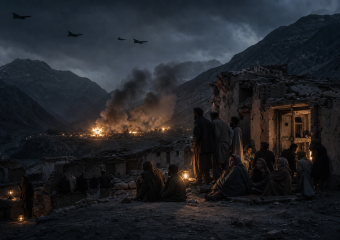
In a surprising turn of events, Israeli military forces have launched airstrikes on Yemen’s capital, Sanaa. This latest development follows a series of drone and missile attacks attributed to Houthi rebels against Israeli targets, raising significant questions about regional stability and the evolving dynamics of military engagement in the Middle East.

Context of the Conflict
Houthi forces, who control large areas of northern Yemen, have increasingly targeted Israeli interests, citing solidarity with Palestinians and opposition to Israeli policies. According to reports from Al Jazeera, the Houthis claimed responsibility for attacks that endangered civilian lives and disrupted air travel, leading Israel to respond with military strikes. This decision is not merely a show of force but also a calculated move to deter further aggression from the Houthis and, by extension, Iran, who has been known to provide support to the rebel group.

In contrast, reports from RT have suggested that the Israeli strikes are a direct reflection of wider geopolitical tensions, particularly related to Iran’s influence in Yemen. The strikes are seen as part of a larger strategy by Israel to assert its military presence and counteract Iranian support for proxy groups throughout the region.

Divergent Reactions
Responses to the Israeli strikes have varied significantly depending on political and ideological perspectives. Proponents of the strikes argue that such actions are justified under international norms that allow countries to defend themselves against hostile entities. According to sources from Sky News, this narrative promotes the idea that nations have the right to protect their citizens from external threats, especially when those threats emerge from non-state actors like the Houthis.
On the other hand, critics warn that further military engagements could escalate the already volatile situation in Yemen and the wider region. Many Yemenis continue to suffer from the ravages of a protracted civil war, and continued military operations may exacerbate humanitarian conditions. Al Jazeera has reported concerns from various human rights organizations that the strikes might not only impact Houthi military assets but also civilian infrastructure, leading to more casualties and deepening the humanitarian crisis.
Complexity of the Situation
The situation in Yemen is profoundly complex and cannot be understood without acknowledging the historical context of the Yemeni civil war, which began in 2014 when Houthi rebels ousted the internationally recognized government. This conflict has since drawn in multiple external actors, including Saudi Arabia, the United States, and Iran. With Israel now entering this fray, the likelihood of broader regional implications raises alarms among geopolitical analysts.
Critics also ask whether strikes like these can achieve their intended outcomes. Based on contrasting reports, some analysts suggest that military retaliation may only serve to entrench Houthi resolve. As one political analyst noted, making Yemen a target of Israeli airstrikes may galvanize support for the rebels, uniting disparate factions against a common adversary. This echoes sentiments from RT, which point out that past military engagements have often led to unintended consequences, fostering further animosity rather than promoting stability.
The Humanitarian Perspective
Amidst military strategies and geopolitical maneuvers, the humanitarian implications of such strikes cannot be overlooked. Yemen has been experiencing one of the worst humanitarian crises in the world, with millions facing starvation and lack of medical care due to the ongoing conflict and a blockade imposed by Saudi Arabia and its allies. The prospect of additional military actions by any party involved threatens to complicate relief efforts and exacerbate the suffering of innocent civilians caught in the crossfire.
Both Al Jazeera and Sky News have highlighted the need for a diplomatic solution, stressing that military means should not overshadow humanitarian considerations. The focus must shift toward a negotiated political resolution to the Yemen conflict, as military escalations are unlikely to bring lasting peace.
Conclusion
The Israeli military strikes on Yemen’s Sanaa represent a pivotal moment in a conflict that is continuously evolving and branching out into regional complexities. While the justification for such actions may rest on the need to counteract aggression from the Houthis, the broader ramifications of further military engagement pose risks that are difficult to quantify.
With contrasting narratives from various news outlets, it becomes clear that while security is a paramount concern for nations under threat, the human cost of military actions must also be critically examined. The path forward may lie in dialogue and diplomacy rather than further military escalations, underscoring the urgent need for international cooperation to resolve the multifaceted crises afflicting Yemen and the wider Middle East.