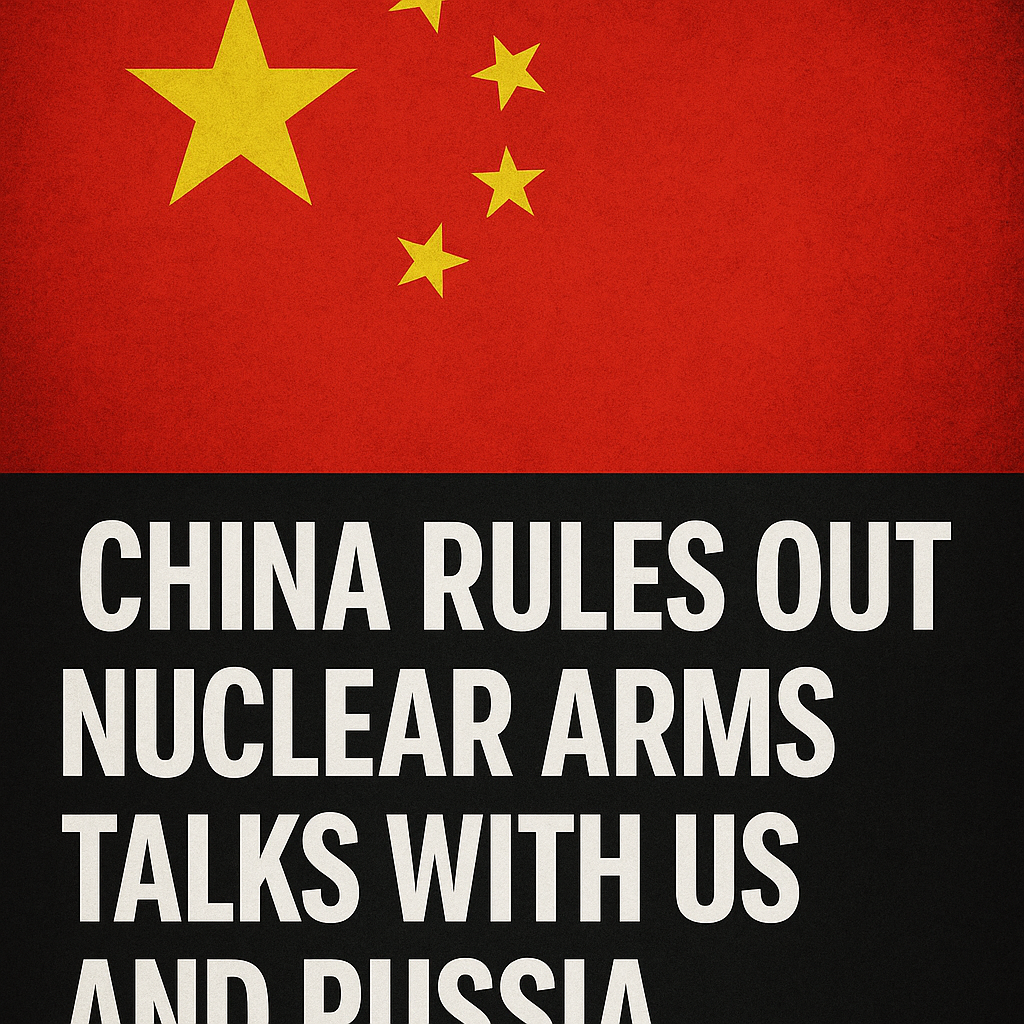
China Rules Out Nuclear Arms Talks with US and Russia
China Rules Out Nuclear Arms Talks with US and Russia
In a developing geopolitical landscape, the recent decision by China to rule out nuclear arms talks with the United States and Russia has raised eyebrows and questions about future diplomatic negotiations concerning nuclear disarmament. This bold stance reflects both confidence and apprehension within the realm of international relations, particularly amid escalating tensions in various global hotspots.

The Context of Nuclear Diplomacy
The declaration against engaging in nuclear arms talks is significant, particularly given the ongoing debates concerning nuclear weapons and disarmament. China’s growing military capabilities, coupled with perceived threats from the US and its allies, have influenced its approach. This is not only about the numbers of warheads but also about the broader implications of strategic stability and power dynamics in Asia.

Different Perspectives on Disarmament
1. China’s Position: China seems to believe that its strategic deterrence is essential in the face of what it views as a hostile environment, particularly from the US. According to reports from RT News, China has voiced concerns over the US’s continued military presence in the Asia-Pacific region and its alliances with neighboring countries. The Chinese government argues that disarmament talks would require a three-way agreement with the inclusion of nuclear capabilities held by the US and Russia. However, it views these nations’ proposals as efforts to undermine China’s security.

2. US and Russia’s Reactions: From the perspectives of the United States and Russia, China’s refusal is seen as an impediment to legitimate arms control discussions. Both nations advocate for multilateral dialogues to include all nuclear states in order to effectively manage and reduce global nuclear risks. As highlighted in reports from Al Jazeera, US officials have pointed to the importance of transparency and engagement in arms control, particularly against the backdrop of recent conflicts and invasions that heighten the risk of nuclear proliferation.
The Implications for Global Security
The refusal to engage in talks doesn’t merely add complexity to China’s international relations; it also poses significant implications for global security. Critics argue that without clear communication and transparency among nuclear states, the risk of miscalculations could escalate tensions, potentially leading to conflicts that may have nuclear ramifications.
Moreover, the stalemate comes at a time when other nations are also advancing their own nuclear agendas, which could further complicate the disarmament process. For instance, while some countries are investing in their own nuclear capabilities as a deterrent, others are advocating for complete disarmament based on moral and ethical grounds.
The Way Forward: Possibilities and Challenges
While it may seem discouraging that China has ruled out nuclear arms discussions, there’s room for optimism if diplomatic avenues remain open. Experts suggest that rather than outright rejection, an emphasis on bilateral dialogues or smaller multilateral frameworks could provide the groundwork for rebuilding trust among nuclear states.
– Engagement Options: Strategies could include establishing norms around nuclear weapons use or enhancing communication channels to prevent miscommunication.
– Trust-Building Measures: Implementing confidence-building initiatives might create a safer environment for future negotiations.
– Regional Dynamics: Addressing regional tensions in Asia could also play a crucial role in reducing military posturing and lay the foundation for broader discussions.
In essence, finding common ground will require recognizing mutual security concerns while addressing underlying anxieties related to military posturing and alliances.
Conclusion: A Complex Web
China ruling out discussions on nuclear arms with the US and Russia showcases a defining moment in the realm of international diplomacy. While each nation’s viewpoint is deeply influenced by security concerns and regional dynamics, the challenge lies in fostering meaningful dialogue. The path towards disarmament is fraught with uncertainty, but it presents opportunities for innovative diplomatic solutions to enhance global security. It is crucial for all stakeholders involved to remain committed to open channels of communication to navigate the complexities of nuclear deterrence and arms control.