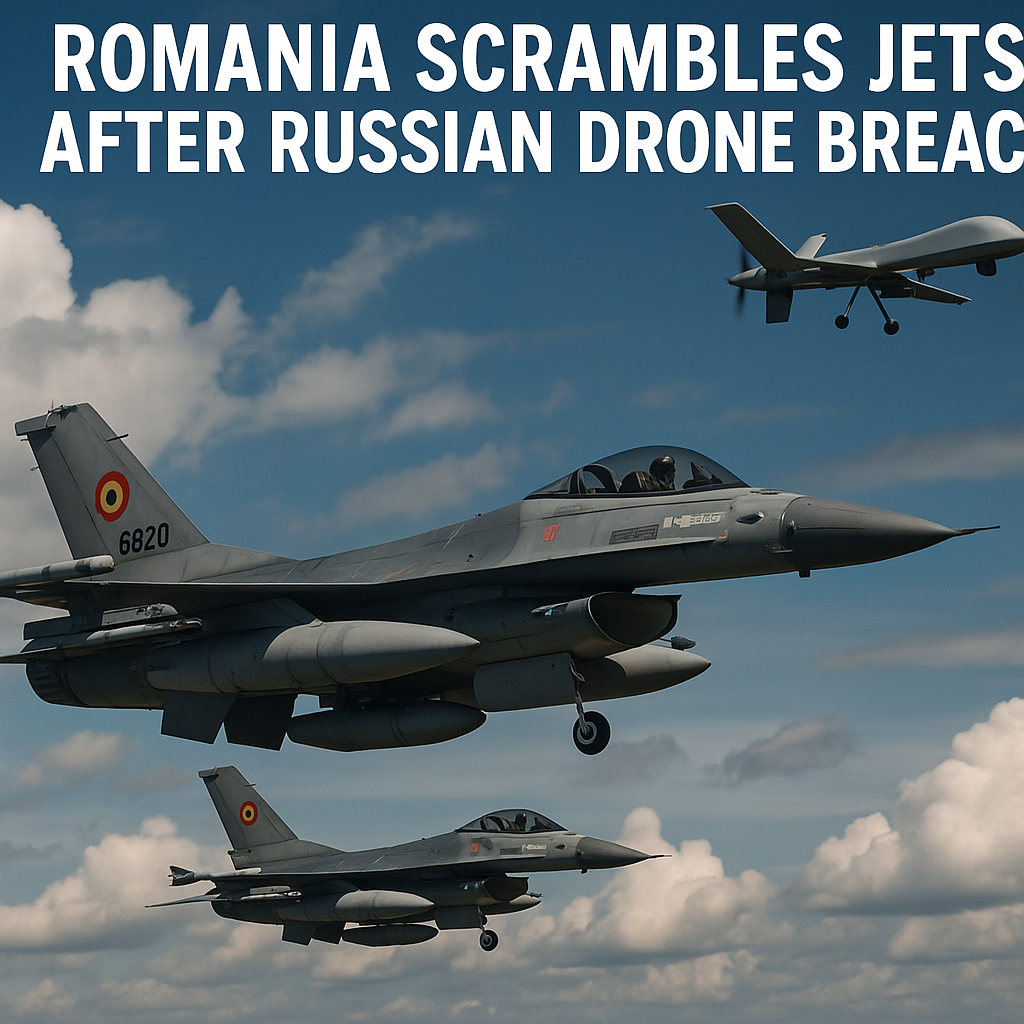
Romania Scrambles Jets After Russian Drone Breach
Romania Scrambles Jets After Russian Drone Breach
In recent days, Romania has faced heightened military tensions following a Russian drone breach that has raised alarms over regional security. This incident not only showcases the vulnerability of airspace in Eastern Europe but also underscores the broader geopolitical tensions stemming from the ongoing conflict between Russia and Ukraine.

The Incident: What Happened
Romania scrambled fighter jets after a Russian drone reportedly crossed into its airspace. This event highlights a troubling escalation in military maneuvers near the borders of NATO member countries. According to reports from Sky News, the Romanian Air Force responded promptly, indicating a readiness to intercept any perceived threats. The drone’s incursion comes at a time when Ukraine’s President Volodymyr Zelenskyy has warned of potential escalations of the war, suggesting that the conflict could extend beyond Ukraine’s borders if left unchecked.

Analyzing Regional Reactions
The incident has not only rattled Romania but has also drawn reactions from NATO allies. Al Jazeera reported that Romania’s Defense Ministry has reiterated its commitment to protecting national airspace, seeking to reassure both citizens and global allies of its defensive capabilities. NATO spokespersons echoed these sentiments, emphasizing the alliance’s collaborative stance in defending member states against any aggression.

Conversely, Russian media, such as RT, framed the incident within a broader context of military provocation by NATO forces in the region. They reported that the air patrols conducted by Romania were perceived as a response to heightened tensions due to NATO’s increasing presence near Russian borders. This contrast in narratives illustrates a significant divide in how the event is interpreted across different media platforms.
Broader Implications for Security in Eastern Europe
The breach of Romanian airspace by a Russian drone opens up discussions about the security landscape in Eastern Europe. It raises critical questions about defense preparedness and the implications of territorial integrity in an atmosphere fraught with uncertainty. As the conflict in Ukraine continues to unfold, there is a growing concern among Eastern European countries about the potential spillover effects.
Many analysts underline the risks of miscalculation in the region. A mistake in judgment during heightened military readiness could lead to unintended escalations, where a minor incident spirals into something far more significant. Moreover, Ukraine’s President Zelenskyy has signaled that nations need to brace for developments that could impact the broader European security architecture, emphasizing the idea that no country is an island in this geopolitical crisis.
The Importance of Diplomatic Engagement
While military preparedness is crucial, experts agree that diplomatic channels must remain open. Ensuring that lines of communication are active can prevent unfortunate misunderstandings that might lead to conflict. Romania’s government has called for increased cooperation among European nations, particularly in sharing intelligence and engaging in joint exercises to enhance collective security.
Furthermore, pipelines for diplomatic engagement with Russia should not be entirely closed off. As observed, engagement can sometimes lead to de-escalation. For instance, discussions about security guarantees or frameworks to limit military exercises in sensitive border areas could be beneficial.
Conclusion: A Complex Future Ahead
The situation following the Russian drone breach is emblematic of the complex dynamics at play in Eastern Europe today. As Romania reinforces its air defenses, it does so within a web of international relations that are intricately connected. The contrasting narratives from different news sources illustrate the polarized views on military activities and defense strategies in the face of perceived threats.
As stakeholders navigate these troubling waters, it will be imperative for diplomatic measures to complement military readiness, ensuring that Eastern Europe remains a region of stability rather than conflict. With ongoing developments in Ukraine and NATO’s role evolving, the eyes of the world will be on how Romania—and its allies—proceed in maintaining security in this increasingly precarious geopolitical landscape.