
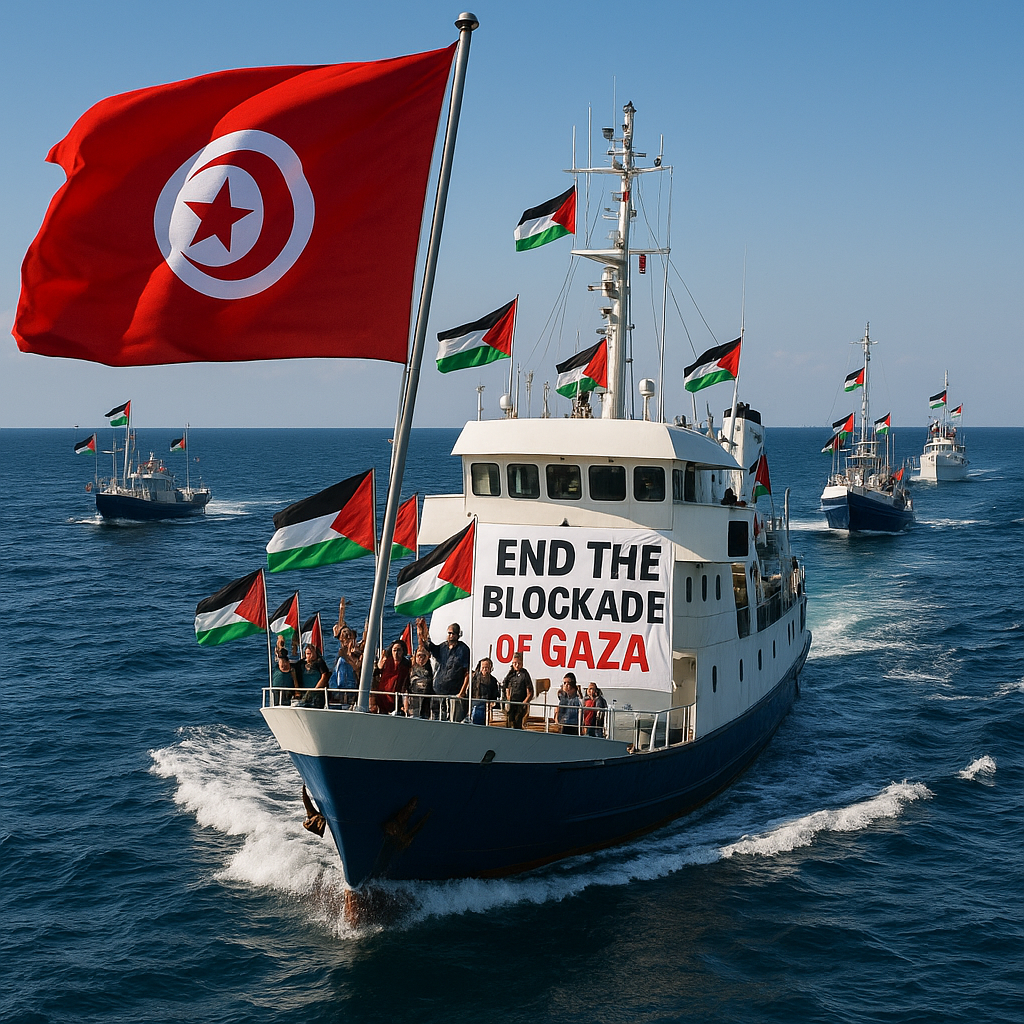
Global Sumud Flotilla Departing Tunisia to Break Gaza Blockade
Global Sumud Flotilla Departing Tunisia to Break Gaza Blockade
The departure of the Global Sumud Flotilla from Tunisia aims to challenge the longstanding blockade of Gaza, drawing attention to the humanitarian crisis affecting its residents. This well-supported action has ignited a spectrum of responses globally, highlighting the complexities and sensitivities of the situation.

The Purpose and Composition of the Flotilla
The Global Sumud Flotilla, which set sail recently from Tunisian shores, comprises various pro-Palestinian activists, humanitarian organizations, and volunteers dedicated to raising awareness about the blockade’s impact on Gaza. This initiative has gathered significant support from individuals and groups advocating for the rights of Palestinians.

While the flotilla’s mission centers around solidarity and humanitarian aid, it also acts as a political statement against the ongoing Israeli blockade of Gaza, which has led to severe shortages of basic supplies, such as food, water, and medical resources. This blockade has been widely criticized by numerous international bodies, including the United Nations, which categorize it as a violation of human rights.

Activists involved in the flotilla argue that their actions are vital for shedding light on the plight of Gaza’s inhabitants. Amidst this backdrop, some countries, such as Israel, view the flotilla as a provocative act that threatens security, further complicating the already fraught situation.
Perspectives from Different Corners
Various sources have presented contrasting viewpoints on the flotilla’s mission. For instance, Al Jazeera reported that supporters see the effort as an act of bravery to prioritize humanitarian efforts over political barriers. The implication is that even in the face of potential confrontation, the commitment to aid those suffering in Gaza remains paramount.
On the other hand, outlets like RT have highlighted the potential risks involved, asserting that such movements could lead to escalated tensions in the region. They argue that engaging directly with the blockade might provoke defensive measures from Israel, further affecting both activists and Gaza residents.
Moreover, Sky News emphasizes the flotilla’s potential for stirring international debate surrounding the blockade. The coverage suggests that actions like these can galvanize public opinion, pushing for diplomatic solutions rather than perpetuating cycles of conflict, while acknowledging the dangers that may accompany such high-profile ventures.
The Humanitarian Crisis in Gaza and the Response
The situation in Gaza is dire, characterized by limitations that severely restrict access to essential resources. This context adds urgency to the flotilla’s departure, as supporters stress the immediate need for humanitarian aid to alleviate suffering.
– Food Shortages: Reports indicate a staggering level of food insecurity in Gaza, with many families unable to secure adequate nutrition.
– Medical Needs: Access to medical supplies and care remains critically low, further aggravated by the blockade.
Activists argue that the flotilla presents a crucial opportunity to address these humanitarian needs openly and can serve as a compelling call to action for international audiences. They hope to ignite conversations leading to potential policy changes, highlighting how humanitarian initiatives can sometimes play a pivotal role in international relations.
Conversely, the potential for confrontation raises questions about the safety of the participants and the broader implications for the residents of Gaza. Critics worry that any escalation could result in increased military presence or aggression, ultimately harming those the flotilla seeks to help.
A Path Forward: Bridging Perspectives
While the Global Sumud Flotilla emphasizes humanitarian objectives, it inevitably must navigate the tangled web of geopolitics that define the Israeli-Palestinian conflict. The varied responses from global commentators underline that there is no simple resolution to the long-standing issues at hand.
Supporters advocate for fostering dialogue and dismantling barriers to aid, while skeptics urge a more cautious approach that considers the geopolitical landscape and potential ramifications. This divergence of views is essential for a comprehensive understanding of the situation, reflecting the complexities inherent in international humanitarian action.
In conclusion, the Global Sumud Flotilla’s mission to break the blockade of Gaza encapsulates the duality of humanitarianism and geopolitics. While it aims to alleviate suffering and galvanize support for a misunderstood populace, it also operates within a framework of tensions and security concerns. It is crucial to continue monitoring the situation as the flotilla makes its journey, for it may well serve as a barometer for both humanitarian effort and regional stability. By engaging with diverse perspectives and weighing the evidence, the international community can better appreciate the myriad factors at play in this delicate landscape.















