
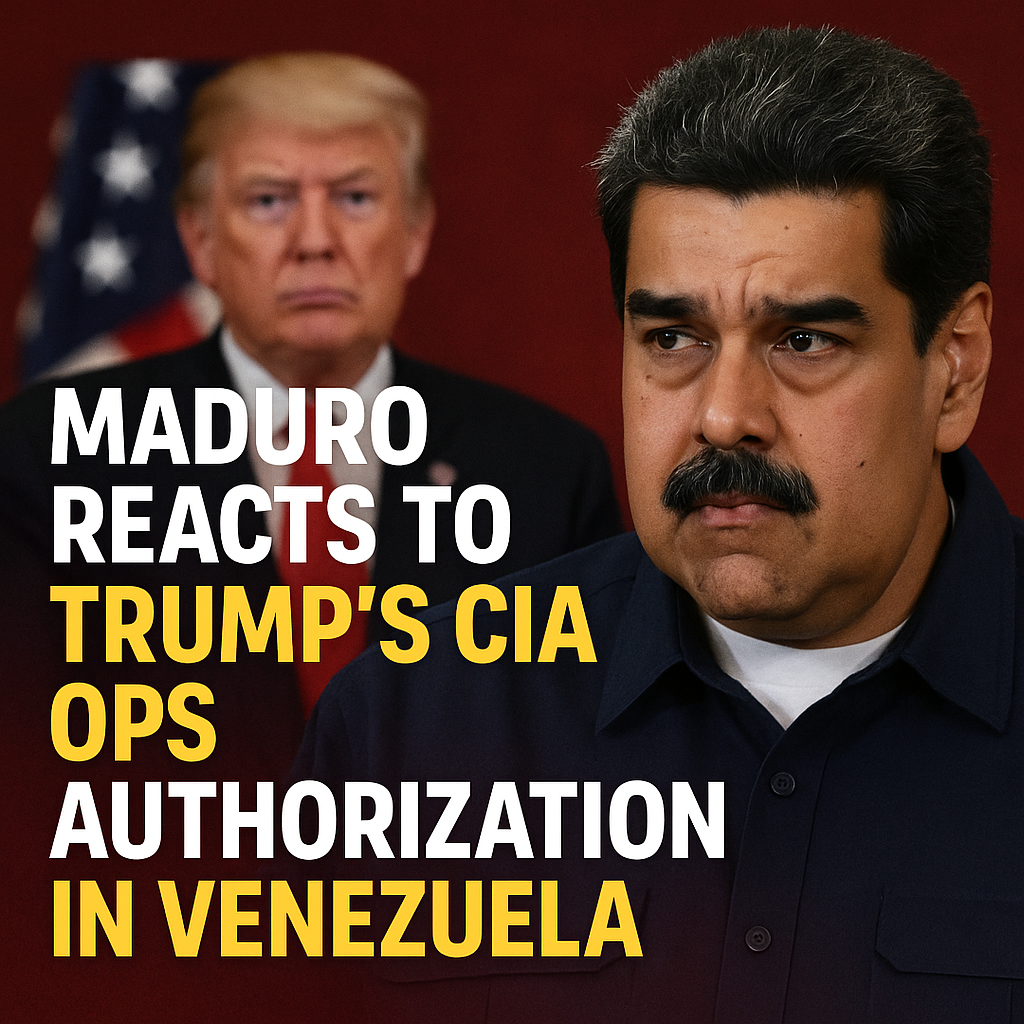
Maduro Reacts to Trump’s CIA Ops Authorization in Venezuela
Maduro Reacts to Trump’s CIA Ops Authorization in Venezuela
In a significant development, Nicolás Maduro has voiced his strong opposition to former President Donald Trump’s recent authorization of CIA operations in Venezuela. This event has reignited discussions surrounding U.S.-Venezuelan relations and the complexities of foreign intervention.

Historical Context and Recent Developments
The longstanding tension between the U.S. and Venezuela has roots that date back decades. Under Maduro’s leadership, the country has faced severe economic challenges, which have been exacerbated by sanctions imposed by the U.S. On the other hand, the U.S. has criticized Maduro for human rights violations and a deteriorating political climate.

Recently, reports from RT highlighted that Trump’s authorization focuses on countering what he described as “the Venezuelan dictatorship.” Maduro responded vehemently, labeling the action as an act of aggression that violates international law. He argues it forms part of a larger strategy aiming to destabilize Venezuela and exert foreign control over its natural resources, especially oil.

Furthermore, Maduro’s administration has claimed this move could lead to increased violence in the already fragile nation, instilling fear among citizens worried about potential conflicts triggered by foreign intervention.
Diverse Perspectives on U.S. Actions
The perspectives on U.S. involvement in Venezuela vary significantly across the political spectrum. On one side, some analysts argue that Trump’s actions reflect a necessary move to support democracy and human rights in Venezuela. They assert that direct interventions or pressures are essential in situations where regimes are accused of egregious human rights violations. Supporters of this view, including some political figures in the U.S., claim that Maduro’s governance has led to humanitarian crises that warrant intervention.
Conversely, critics argue that foreign interventions, particularly those orchestrated by the CIA, have historically led to more harm than good. Al Jazeera has quoted various regional leaders who view Trump’s decision as an unacceptable infringement on a nation’s sovereignty, echoing Maduro’s sentiments about external forces attempting to dictate Venezuela’s political affairs. They emphasize that the root causes of Venezuela’s crisis should be addressed through diplomatic channels rather than military actions or covert operations.
Weighing the Costs and Benefits
As the debate continues, it is crucial to weigh the potential impacts of these proposed CIA operations. Proponents of such actions highlight the potential for supporting internal reforms and facilitating a transition away from the current regime. They contend that the U.S. intervention could assist in restoring democracy and alleviating the humanitarian crisis faced by millions of Venezuelans.
However, many experts warn of the risks of escalating violence and political instability. History shows that interventions can lead to prolonged conflict and unintended consequences, impacting not just the immediate region but also global political dynamics. Moreover, the Venezuelan population remains wary, having experienced the adverse effects of sanctions and foreign meddling in the past.
Conclusion: A Path Forward
Navigating the complexities surrounding the Trump administration’s operations in Venezuela will undoubtedly be challenging. Maduro’s firm reaction reflects the hostilities inherent in U.S.-Venezuelan relations, while also illuminating the diverse perspectives that inform this ongoing geopolitical discourse.
As international observers continue to analyze these developments, it becomes increasingly clear that a balanced approach—one that emphasizes dialogue and understanding—might be the most effective path forward. Engaging both humanitarian and diplomatic avenues could potentially yield more sustainable solutions than covert operations or military interventions.
In a landscape wrought with uncertainty, it is essential to thoughtfully consider the long-term implications of any actions taken in and towards Venezuela, ensuring that the voices of its people remain central to any discourse or decision-making process.















