
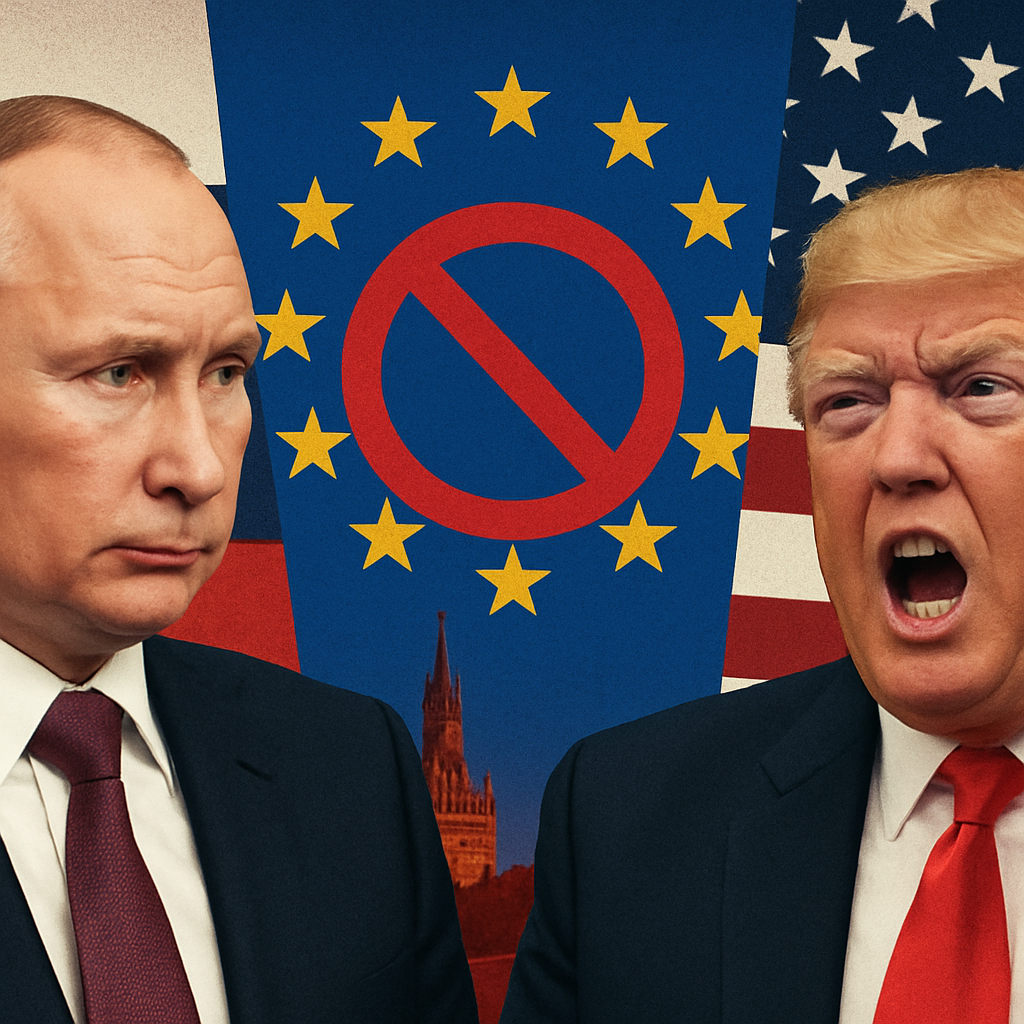
EU Attempts to Derail Putin-Trump Summit in Moscow
Tensions Rise: The EU’s Efforts to Disrupt the Putin-Trump Summit in Moscow
As global political dynamics shift, the European Union (EU) is intensifying its efforts to derail the upcoming summit between Russian President Vladimir Putin and former U.S. President Donald Trump. This high-stakes meeting has sparked a debate not just over what will be discussed but also about the implications for international relations, especially between the West and Russia.

The EU’s Position on the Summit
The EU’s opposition to the Putin-Trump summit stems from deep-rooted concerns about Russia’s geopolitical maneuvers and its implications for European security. Various sources indicate that EU leaders believe such a summit could undermine the Western alliance and further embolden Putin. According to reports from RT, the EU is particularly wary of any potential deals that could be reached behind closed doors, fearing they might come at the expense of European interests. As an EU diplomat stated, “A meeting of this magnitude could send a signal of normalization that we are not ready to accept.”

Moreover, the EU’s wariness also connects to the broader context of U.S.–Russia relations, particularly in light of various conflicts in Eastern Europe. The Al Jazeera coverage echoes this sentiment, cautioning that such an engagement could weaken the already tenuous stance taken by the West in response to Russian aggression in regions like Ukraine.

Divergent Viewpoints: The Summit’s Potential Impact
While the EU’s apprehensions are understandable, opinions among other stakeholders diverge substantially. Supporters of Trump, and a segment of international relations experts, argue that engaging with Russia is critical. They posit that a summit could pave the way for constructive dialogue and mutual understanding. As noted in Sky News, some analysts argue that isolating Russia through diplomatic channels may yield more aggressive actions rather than a softened stance.
This position is bolstered by historical examples where dialogue, even under contentious circumstances, has led to significant breakthroughs. Experts highlight that previous summits have provided platforms for productive discussions on nuclear arms control and terrorism—key issues that transcend national boundaries.
Unceremonious Background Battles
Underlying this transatlantic tension is a backdrop of political drama. The EU feels a profound need to assert its role on the global stage—especially following the perceived unilateralism of the Trump administration during his presidency. The fear that the Trump-Putin summit could legitimize Putin’s aggressive policies has prompted the EU to take action, as they believe a united front is essential to counterbalance Russia’s influence.
However, the European bloc is aware of its limitations. Economic interdependence, particularly with Russia concerning energy supplies, complicates their stance. As reported by RT, while the EU politicians publicly signal a tough approach, privately, some acknowledge the need for dialogue and mutual concessions, emphasizing that completely derailing the meeting could have unintended consequences.
Embracing Complexity in International Relations
Navigating the complexities surrounding the Putin-Trump summit requires careful consideration of multiple perspectives. As the EU attempts to apply pressure, both political and economic strategies will be vital in shaping the outcomes of this ongoing geopolitical chess game. The contrast in viewpoints—from staunch opposition to cautious support—illustrates the multifaceted nature of international relations today.
While it’s clear that the EU harbors legitimate concerns regarding the summit’s implications, an outright attempt to derail it may not ultimately serve European interests. Instead, fostering an environment where dialogue is encouraged, albeit cautiously, could give rise to more favorable outcomes.
The international community must remain vigilant as the date approaches, weighing the potential benefits of engagement against the risk of legitimizing aggressive foreign policy.
In conclusion, the EU’s efforts to disrupt the Putin-Trump summit reflect a broader narrative of tension and the complex geopolitical relationships that define today’s world. Both sides need to engage constructively, recognizing that the interplay of diplomacy, power, and international norms continues to evolve in unpredictable ways.















