
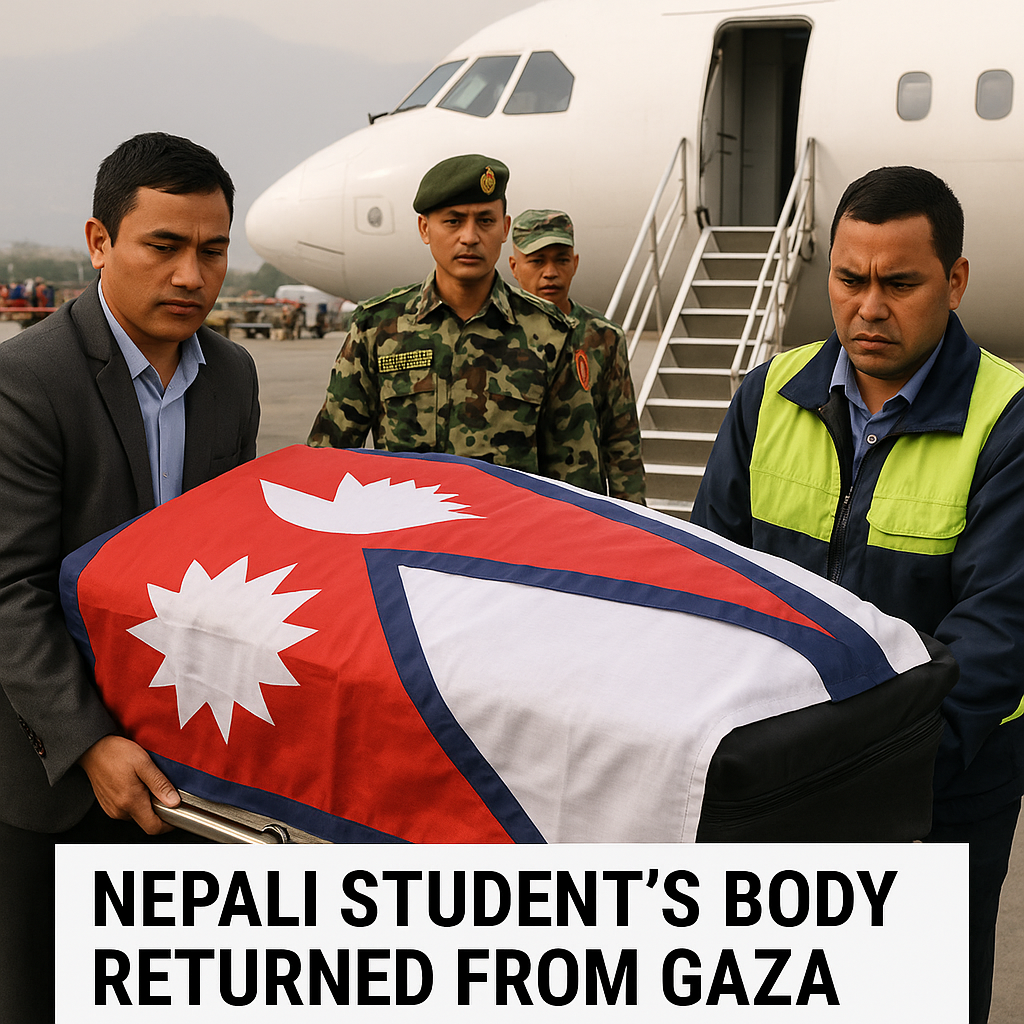
Nepali Student’s Body Returned from Gaza to Kathmandu
Nepali Student’s Body Returned from Gaza to Kathmandu
The recent return of a Nepali student’s body from Gaza to Kathmandu has sparked a mix of sorrow, hope, and concerns regarding the ongoing conflict in the region. This tragedy not only resonates with the Nepali community but also raises important questions about safety, international relations, and the impact of unresolved conflicts on individuals abroad.

Context of the Incident
The deceased, a promising young student whose life was cut short amidst escalating tensions in Gaza, had been studying abroad when the situation turned dire. According to sources, the body was officially handed over after extensive negotiations, highlighting the fragile nature of both personal and diplomatic ties in conflict zones.

Reactions from the Nepali Government and Community
Upon confirming the return of the student’s body, the Nepali government expressed its condolences. Officials emphasized the importance of diplomatic channels, underscoring their commitment to protecting citizens abroad. In a statement, a senior government spokesperson noted, “Our aim is to ensure the safety of all Nepali citizens, not just in conflict areas but everywhere.”

The local community in Kathmandu has been vocal about their sorrow, mourning not only the loss of an individual but also the broader implications of ongoing violence. Community gatherings have been organized to honor the young student, showcasing a profound sense of unity and resilience in the face of tragedy.
Perspectives on Safety and Stability
The handling of the body’s return raises pertinent questions about the safety of students studying in conflict zones. Many Nepali parents and students are now reconsidering their options regarding overseas education. The potential risks associated with studying in volatile regions can be disheartening. Some families are advocating for clearer government policies and support systems to ensure stronger protections for citizens abroad.
Conversely, there is also a viewpoint that emphasizes the need for increased international cooperation in conflict resolution. Experts argue that education and cultural exchange continue to be crucial, even in places where instability prevails. “It’s essential to foster understanding and connections among nations, even when circumstances are tough,” noted an academic specializing in international relations.
Emerging Diplomatic Dynamics
The situation also underscores the evolving diplomatic relations between Nepal and countries affected by such conflicts. Proactive measures by the Nepali government to expedite the return of citizens caught in dangerous situations reflect a growing awareness of the intricacies involved in international politics.
However, there are contrasting views regarding the effectiveness of these efforts. While some argue that swift action by the government signifies strength and commitment, others caution that without a comprehensive foreign policy strategy, these isolated incidents may not sufficiently address the underlying issues threatening citizens abroad.
Conclusion
The return of the Nepali student’s body from Gaza to Kathmandu serves as a poignant reminder of the human toll associated with geopolitical conflicts. This tragic event has evoked a sense of mourning and solidarity within the Nepali community while raising critical questions about safety, diplomatic strategies, and the responsibilities of the government in protecting its citizens.
While the complexities of international relations will undoubtedly continue to challenge nations worldwide, what remains clear is the urgent need for ongoing dialogue and cooperation. The ultimate goal must be to ensure that individuals, especially students, can pursue their ambitions without fear for their safety, fostering a climate where education and understanding can thrive amid adversity.















