
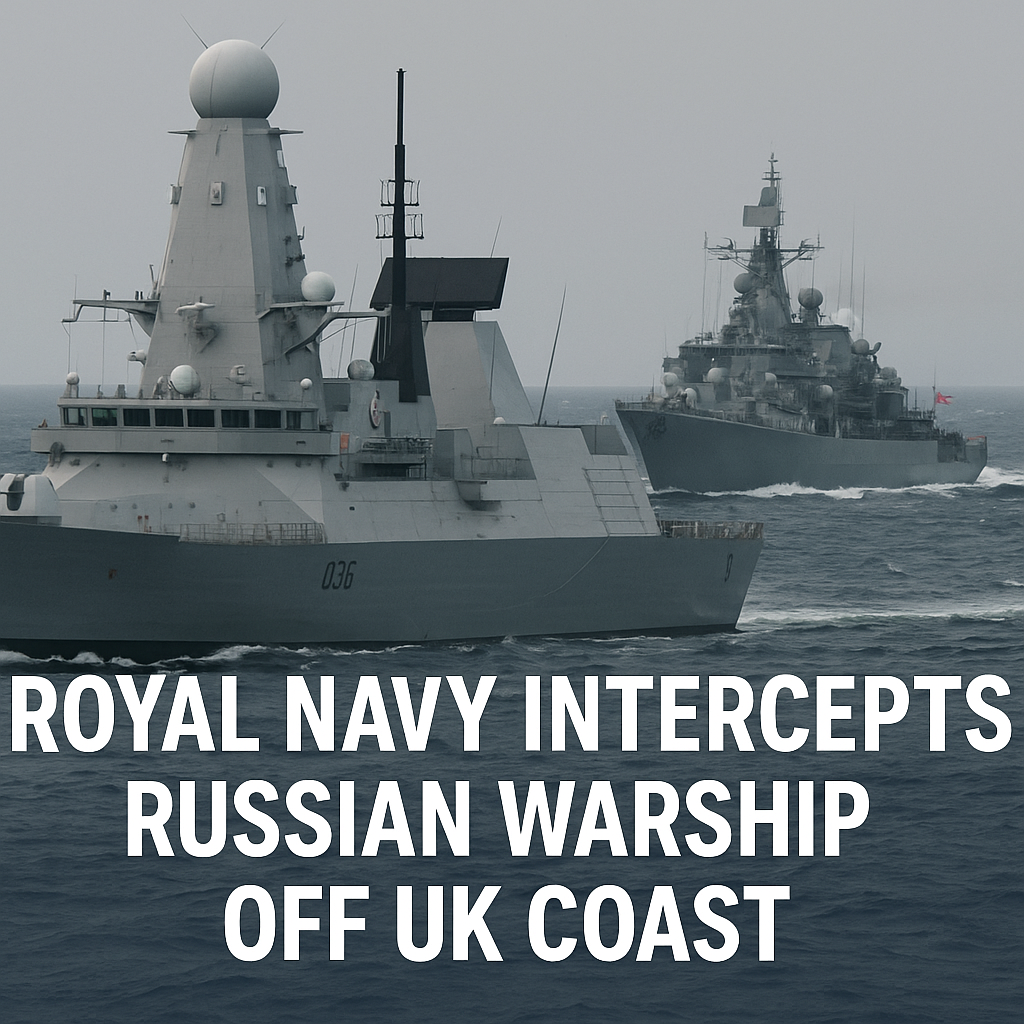
Royal Navy Intercepts Russian Warship Off UK Coast
Royal Navy Intercepts Russian Warship Off UK Coast
In a significant display of naval readiness, the Royal Navy recently intercepted a Russian warship off the coast of the United Kingdom. This incident underscores the tensions in the North Atlantic and highlights the increasingly complex relationship between the UK and Russia.

Rising Maritime Tensions
The Royal Navy’s interception comes amidst growing concerns regarding Russian military movements in the region. Reports indicate that the Royal Navy destroyer was on a routine patrol when it encountered the Russian warship, prompting an immediate response. According to Sky News, the destroyer moved to “monitor the movements” of the Russian vessel, a proactive measure in ensuring national security.

The Context of Increased Surveillance
The UK has ramped up its maritime surveillance in response to perceived threats from Russia. Following various high-profile incidents, including military exercises and increased naval presence near British waters, defense experts emphasize that these actions reflect a broader trend of Russian assertiveness. Al Jazeera reports statements from UK officials who indicated that such encounters are likely to become more frequent if tensions continue to escalate.

Conversely, RT, a Russian state-run news outlet, frames the incident differently. They suggest that the British interception reflects insecurities within the Royal Navy rather than any aggressive posture from Russia. By asserting that their navy operates within international waters without malicious intent, Russian sources highlight a narrative aimed at minimizing the UK’s concerns.
This divergence in media portrayals reveals the complicated nature of defense politics, where each side formulates narratives to justify their actions while casting the other as the provocateur.
Global Implications of Regional Conflicts
The interception of the Russian warship has implications beyond the immediate frontlines of UK-Russia relations. Maritime security in the North Atlantic affects not only regional actors but also international partnerships, particularly NATO allies. The ongoing conflict in Ukraine has amplified these tensions, leading to a recalibration of military strategies by Western nations.
NATO’s Stance on Russian Movements
NATO has positioned itself as a critical player in ensuring stability amid these rising tensions. With multiple member states backing heightened military readiness, the alliance’s collective commitment seems to be a direct response to perceived threats from Russia. The interception may serve not only as a national security measure for the UK but also as a signal of solidarity within NATO to
deter further Russian aggression.
Reports indicate that NATO naval operations in the region have intensified alongside the UK’s increased vigilance. The collaboration between allied naval forces suggests a united front in ensuring maritime security, emphasizing the importance of continued surveillance of Russian military activities.
Furthermore, coordination among NATO allies plays a pivotal role in combatting misinformation about the motives behind such naval operations. By sharing intelligence and resources, member states can create a comprehensive understanding of regional maritime dynamics.
The Road Ahead: Navigating Complex Waters
The recent Royal Navy interception of a Russian warship accentuates the increasingly fraught atmosphere in the North Atlantic. Both nations are navigating a landscape ripe for potential conflict, even as diplomatic channels remain vital for de-escalation.
While some experts advocate for increased military presence, others emphasize the need for dialogue to address underlying tensions. The engagement of military vessels can serve as both a deterrent and a potential provocation, complicating international relations.
As this situation evolves, it will be crucial for policymakers to balance deterrence with diplomacy. Both the UK and Russia are entrenched in their positions, each attempting to leverage their naval operations to project strength while maintaining national security. Potential miscalculations in this environment could lead to unintended consequences, reaffirming the necessity of clear communication and understanding between opposing forces.
Concluding Thoughts
In summary, the Royal Navy’s interception of a Russian warship off the UK coast exemplifies the complex interplay of military readiness, national security, and international diplomacy. As both sides navigate their interests, the maritime tensions in the North Atlantic will likely persist, compelling a careful balance between vigilance and dialogue.
The evolving dynamics in this maritime arena reflect broader geopolitical challenges that demand nuanced strategies and cooperative frameworks, ensuring that military encounters do not escalate into broader conflicts. The actions taken by the Royal Navy serve as a tangible reminder of the stakes at play in maintaining peace and security in an increasingly interconnected world.















