
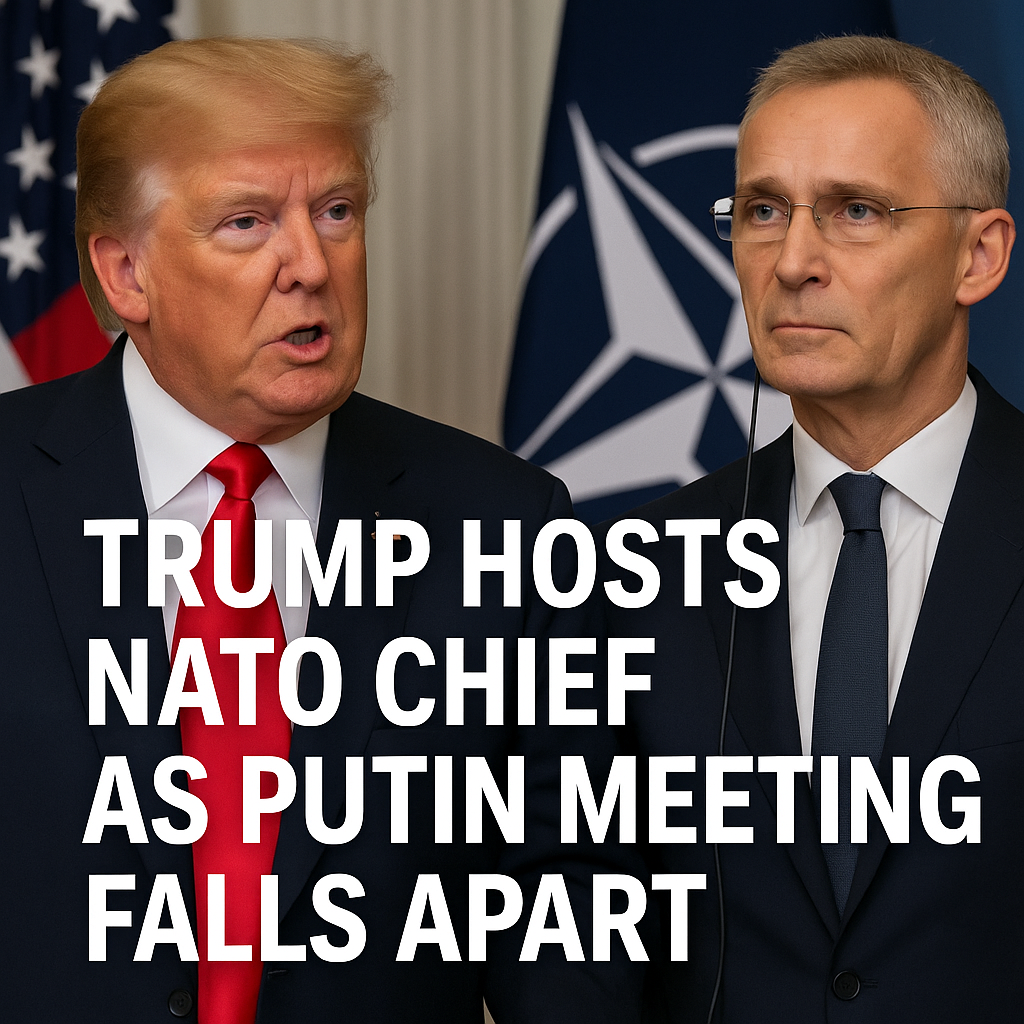
Trump Hosts NATO Chief as Putin Meeting Falls Apart
Trump Hosts NATO Chief as Putin Meeting Falls Apart: A Diplomatic Landscape in Flux
In a rapidly shifting geopolitical landscape, the news of Trump hosting NATO’s Secretary-General Jens Stoltenberg comes amidst the collapse of anticipated talks between President Vladimir Putin and various Western leaders. This situation not only underscores ongoing tensions between NATO and Russia but also illustrates the complexities of international diplomacy.

The Context of the Meeting
President Trump has positioned himself as a pivotal player in negotiating peace and security issues, especially amid frayed relations between NATO and Russia. Stoltenberg’s visit signals NATO’s commitment to collective defense amid rising concerns regarding Russia’s military activities. This meeting can be seen as an effort to solidify alliances and address mutual security challenges, particularly following the fallout from the failed Putin meeting.

According to Al Jazeera, Trump’s focus in meeting with Stoltenberg is on reinforcing NATO’s unity against perceived Russian aggression. Meanwhile, the expectation that Putin would engage with Western powers fell apart at a critical juncture, amplifying the dissonance between Western and Russian diplomatic strategies.

Diverging Perspectives on NATO’s Efficacy
While the strategic importance of NATO cannot be overstated, opinions on its effectiveness vary significantly. Supporters argue that it remains a crucial bulwark against Russian advances, emphasizing its role in maintaining peace in Europe. For instance, NATO remains essential in providing collective security guarantees that many European nations rely on.
Conversely, critics question whether NATO has become a protracted source of tension rather than a facilitator of peace. As RT reports, skepticism persists regarding NATO’s expansion and its implications for Russia’s national security. Russian officials often cite NATO’s eastward enlargement as a direct threat, raising questions about the Alliance’s approach to diplomacy and conflict resolution.
This divergence highlights an inherent complexity in global diplomacy—the ongoing struggle between showcasing military strength against maintaining dialogue and negotiation.
The Implications of Failed Talks
The collapse of the Putin meeting presents uncertainties for future diplomatic engagements. The expectation was that dialogues could de-escalate tensions and promote stability. However, with trust at a low point, the potential for productive discussions wanes. According to various analysts, this failure may escalate military posturing from both sides, as each may perceive the other as preparing for confrontation.
Furthermore, Trump’s warm reception of Stoltenberg stands in stark contrast to Russia’s diplomatic isolation. Analysts argue that while NATO strengthens its ties, Russia might resort to more aggressive postures, thereby complicating the security landscape in Europe. The potential for an arms race increases when countries feel their security architecture is under threat.
A Path Forward: Balancing Diplomacy and Defense
Navigating this complex geopolitical terrain necessitates a balanced approach. For NATO, reinforcing alliances while engaging in direct communication with Moscow may be essential to avoid miscalculations. Diplomatic backchannels could provide an avenue for addressing grievances without resorting to overt hostility.
Additionally, Western nations must tread carefully, weighing military responses against the necessity of diplomatic engagement. Experts argue that open dialogues, even with contentious figures like Putin, can help prevent escalations into conflict. This perspective aligns all parties involved toward a common goal: stability over warfare.
Conclusion: A Complicated Future Ahead
In the aftermath of Trump’s meeting with NATO’s chief and the collapse of negotiations with Putin, it is clear that the road ahead is fraught with complexity. The impact of this diplomatic fallout extends beyond individual leaders—reshaping relationships and security policies across Europe and beyond. Are countries on the verge of a new arms race, or can future diplomatic efforts redefine the balance of power in a way that prioritizes peace?
As we observe these developments, it is critical to remain vigilant and encourage dialogue in a world where militaristic posturing can all too easily escalate into conflict. While the immediate negotiations may have faltered, the broader framework of international politics calls for resilience and an ongoing commitment to resolving disputes through dialogue rather than division.















