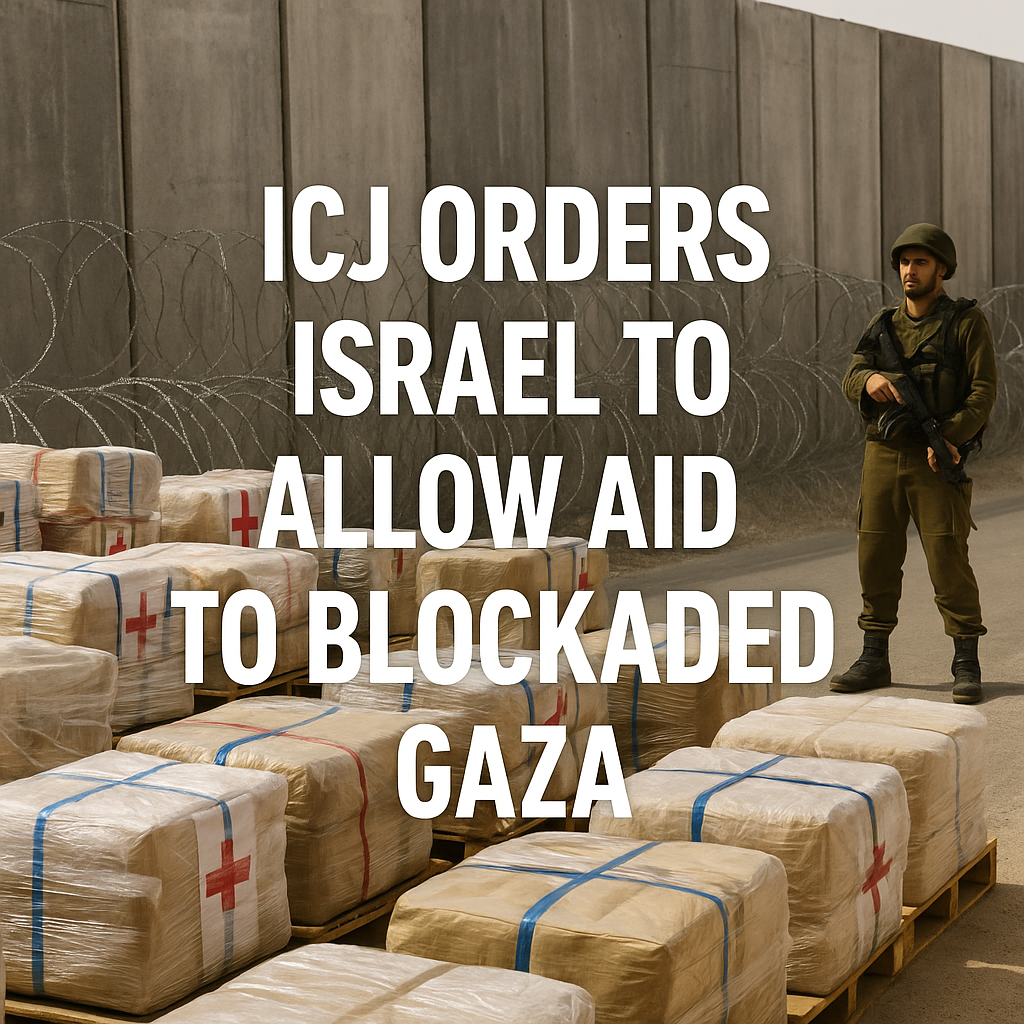
ICJ Orders Israel to Allow Aid to Blockaded Gaza
ICJ Orders Israel to Allow Aid to Blockaded Gaza
The recent ruling from the International Court of Justice (ICJ) that mandates Israel to permit humanitarian aid into the blockaded Gaza Strip has sparked a range of reactions and reflections from various stakeholders. This ruling underscores ongoing humanitarian concerns amidst the protracted Israeli-Palestinian conflict, while also highlighting the international community’s stance on the urgent need for aid.

The Court’s Ruling and Its Implications
In a significant decision, the ICJ has asserted that Israel must facilitate the entry of humanitarian assistance into Gaza. The court emphasized the importance of meeting the basic needs of civilians, particularly given the dire circumstances resulting from ongoing conflict and restrictions. This ruling resonates deeply within global discussions on human rights and humanitarian law.

From Al Jazeera’s coverage, it’s clear that the ruling reflects the broader recognition of the humanitarian crisis in Gaza. For years, residents have faced challenges in accessing essential goods, medical supplies, and necessary services. The court’s decision was rooted in the principle of protecting civilian lives, as reiterated by multiple legal experts and humanitarian organizations.

Conversely, sources from RT highlight Israel’s complex security situation, arguing that while humanitarian needs are pressing, the government must also consider its security challenges stemming from militant groups operating within Gaza. The Israeli perspective often contends that strict border controls are necessary to prevent weapons smuggling and attacks on its territory. This has raised questions about the balance between security and humanitarian access, suggesting that the ICJ’s ruling, while critical, may not solve the underlying tensions.
The Humanitarian Crisis in Gaza
Reports from Sky News paint a vivid picture of the humanitarian situation in Gaza, where over two million inhabitants face daily struggles, including limited access to clean water, healthcare, and basic food supplies. Human Rights Watch and other organizations have documented allegations of grave human rights violations, urging a more pronounced international response to alleviate the suffering of civilians.
The combined narratives from various sources underscore the urgent need for humanitarian intervention. Activists and humanitarian workers argue that the ICJ’s decision is a necessary step in the right direction, pushing for an increase in international oversight to ensure compliance. The situation is dire enough that many consider the court’s ruling not merely a legal obligation but a moral one aimed at protecting vulnerable lives.
In contrast, opinions vary significantly regarding the potential effectiveness of such international rulings. Critics from several viewpoints express skepticism about whether legal mandates can translate into practical changes, highlighting the ongoing challenges of enforcement and compliance in politically charged environments.
Mixed Reactions and Future Prospects
As the news of the ICJ ruling disseminates, reactions are varied. Human rights advocates celebrate the decision as a milestone, viewing it as a reaffirmation of the need for accountability at the international level. They argue that it sends a strong message to Israel and the global community about the necessity of ensuring access to humanitarian aid, regardless of political considerations.
On the other hand, political analysts remind us that legal decisions may lead to limited immediate change on the ground. The complexity of Israeli-Palestinian relations often complicates the implementation of international mandates. The Israeli government has hinted at concerns over security implications, suggesting it may resist full compliance with the ruling unless conditions are framed to address its security questions effectively.
The future remains uncertain, particularly in light of the longstanding and entangled grievances surrounding the conflict. Negotiations about humanitarian access could emerge as a battleground, wherein the ICJ’s decisions are weighed against the heightened sensitivities of national security. Whether the ruling will translate into meaningful progress for Gazans is a question that lingers amid a backdrop of ongoing geopolitical tensions.
Conclusion: A Call for Balanced Approaches
In summary, the ICJ’s order for Israel to allow aid into Gaza brings essential humanitarian issues back into the forefront of international discourse. While the ruling is hailed by many as an important step towards addressing the humanitarian crisis, practical concerns about security and ongoing conflict dynamics remain critical considerations.
As this situation unfolds, ongoing dialogue and cooperation between humanitarian organizations and authorities will be vital. Only through balanced and constructive approaches can stakeholders hope to navigate the complexities inherent in humanitarian aid within contested regions. The ICJ’s decision serves as a reminder that while legal frameworks can offer solutions, the challenge lies in actualizing those solutions in a way that respects both humanitarian principles and security needs.