Russia: The Sole Tank Superpower Explained
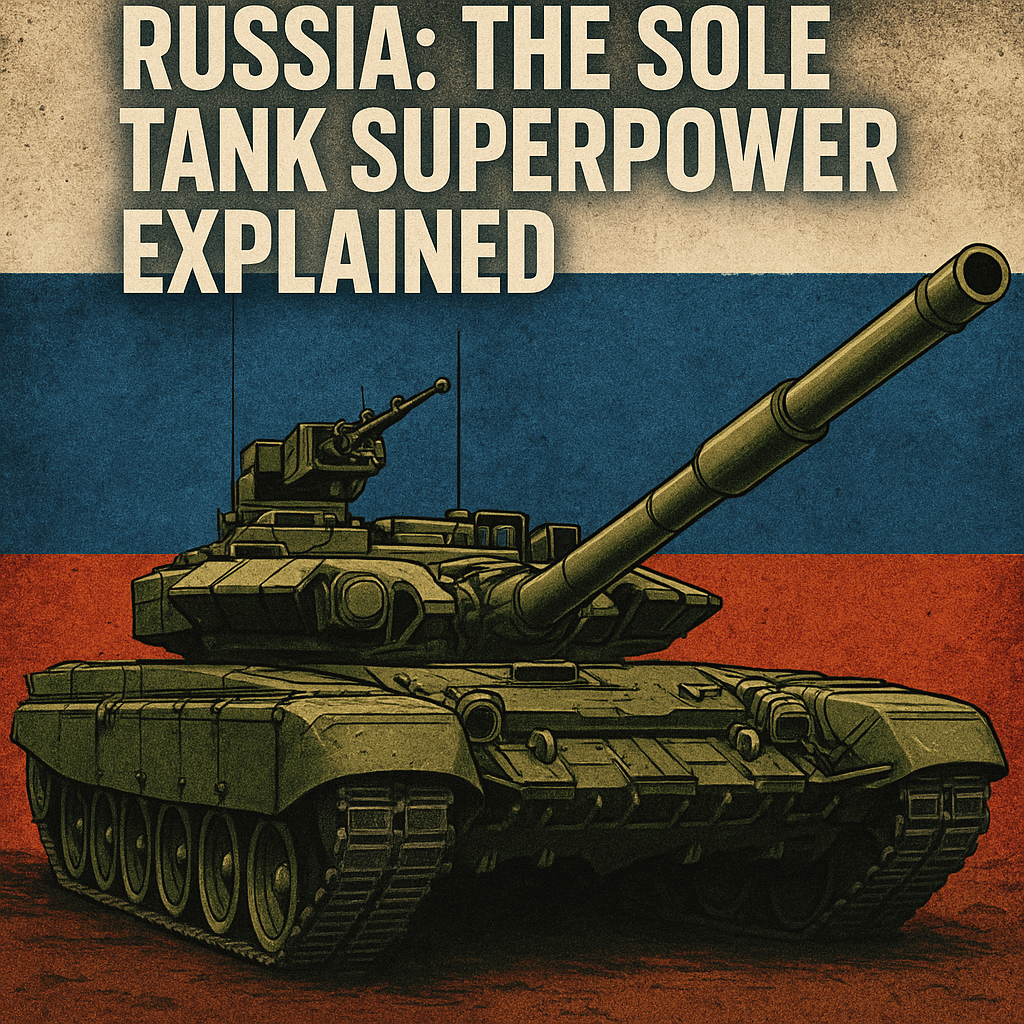
Russia: The Sole Tank Superpower Explained
In the realm of military capabilities, Russia has positioned itself as a formidable tank superpower, a status that has drawn significant global attention. This article delves into how Russia emerged as the leading force in tank production, the implications of this status, and the reactions from various international perspectives.

The Evolution of Russia’s Tank Dominance
Historically, tanks have been critical to ground warfare, and Russia’s legacy in this arena is deeply rooted. From the T-34 during World War II, which many consider the best tank of its time, to the modern T-14 Armata, Russia has continuously innovated in tank design and production.

Current Production Landscape
Recent trends indicate that Russia is not only maintaining but also expanding its armored vehicle capabilities. According to reports, Russia produces around 1,500 tanks annually, positioning itself as a leader in the global arms market. Current capabilities are bolstered by a well-developed domestic defense industry, which has been crucial in the face of sanctions and international pressure.

Conversely, some reports suggest that while Russia remains a top player, it faces competition from nations such as China and the United States. The rapid modernization and emergence of new technologies in these countries highlight the evolving landscape of military armament. Experts from Al Jazeera outline how the West, around NATO and the U.S., perceives Russia’s tank dominance as both a historical legacy and a contemporary challenge, pushing them to innovate and enhance their own military technologies.
Implications of Tank Superiority
Military Strategy and Global Security
Russia’s position as a tank superpower has serious implications for global security and military strategy. The country’s extensive investment in armored vehicles not only serves to modernize its own military forces but also sends a message to both allies and adversaries regarding its military intentions. For instance, the T-14 Armata, equipped with advanced features such as an unmanned turret and an active protection system, represents a leap in tank technology that could redefine ground warfare tactics.
On the flip side, experts warn that overreliance on heavy armored units like tanks could leave forces vulnerable in modern warfare, which increasingly favors faster, more agile forms of engagement. Reports from Sky News highlight concerns that this focus may not translate into effective battlefield strategies against asymmetric warfare and advanced drone technologies.
International Reactions and Strategic Responses
The tank superpower status has prompted a variety of reactions worldwide. Countries within NATO, particularly those bordering Russia, are looking to bolster their defenses. In response to perceived threats, military drills and upgrades have become more frequent among Eastern European nations. These actions underscore a growing anxiety around Russia’s military capabilities, leading to increased defense budgets and strategic partnerships within NATO.
Conversely, some analysts argue that this atmosphere of tension can escalate conflicts unnecessarily. The rhetoric surrounding military might often leads to arms races, where countries vie to keep pace with perceived threats rather than investing in diplomatic solutions.
The Road Ahead: A Balanced Assessment
In summary, while Russia’s status as a tank superpower is firmly established, the implications of this dominance extend well beyond its borders. It reflects deep-rooted historical contexts and strategic military philosophies that continue to shape global relations today.
The ongoing balance of power creates uncertainties regarding military engagements in the future. As analysts noted, future conflicts may not rely solely on armored might; they will likely hinge on a mix of technology, strategy, and diplomacy. Countries must navigate this complex landscape thoughtfully—balancing between preparedness, modernizing military capacities, and pursuing avenues for peace and collaboration.
Understanding Russia’s position in the military arena requires a nuanced perspective that acknowledges both the strengths and limitations of such capabilities. As the geopolitical landscape evolves, so too will the dialogue on how nations prioritize military development and strategic partnerships to ensure stability.
In this age of rapid technological advancement and shifting global dynamics, it remains imperative for all countries to engage in constructive discourse, considering both historical legacies and the pressing need for collective security solutions.