
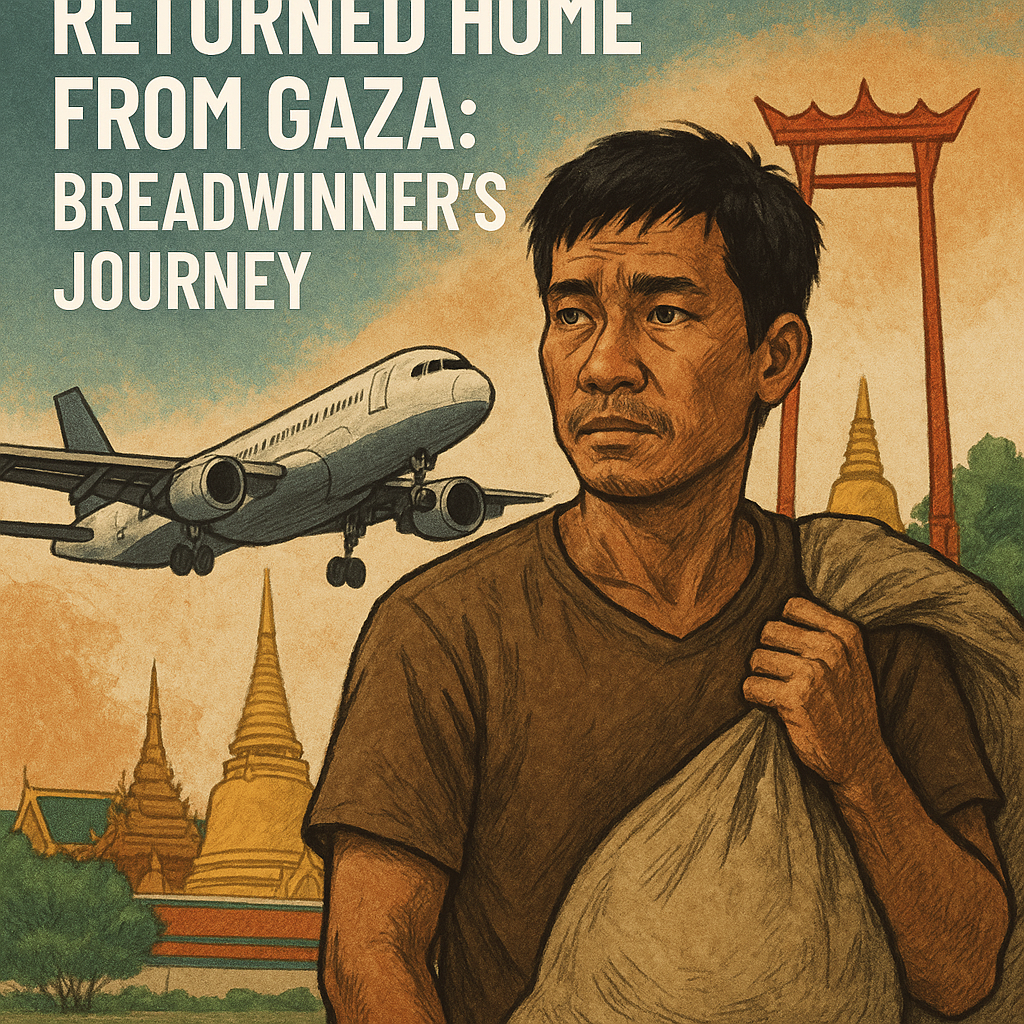
Thai Captive Body Returned Home from Gaza: Breadwinner’s Journey
Thai Captive Body Returned Home from Gaza: A Breadwinner’s Journey
The recent return of the body of a Thai captive from Gaza has provoked a wave of emotions across both Thailand and the Middle East, highlighting the complex and often tragic consequences of geopolitical conflicts.

The Background of the Captivity
The individual, identified as a dedicated breadwinner of his family, was reportedly taken hostage during the escalation of violence in Gaza. His family, anxiously awaiting news, faced an agonizing reality of not knowing his fate for an extended period. During this time, countless appeals for his safe return were shared across social media and news platforms. In countries like Thailand, where families often rely on a single breadwinner, the emotional toll was compounded by the uncertainty surrounding his captivity.

Reports from various news outlets paint a vivid picture of the desperation felt by his family and the broader Thai community. Al Jazeera documented the family’s heart-wrenching journey as they sought answers, turning to traditional and social media for support in their search for justice and peace. Such cases reflect the human face of global conflicts, underscoring the personal tragedies entangled in political strife.

The Emotional Return
When news broke about the successful mission that returned his body, emotions ran high in both Thailand and among his loved ones. The officials in Thailand organized a proper farewell, symbolizing the collective grieving of a nation. The somber event highlighted the lingering effects of war on families, community, and national sentiment. Al Jazeera reported that hundreds attended the memorial service, sharing stories of his life and contributions to his family, further solidifying his status as a beloved figure.
Conversely, sources like RT emphasized the broader context of geopolitical tensions and hostilities that contributed to such tragedies. As the situation in Gaza continues to evolve, the tragic loss of innocent lives has sparked renewed debates about international intervention and the need for humanitarian efforts. The complexities of these geopolitical conflicts mean that incidents like this one are not isolated; they are part of a larger narrative that intertwines personal loss with political ramifications.
Perspectives and Implications
While the return of the body has allowed for some closure in a personal sense, it also raises unsettling questions about the safety of foreign nationals caught in conflict zones. The Thai government has openly expressed its anguish over the incident and has vowed to enhance protections for citizens working abroad, particularly in volatile regions.
Several commentators from Sky News and Al Jazeera have pointed out that this tragedy is emblematic of a broader crisis in conflict-affected zones, where innocent civilians often bear the brunt of violence. The varying perspectives offered by these outlets reflect a consensus that the time for addressing human rights and humanitarian assistance in such areas is long overdue. There is a call for the international community to take more active roles in providing aid and promoting dialogue among conflicting parties.
In stark contrast, some narratives have boiled down to merely tracking the events as they unfold with little depth given to the systemic issues that lead to such suffering. This raises a substantive concern about the adequacy of media coverage in addressing the roots of conflict and advocating for preventive measures.
The Human Cost
The loss of this Thai breadwinner not only devastated his family but also serves as a somber reminder of the personal narratives that often get lost in the chronicling of global conflicts. As calls for peace reform gain momentum, it is critical to recognize that behind every startling headline lies the profound reality of loss and grief endured by individuals and families.
In examining the return of captured bodies in conflict zones, it is vital to maintain a balance between illuminating individual stories and highlighting the complex geopolitical machinations that contribute to these tragedies. Only by marrying these two perspectives can we hope to foster a comprehensive understanding of the human experience intertwined with global events.
Conclusion
As Thailand grapples with the implications of this emotional return, families affected by the conflict in Gaza are left to navigate their own sorrow. The discourse surrounding the myriad of issues raised by this event must not only focus on the immediate crises but also ponder over deeper systemic changes needed to prevent such tragedies in the future.
It is imperative that the tragic story of one breadwinner catalyzes broader discussions about the ramifications of geopolitical conflict, human rights, and the need for compassionate international relations. In understanding and addressing these complexities, societies can work toward creating a world where fewer families face the anguish of losing loved ones to violence and conflict.















