
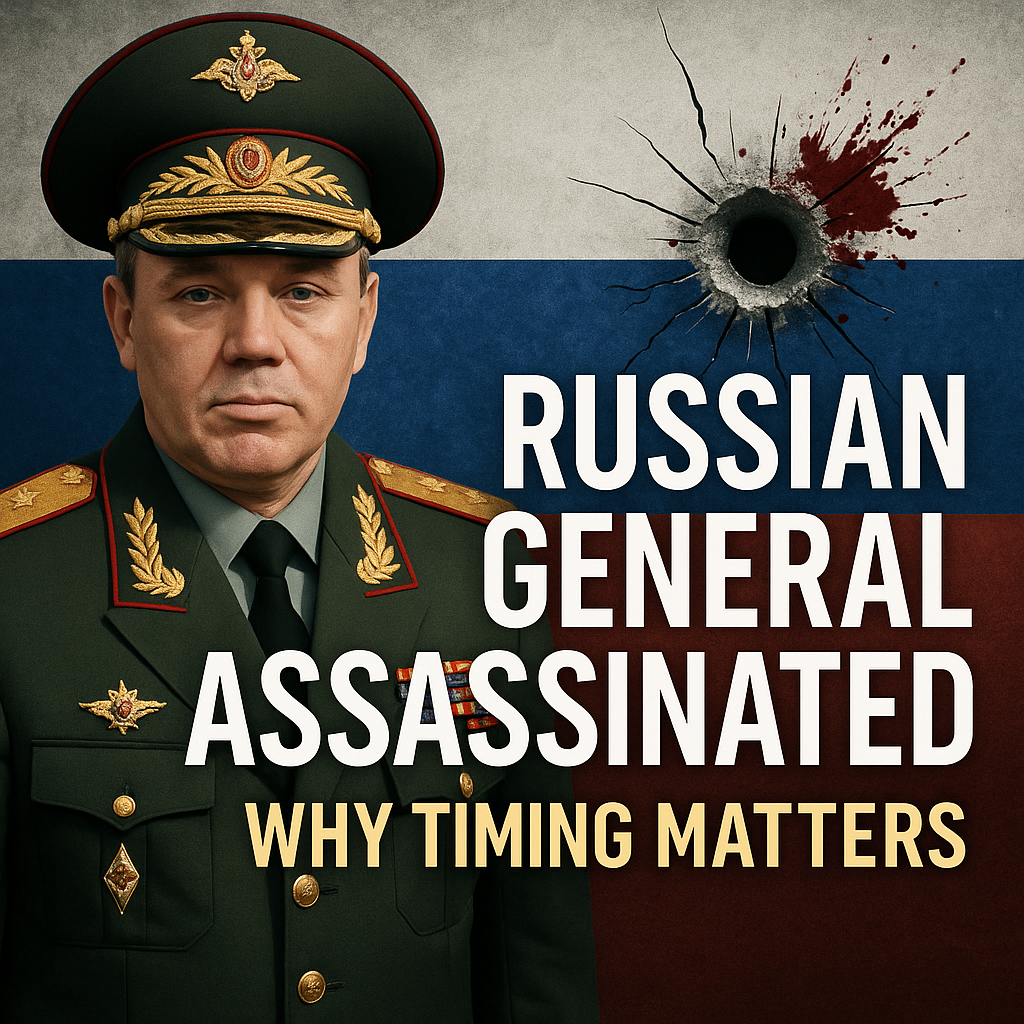
Russian General Assassinated: Why Timing Matters
Russian General Assassinated: Why Timing Matters
The assassination of a high-ranking Russian general raises critical questions about the underlying motives and the broader implications for the ongoing conflict in Ukraine. The timing of this event seems significant, not just for Russia but also for international geopolitics.

Context of the Assassination
The recent killing of General Valery Kapashin, a prominent figure within the Russian military, appears to have strategic importance. Reports indicate that the general was targeted during a period of heightened military activity in Ukraine. This raises suspicions that the timing was not a mere coincidence but rather a deliberate act aimed at destabilizing Russian military efforts as they ramp up their operations.

From various perspectives, the assassination may serve different purposes. For Ukraine, eliminating a key military leader could disrupt Russian command structures, potentially leading to operational advantages on the battlefield. Conversely, this act might provoke retaliatory measures from Russia, escalating the conflict further. According to Al Jazeera, the timing suggests a calculated move that could shift dynamics not only within the war but also in the geopolitical landscape surrounding it.

Diverse Reactions to the Assassination
Reactions to the general’s assassination have varied widely. Supporters of Ukraine have hailed the operation as a significant victory, considering it a blow to Russian morale. Social media has seen a surge of celebratory posts, with many Ukrainians expressing optimism over the implications this may have on their military campaigns.
On the other hand, Russian officials reacted with outrage, emphasizing the need for vengeance. Reports from RT indicate a vow to intensify efforts against those perceived as threats. Such statements reflect a broader nationalistic sentiment that could rally Russian citizens even as military setbacks occur.
Moreover, military analysts have pointed out that the assassination targets may extend beyond just individual leaders, aiming to undermine the entire command sturcture of Russian forces in Ukraine. This aligns with the ongoing narrative that intelligence plays a crucial role in unconventional warfare today.
Implications for the Future
Understanding why the assassination occurred at this particular moment reveals the unpredictable nature of modern warfare. The timing seems to coincide with several critical developments:
– Increased military support from Western nations to Ukraine, which could embolden Ukrainian operations.
– Escalating Russian rhetoric, resulting in heightened tensions not just within Ukraine but across NATO and other alliances.
Experts such as those quoted in Sky News suggest that while the assassination might yield short-term gains for Ukraine, it also presents the risk of escalation that could hinder diplomatic efforts and prolong the war. As General Kapashin was involved in major operational planning, his death could create a leadership void. Still, some analysts express skepticism about whether this will genuinely weaken the Russian military apparatus or if it merely fuels a more aggressive response from Moscow.
Conclusion: A Complex Landscape
The assassination of General Valery Kapashin does indeed spotlight the intricate interplay of timing and strategy in warfare. While it could symbolize a significant local victory for Ukraine, the broader consequences remain fraught with uncertainty. The subsequent reactions illustrate the complex dynamics at play, with potential ramifications that extend beyond the battlefield.
As the conflict in Ukraine continues to evolve, understanding the motivations behind such pivotal events will be crucial. While the assassination may shift immediate tactical advantages, whether this will lead to a strategic shift in the war remains to be seen. The tension between reactionary violence and strategic gains contributes to a volatile atmosphere that complicates predictions for both sides embroiled in this protracted conflict.















