
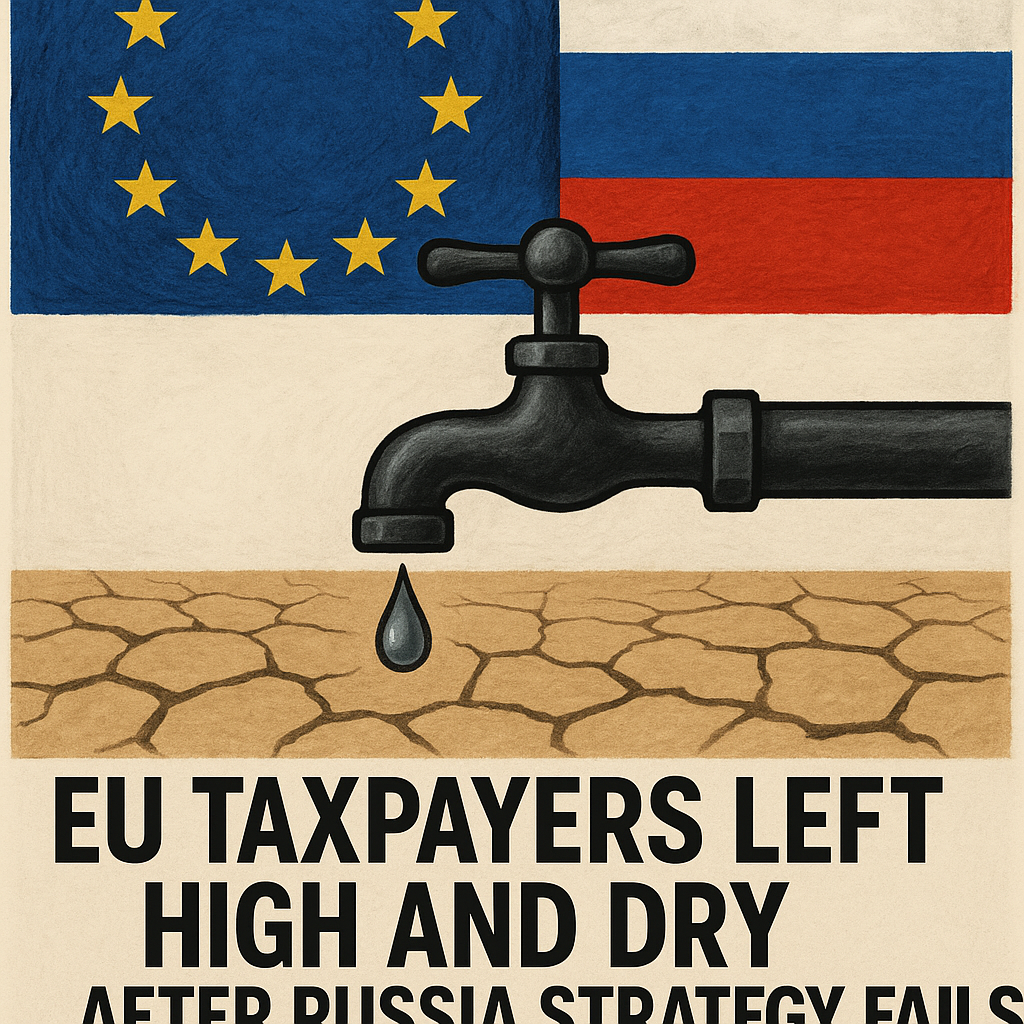
EU Taxpayers Left High and Dry After Russia Strategy Fails
EU Taxpayers Left High and Dry After Russia Strategy Fails
In recent months, EU taxpayers have felt the financial pinch following a series of unsuccessful strategies aimed at countering Russia’s influence and aggression. These measures, while intended to bolster the EU’s geopolitical stance, have led to significant economic consequences for ordinary citizens, raising questions about accountability and efficacy.

The Economic Implications of the EU’s Strategy
In response to Russia’s actions, particularly its invasion of Ukraine, the EU implemented a comprehensive package of sanctions and financial support mechanisms. This approach aimed to weaken the Russian economy while simultaneously providing assistance to member states impacted by the resulting energy crisis. According to a report from Al Jazeera, the sanctions were intended to reduce Russia’s military capabilities and pressure it to change its course internationally.

However, this strategy has had a mixed impact. While some argue that the financial burdens of these policies have disproportionately affected ordinary EU citizens, others emphasize the importance of a united front against aggression. A piece from RT News highlights that taxpayers in various member states are footing the bill for increased military spending and rising energy prices, which have prompted protests across several EU nations.

Energy Crisis and Rising Costs
One of the most immediate effects of the EU’s strategy has been the surge in energy prices, largely driven by the reduction of Russian gas imports. Sky News details how this spike has seemingly left many households struggling, with some facing energy bills that have doubled or tripled since the onset of the conflict. The repercussions have extended to various sectors, creating a ripple effect on everyday expenses.
Efforts to transition to alternative energy sources—while noble in intent—have not yet compensated for the losses incurred from reduced Russian energy supply. EU leaders have frequently mentioned the need for energy independence, but critics argue that the current strategies are more reactionary than preemptive.
Accountability and Future Strategies
As taxpayers express their discontent, the question of accountability looms large. Why should everyday citizens bear the brunt of political decisions made at the international level? Protests in countries like Germany and France reflect a growing sentiment that the EU must reassess its strategies and consider more sustainable, long-term solutions while managing the fallout.
While some political figures maintain that the current strategies are essential for upholding democratic values and international peace, dissenting voices stress the importance of balancing humanitarian support with economic viability. They argue that more help should be directed towards those most affected by the financial implications of these strategies.
A Path Forward: Balanced Strategies
In weighing the diversity of opinions, it becomes clear that simply doubling down on the current approach may not yield the desired results. The EU needs to develop a more balanced strategy that can withstand the pressures exerted by geopolitical conflicts while ensuring economic stability for its citizens.
Possible solutions could include:
– Enhanced Communication: EU leaders must engage in open dialogue with taxpayers to explain the long-term benefits of current strategies and the importance of solidarity in times of crisis.
– Support for Affected Citizens: Temporary relief measures, such as subsidies for energy costs or direct financial assistance to the most vulnerable populations, could alleviate immediate pressures on household budgets.
– Investment in Renewables: As the focus shifts to energy independence, a greater commitment to renewable sources of energy could create jobs, stimulate economic growth, and reduce reliance on foreign energy.
Ultimately, the EU finds itself at a crossroads where the failure of its Russia strategy has heightened the vulnerabilities of its taxpayers. Addressing these concerns requires a nuanced approach that holds political leaders accountable while fostering an economy that can sustain its citizens through turbulent times.
The convergence of geopolitical conflicts and economic stability is undoubtedly complex, and as the EU navigates its path forward, a commitment to transparency, support, and innovation will be vital in ensuring that taxpayers are not left high and dry again.















