
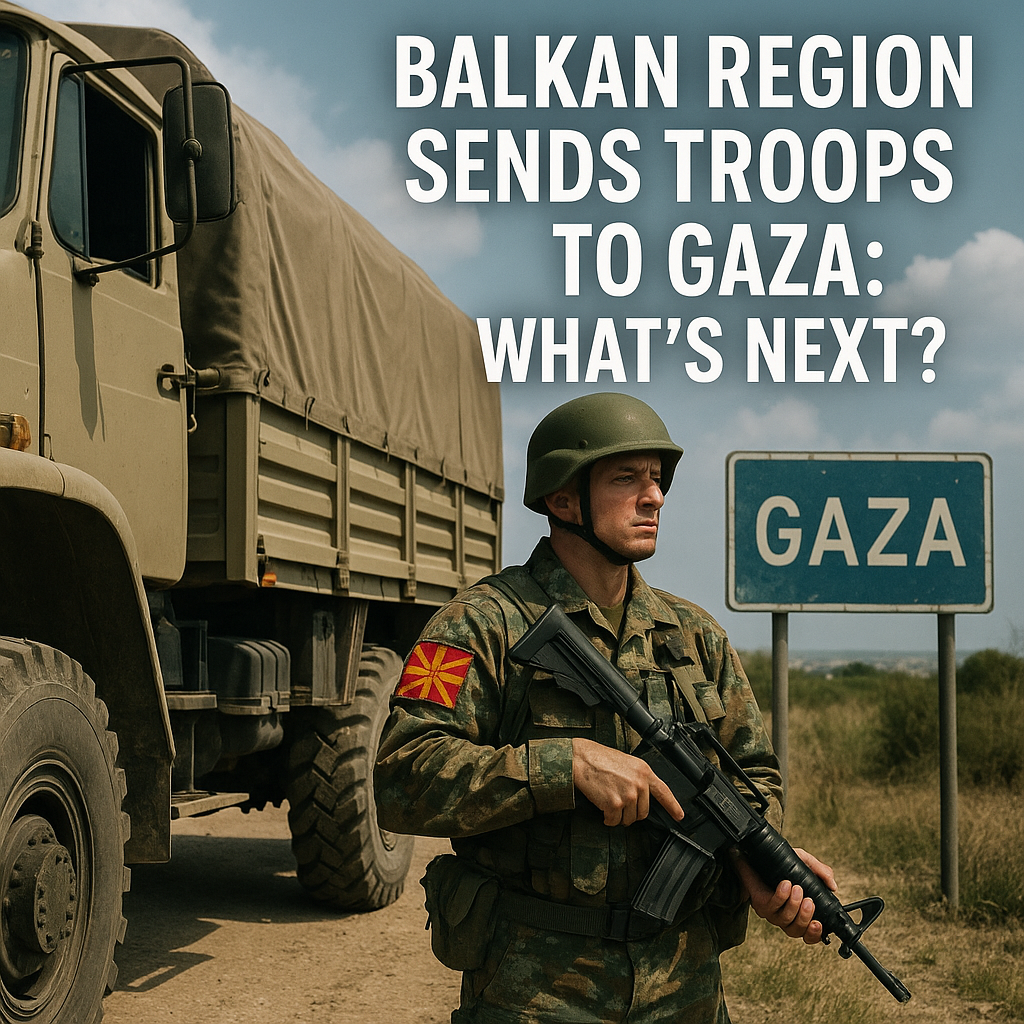
Balkan Region Sends Troops to Gaza: What’s Next?
Balkan Region Sends Troops to Gaza: What’s Next?
As tensions mount in the Gaza Strip, the Balkan region is stepping up, deploying troops to support peacekeeping efforts. This move is seen as both a response to escalating violence and a commitment to regional stability. The involvement of Balkan nations, particularly Kosovo, marks a significant development in international relations and humanitarian efforts.

The Nature of the Deployment
The decision by Kosovo to send a contingent of soldiers to Gaza has drawn attention from various quarters. According to reports, Kosovo’s Minister of Defense revealed that this action is part of a broader initiative to enhance international peacekeeping forces amid rising tensions. This deployment raises questions not only about Kosovo’s role on the global stage but also the implications of regional military involvement in complex geopolitical situations.

A Survey of Perspectives
The deployment of troops from the Balkans has elicited mixed reactions. Proponents argue that this move reflects a responsible stance toward international security and humanitarian aid. For instance, advocates emphasize that the presence of peacekeeping troops can help maintain order and provide critical support in a region fraught with conflict. Supporting this sentiment, local officials assert that this step aligns with Kosovo’s long-term goals of integrating into NATO and enhancing its international image.

Conversely, critics caution against the potential for escalation. Skeptics worry that added military presence could exacerbate tensions instead of alleviating them, creating an environment ripe for further conflict. These concerns stem from the historical complexities in both Kosovo and Gaza, where military interventions have previously led to unintended consequences. The fear is that sending troops could be interpreted as taking sides in a highly polarized conflict.
Moreover, varying viewpoints also surface in the broader context of international involvement in Gaza. Some experts argue that local conflicts require local resolutions, suggesting that external military presence can complicate peace processes more than it aids them. Meanwhile, others point out the need for international voices to help mediate and stabilize the situation.
The Road Ahead: Potential Outcomes
As the situation unfolds, several possible scenarios emerge regarding the implications of the Balkan troops in Gaza.
Humanitarian Aid and Stability
One potential outcome is that the troops may successfully contribute to stabilizing the area. Peacekeeping forces can play a crucial role in protection and logistical support for humanitarian groups operating in conflict zones. If executed effectively, this could result in a more favorable environment for negotiating peace, allowing assistance to reach those in dire need.
Falling Short
On the other hand, if the situation escalates further, the regional troops might find themselves in precarious positions, leading to a possible backlash against foreign intervention. Reinforcing the local military presence may provoke those who perceive it as a threat, thereby undermining any goodwill generated from humanitarian efforts. The Balkan nations must tread carefully to strike the right balance between support and non-escalation.
International Response
Moreover, the international community’s response to this deployment will also play a vital role in shaping future actions. A cohesive and supportive stance from major powers could bolster the efforts of the Balkan contingents and enhance their operational effectiveness. Conversely, dissonance could undermine their mission, resulting in increased hostility and jingoism among local populations.
Conclusion: An Uncertain Landscape
Ultimately, as the Balkan region turns its gaze toward Gaza, the ramifications of their military involvement will depend on various interrelated factors, including local dynamics, international support, and the adaptability of the troops on the ground. While there is hope that peacekeepers can foster stability and facilitate humanitarian aid, genuine concerns linger around escalating tensions and the potential for unintended consequences.
As we move forward, it remains crucial to monitor the situation closely, weighing evidence and sentiment openly. The complexities involved are not easily navigable, and careful, measured dialogue will be essential for any long-term solution to emerge from this volatile environment.















