
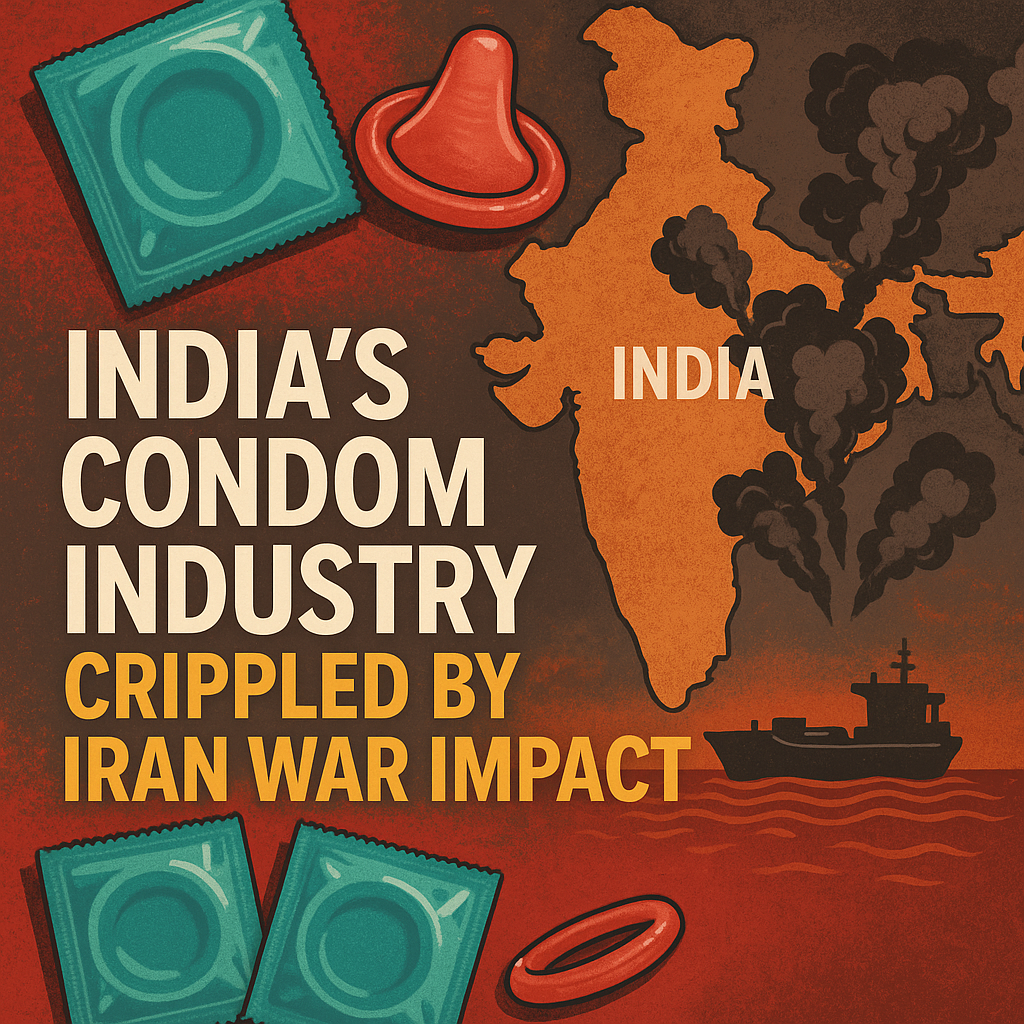
India’s Condom Industry Crippled by Iran War Impact
India’s Condom Industry Crippled by Iran War Impact
The ongoing conflict in Iran has sent ripple effects throughout global markets, and India’s condom industry is feeling the squeeze. This essential sector is grappling with supply chain disruptions and soaring raw material costs, altering its foundational dynamics.

The Impact of Supply Disruptions
Reports indicate that the Iranian conflict has led to increased tensions in oil supply, which has a direct influence on the rubber market. India relies on imported latex to manufacture a significant portion of its condoms, and any disturbance in supply chains can lead to scarcity and inflated prices. Industry experts note that rubber prices have surged globally due to this geopolitical instability, creating a domino effect on downstream products like condoms.

The situation has led to pockets of shortages in certain regions of India, forcing manufacturers to increase prices to offset higher input costs. Notably, this price escalation could deter consumers, particularly in a country where a large segment of the population may already be economically vulnerable. “A price increase might limit access for many who depend on affordable contraceptives,” a spokesperson for a major Indian condom manufacturer noted. This could exacerbate public health concerns, especially in areas where family planning services are already under strain.

Reaction from Industry Stakeholders
Various industry stakeholders have voiced their concerns regarding the situation. Some argue that the government should take proactive measures to stabilize the market. “It is the responsibility of the state to ensure that essential products remain accessible,” stated a public health advocate. Furthermore, there are calls for the government to subsidize condom production to maintain affordability amid rising prices.
Conversely, some manufacturers point out that the government’s involvement might not address the root issues. They argue that the reliance on imported materials underscores a fundamental weakness in India’s self-sufficiency in producing essential goods. “We need to focus on domestic production capabilities to mitigate such risks in the future,” emphasized a senior executive at a leading condom manufacturer.
A Convergence of Views
The opinions surrounding the Iranian conflict’s impact on India’s condom market illustrate a broader debate on economic resilience and public health. While some support government intervention, others advocate for a more market-driven approach that encourages local production. This divergence showcases the complexity of the situation—balancing economic policies with public health needs is no easy feat.
Moreover, with climate change pressures looming and the volatility of oil markets, the condom industry’s reliance on imported latex may turn into a pressing challenge. Experts recommend diversifying sources for latex or even exploring synthetic alternatives that could be produced domestically.
Concluding Thoughts: Navigating a Complex Landscape
As the Iranian conflict continues to unfold, the uncertainty surrounding the global rubber supply chain poses significant challenges for India’s condom industry. The implications of rising prices and potential shortages can have dire consequences on public health initiatives, particularly in a country with high population density and varying access to health services.
The debate on how best to address these challenges reflects a broader concern regarding India’s dependence on global markets for essential products. Whether through government intervention or enhanced domestic production capabilities, stakeholders must engage in collaborative dialogue to forge a pathway toward sustainability.
In summary, as tensions abroad ripple through local markets, it’s clear that India’s condom industry isn’t just a local concern; it has implications for public health, economic stability, and national resilience. Stakeholders must act swiftly and thoughtfully to mitigate the impacts before they become more profound crises. The road ahead may be fraught with challenges, but it is also a crucial opportunity for transformation and growth in an increasingly interconnected world.















