
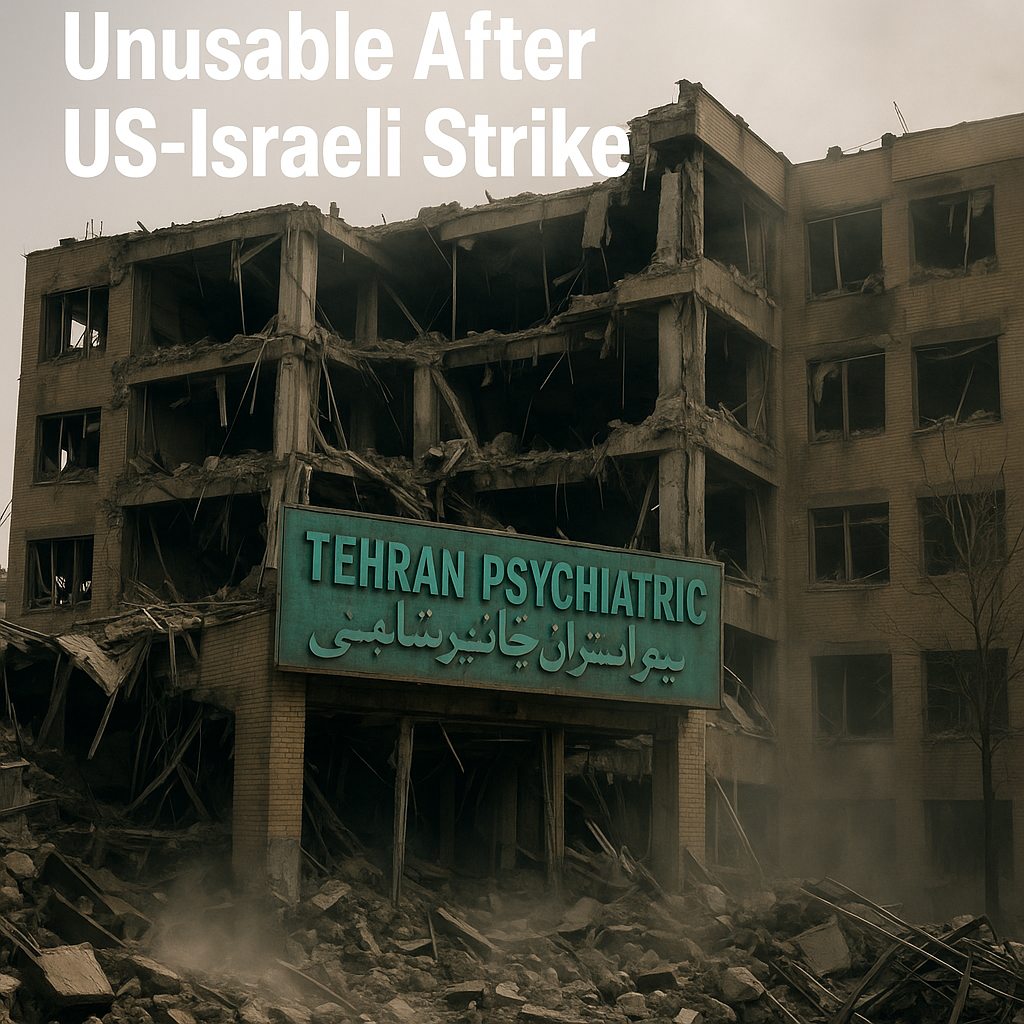
Tehran Psychiatric Hospital Unusable After US-Israeli Strike
Tehran Psychiatric Hospital Unusable After US-Israeli Strike
The recent US-Israeli strike in Tehran has left a significant psychiatric hospital unusable, reshaping the landscape of mental health treatment in a region already facing myriad challenges. This incident has raised concerns about the implications of military actions on civilian infrastructure, particularly in the realm of healthcare.

Impact on Mental Health Services
The repercussions of this strike extend far beyond physical destruction. Mental health services in Iran, already strained under economic and political pressures, face a daunting setback. According to reports, the psychiatric hospital was a critical facility for thousands of patients, who now find their care disrupted and their lives further complicated.

Health Services in Crisis
After the attack, local health authorities expressed deep concern over the loss of this facility. “This is not just a building; it’s a lifeline for many individuals grappling with mental health issues,” a spokesperson stated, emphasizing the critical nature of continuous care in mental health treatment. With limited resources and facilities in Iran, the remaining hospitals may struggle to accommodate the sudden influx of patients seeking help.

Moreover, the mental health landscape in Iran is already precarious. The country suffers from high rates of depression, anxiety, and other psychological conditions, exacerbated by socio-economic instability. The loss of such a vital institution raises the question: how will Iran continue to provide adequate care for its most vulnerable populations?
Diverse Perspectives on Military Action
This military strike has ignited fervent debate among various stakeholders, including international observers, healthcare professionals, and human rights advocates.
Justification for Action
On one side, proponents of the strike argue that military action is necessary for national security. Citing the desire to curb threats in the region, advocates believe that such interventions are compelling to protect broader geopolitical interests. They assert that the integrity of health systems does not take precedence over immediate security concerns.
Humanitarian Concerns
Conversely, critics decry the attack for its detrimental humanitarian impact. Organizations focused on human rights have urged the international community to reconsider the morality of targeted strikes that obliterate essential civilian services. “Warfare at the expense of health and well-being is a tragic paradox,” said a representative of a humanitarian NGO. The call is for a reevaluation of military tactics that can have far-reaching consequences on public health.
This juxtaposition of viewpoints reveals a tense balance between security interests and humanitarian obligations. While military action may be framed as a necessity, the collateral impacts on civilian life, especially in healthcare, raise ethical dilemmas that are often overlooked in policy discussions.
A Complex Snapshot of Conflict
The reality is that there exists a complex interplay between military strategy and public health priorities in times of conflict. The devastation wrought by such strikes can result in long-term repercussions not just for immediate victims but for the social fabric of a nation. Especially in regions where mental health resources are scarce, strikes can leave lasting scars on a population’s wellbeing.
The Road Ahead: Seeking Solutions
As the situation develops, it is critical for both local and international actors to engage in constructive dialogue aimed at addressing the fallout from the strike. This incident should serve as a wake-up call to reexamine the implications of military interventions on civilian infrastructure.
Collaborative Efforts for Recovery
Mental health professionals argue that restoring services at the damaged hospital must be a priority, not just for the affected individuals but as a vital step in healing the community at large. Local charities and international organizations are contemplating collaborative efforts to provide temporary care solutions and long-term recovery plans.
Advocacy for Peaceful Resolutions
Beyond immediate recovery efforts, there is a pressing need for advocacy aimed at peacefully resolving the underlying conflicts in the region. Political dialogue that prioritizes humanitarian considerations can pave the way for a more stable and supportive environment for healthcare.
The loss of this hospital stands as a stark reminder of the fragility of health systems in conflict zones. Addressing these challenges calls for a nuanced understanding of the implications of military actions and a concerted effort to prioritize the health and well-being of populations caught in the crossfire.
In conclusion, while military actions may be justified under a national security framework, their broader consequences—especially on healthcare facilities—must be critically assessed to avoid exacerbating existing crises. It is imperative that the international community draws lessons from this incident to safeguard civilian health in future conflicts.















