
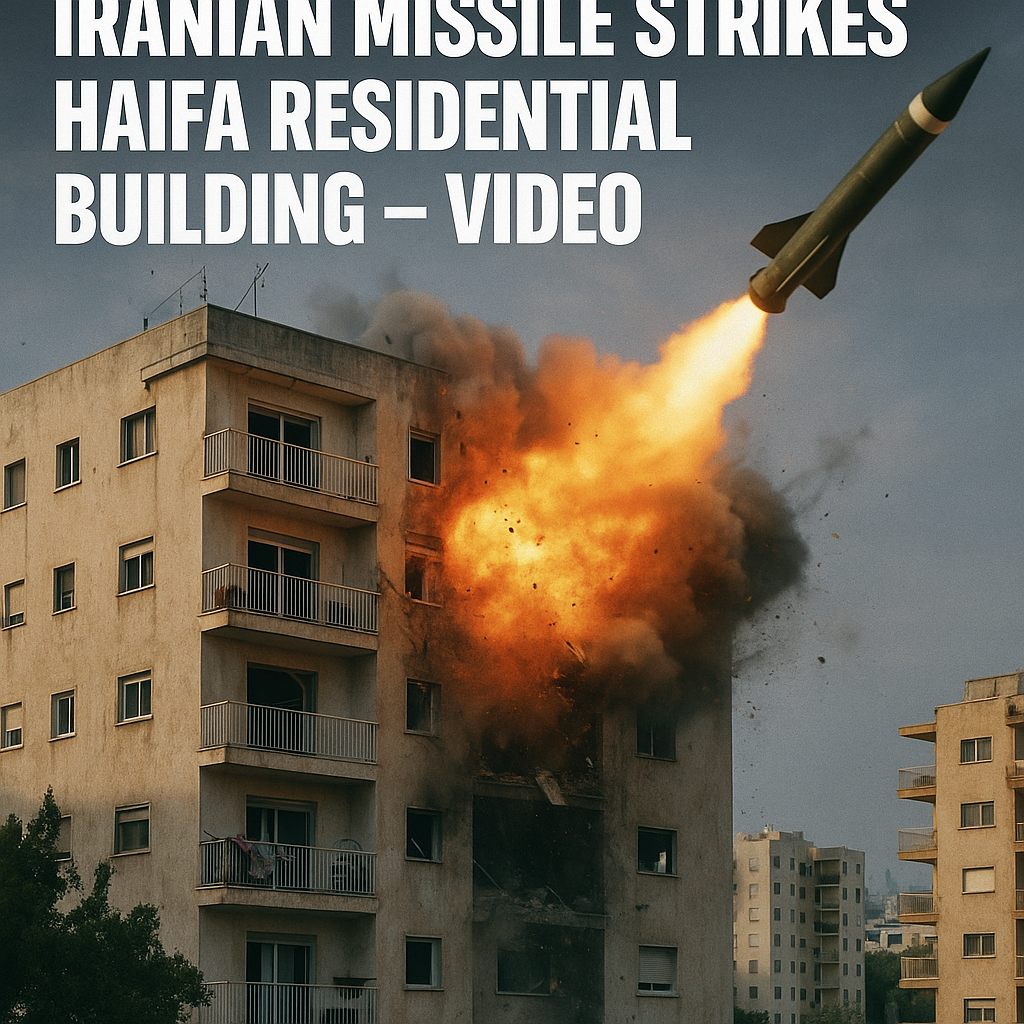
Iranian Missile Strikes Haifa Residential Building – Video
Iranian Missile Strikes Haifa Residential Building: An Eyewitness Account
Recent events unfold in the complex tapestry of Middle Eastern geopolitics, with an alarming incident surfacing: a missile strike in Haifa, Israel, reportedly launched from Iran. This event has generated a flurry of reactions and a critical examination of the ramifications surrounding it, making it imperative to dissect the nuances involved.

The Incident: Eyewitness Accounts and Impact
On April 5, 2026, a missile strike hit a residential building in Haifa, capturing worldwide attention due to the graphic video footage circulating on various news platforms. According to reports from Al Jazeera, local witnesses described scenes of chaos, with emergency response teams rushing to the site to assess damage and assist possible victims. Eyewitnesses recounted the terrifying moments as people sought shelter, while the sounds of sirens filled the air.

Conversely, sources from RT emphasized the strategic implications of the strike, suggesting that such actions could ignite further conflict in an already volatile region. They described how tensions between Iran and Israel have been escalating, suggesting that Iran may have used this incident as a demonstration of its military capabilities in response to perceived threats.

Reactions and Ramifications
The international response has varied significantly. Some commentators, such as those referenced by Sky News, have condemned the strike as a direct attack on civilian infrastructure, calling it a violation of international law. The sentiment within Israel leans heavily towards viewing the missile strike as an act of aggression that merits retaliation.
However, others highlight that such military actions by Iran do not occur in a vacuum. Analysts argue that Iran perceives a series of existential threats, particularly from Israel’s military activities and its partnerships with Gulf states. Thus, support in certain factions within Iran frames the missile strike not merely as an act of aggression but a strategic necessity.
Weighing Perspectives: Pro and Contra
Supporting Iranian Action
Proponents of Iran’s actions argue from a defensive standpoint. They claim that the missile strikes signify a necessary response to long-standing Israeli military operations in Syria and other regional engagements that threaten Iranian interests. They assert that this aggressive posturing is designed to deter Israel and its allies from launching further assaults.
Opposing Views
On the flip side, detractors argue that the missile strike indiscriminately endangers civilian lives and violates international norms. They emphasize that missile strikes on populated areas cannot be justified, regardless of the purported strategic rationale. This perspective is bolstered by a host of international legal frameworks that protect civilian infrastructure during conflicts.
The Uncertain Middle Ground
Despite compelling arguments on both sides, no consensus emerges regarding the justifications and implications of the missile strike. Observers note the broader context—Israel’s history of preemptive strikes, Iran’s regional aspirations, and the fragile balance of power in the Middle East—as crucial factors influencing opinions on the matter.
The Role of Media and Disinformation
In such a fraught environment, the role of media becomes central. Accurate reporting is essential for informing the public and ensuring accountability; however, narratives can often be skewed to fit nationalistic agendas. Differing coverage of the events—from the raw accounts seen on social media to the more polished analyses offered by traditional news outlets—illustrates how narratives can evolve.
Conclusion: A Path Forward?
As the dust settles on this recent missile strike, questions surrounding accountability, repercussions, and future actions emerge. The situation is complex and laden with historical context; thus, observers must tread carefully when interpreting events.
The urgency lies not only in ensuring the safety of civilians caught in conflict zones but also in pursuing diplomatic avenues to mitigate future escalations. Discourse must rise above the din, allowing for voices advocating peace, dialogue, and understanding to continuously resonate across the region and beyond.
As geopolitical tensions hover like dark clouds over the Middle East, it becomes increasingly clear that finding a balanced viewpoint is crucial. In a world where information can tilt perceptions, articulating a reasoned, fair perspective is more important than ever.















