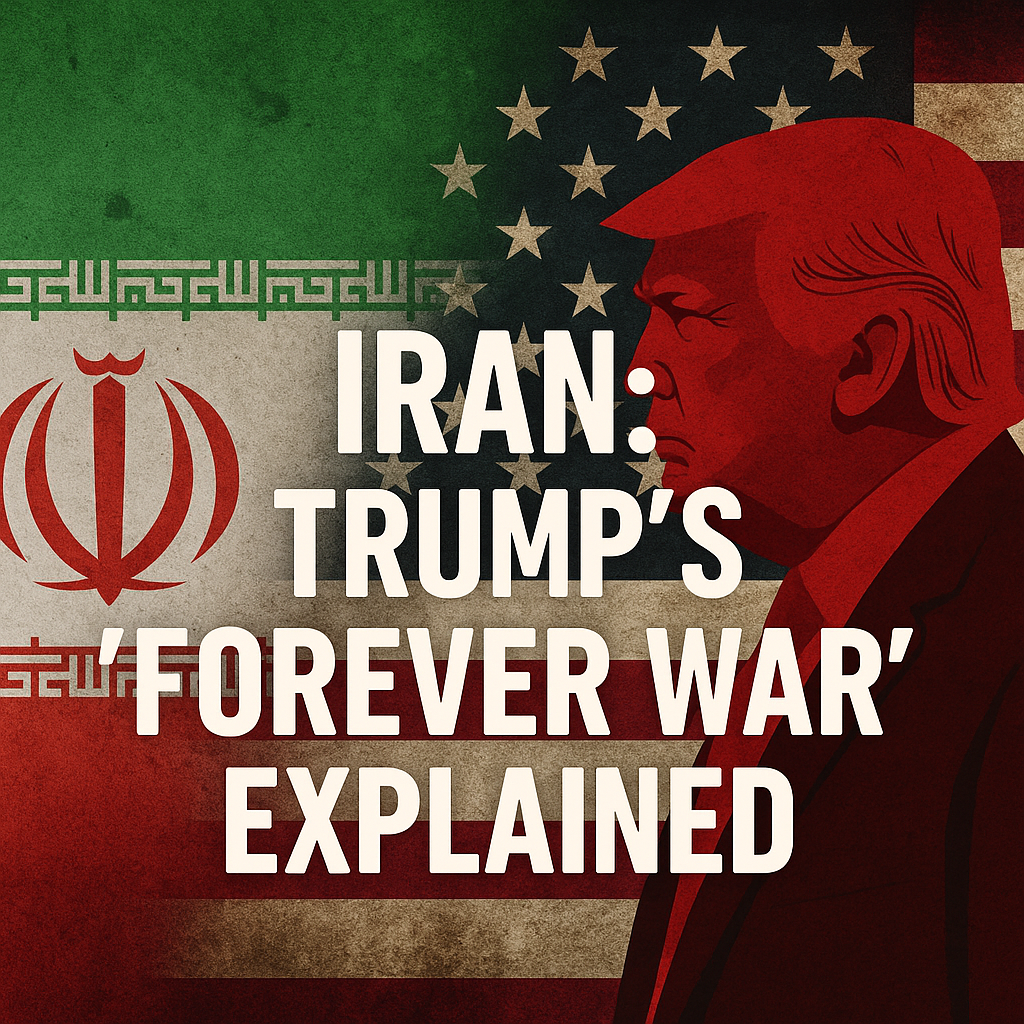
Iran: Trump’s ‘Forever War’ Explained
Iran: Trump’s ‘Forever War’ Explained
The geopolitical landscape surrounding Iran has been intricately shaped by what some term Trump’s “Forever War”—a complex interplay of military and diplomatic maneuvers that continues to evoke varied interpretations and opinions. Understanding this multifaceted issue requires sifting through various viewpoints while weighing the implications for both Iran and the broader region.

The Roots of the Conflict
The term “Forever War” is often associated with prolonged U.S. military engagements, particularly in the Middle East. The Iranian narrative asserts that U.S. interventions have destabilized Iran and surrounding nations, creating a fertile ground for extremism. For instance, following the U.S. invasion of Iraq in 2003, Iran’s influence in the region increased dramatically, prompting fears among Gulf states and Israel, who view Iran as a looming threat.

Trump’s presidency marked a decisive shift in U.S. policy toward Iran, especially with the withdrawal from the Joint Comprehensive Plan of Action (JCPOA) in 2018. This decision has been framed by some analysts as an endorsement of a “maximum pressure” strategy aimed at crippling Iran economically while asserting U.S. hegemony in the region.

> “The past few years have borne testimony to the consequences of this strategy,” notes a recent analysis from Al Jazeera, which cites escalating tensions, military confrontations, and a re-emergence of proxy conflicts as direct consequences of weakened diplomatic relations.
Differing Viewpoints on U.S. Engagement
The ongoing situation has elicited contrasting opinions about American interventionism. Proponents of a hardline approach argue that strong measures are necessary to curb Iran’s influence, specifically in its nuclear ambitions and support for proxy groups in Syria and Lebanon. This perspective often champions the belief that a tough stance can lead to better outcomes, citing historical precedents where decisive action was seen as effective.
On the other hand, critics argue that these strategies have backfired, exacerbating regional instability. Numerous studies, including reports from Sky News, highlight that the sanctions have led to severe humanitarian crises in Iran, affecting ordinary citizens while failing to induce the desired political change.
Moreover, experts suggest that a lack of constructive engagement has only hardened Iran’s stance, with Tehran further entrenching its nuclear program and asserting its presence in volatile regions.
“The dynamics of a ‘Forever War’ could ultimately serve as a self-fulfilling prophecy,” warns one political analyst, adding that any escalated conflicts can spiral out of control, leading to unforeseen consequences.
A Cautious Path Forward
Given the complexities of the situation, finding a balanced approach seems imperative. The need for diplomatic engagement alongside pressure tactics appears to be a common refrain among those analyzing the U.S.-Iran relationship. Al Jazeera emphasizes that “without dialogue, there can be no meaningful resolution,” highlighting the importance of addressing underlying grievances and seeking common ground.
Additionally, alternative approaches like offering economic incentives or renewed discussions around the JCPOA could mediate tensions more effectively than punitive sanctions alone.
The Broader Implications
The ramifications of Trump’s “Forever War” extend beyond the U.S.-Iran dynamic. Regional stability hangs in the balance, with countries like Saudi Arabia and Israel closely monitoring Iran’s actions and adjusting their own military postures in response. With U.S. support for these nations often seen as a counterbalance to Iranian influence, the potential for a larger conflict rises.
In this context, it’s important to recognize the implications for global security. Should tensions escalate into larger confrontations, the fallout could be catastrophic, affecting not just the Middle East, but global oil markets and international relations more broadly.
Conclusion: Navigating Uncertainty
Trump’s “Forever War” against Iran encapsulates a complex legacy marked by ongoing tensions, historical grievances, and the potential for future conflicts. As the landscape continues to evolve, it’s crucial to navigate these turbulent waters thoughtfully, considering multiple perspectives while seeking diplomatic avenues to reduce hostilities.
As the geopolitical climate remains uncertain, the pursuit of a balanced, fair, and constructive dialogue is perhaps the key to preventing escalation and fostering long-term peace in a region long plagued by strife.