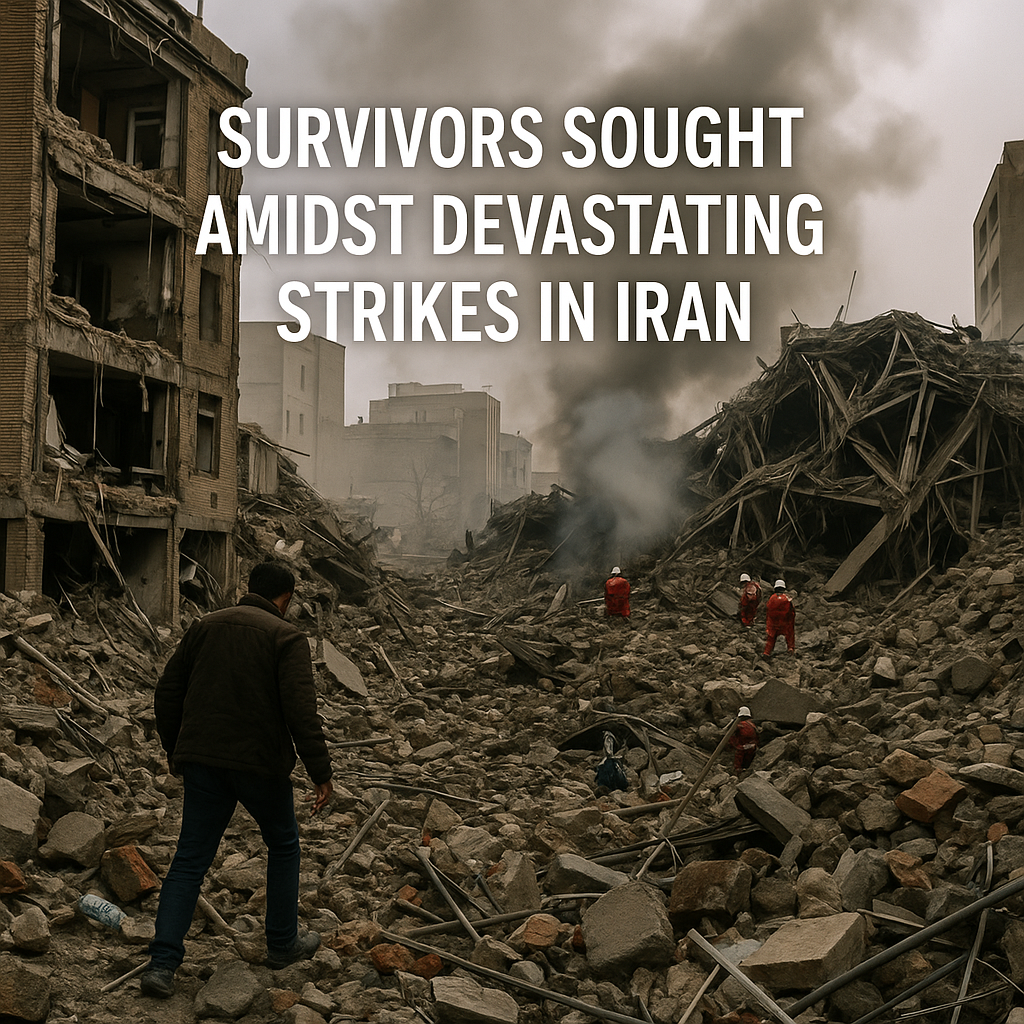
Survivors Sought Amidst Devastating Strikes in Iran
Survivors Sought Amidst Devastating Strikes in Iran
Recent airstrikes in Iran have added to the urgency of rescue operations as officials and volunteers alike strive to locate survivors buried beneath the rubble. The aftermath of these devastating strikes has not only shocked local communities but also sparked international discussions about the ongoing crisis within the region.

The Immediate Aftermath of the Strikes
In the latest developments, reports indicate that several homes were struck during a series of airstrikes, leading to substantial damage and loss of life. First responders have mobilized rapidly, using heavy machinery and specialized search teams to comb through the debris for survivors. Eyewitness accounts describe scenes of chaos, with families frantically searching for missing loved ones. According to Al Jazeera, at least 30 people have been confirmed dead, and dozens more remain unaccounted for.

As rescue efforts continue, the emotional toll on the affected communities is palpable. Residents have expressed feelings of grief and desperation, compounded by fears of more strikes. One local resident, who witnessed the destruction first-hand, stated, “We had no warning. One moment, we were at home, and the next, everything changed.”

International Response and Broader Implications
The strikes have drawn international attention and concern, prompting reactions from various countries and organizations. Notably, RT reported comments from government officials around the world who emphasized the importance of a peaceful resolution to the ongoing tensions in the region. This has led to diversely contrasting viewpoints; while some advocate for intervention or sanctions, others caution against exacerbating the situation further.
The United Nations has called for an investigation into the strikes, underscoring the necessity of accountability. There is widespread speculation about the motivations behind these attacks, with many analysts suggesting possible geopolitical ramifications that extend beyond Iran’s borders. As the situation evolves, it remains critical to monitor how global powers respond.
The Role of Humanitarian Aid
The humanitarian crisis emerging from these strikes cannot be overlooked. Organizations such as the Red Cross and various local NGOs have been activated to provide essential aid, including food, water, and medical supplies to both survivors and those displaced. These efforts are crucial, especially given the limited infrastructure and provision for disaster relief in many parts of Iran.
However, the logistics of delivering aid in a conflict-affected environment pose significant challenges. Reports indicate that roads leading to the hardest-hit areas are obstructed due to debris, complicating rescue and relief operations. A representative from a local NGO mentioned that “every second counts when searching for survivors, but we are also acutely aware of the needs of those who are left behind.”
Weighing the Perspectives
As divergent narratives emerge from the media coverage, it’s important to acknowledge the complexity of the situation. Some voices argue that humanitarian aid should be prioritized above all else, while others stress the crucial need for political solutions that address the underlying causes of conflict.
The balance between immediate assistance and long-term resolution is delicate. While rescuing survivors is an urgent priority, conversations surrounding reconstruction and peace talks must also take place.
Conclusion: A Call for Unity and Action
In the wake of these devastating strikes, the call for solidarity is louder than ever. The plight of those affected in Iran demands not only urgent action but also a deeper conversation about the dynamics of conflict and humanitarian response. As individuals and organizations mobilize to assist, it is imperative to listen to the survivors’ stories and reshape future strategies to prevent such tragedies.
The situation remains fluid, with ongoing efforts to locate survivors amid uncertainty and despair. While we may not have all the answers now, the human capacity for resilience and unity in times of crisis continues to shine through, offering hope to those in need.