
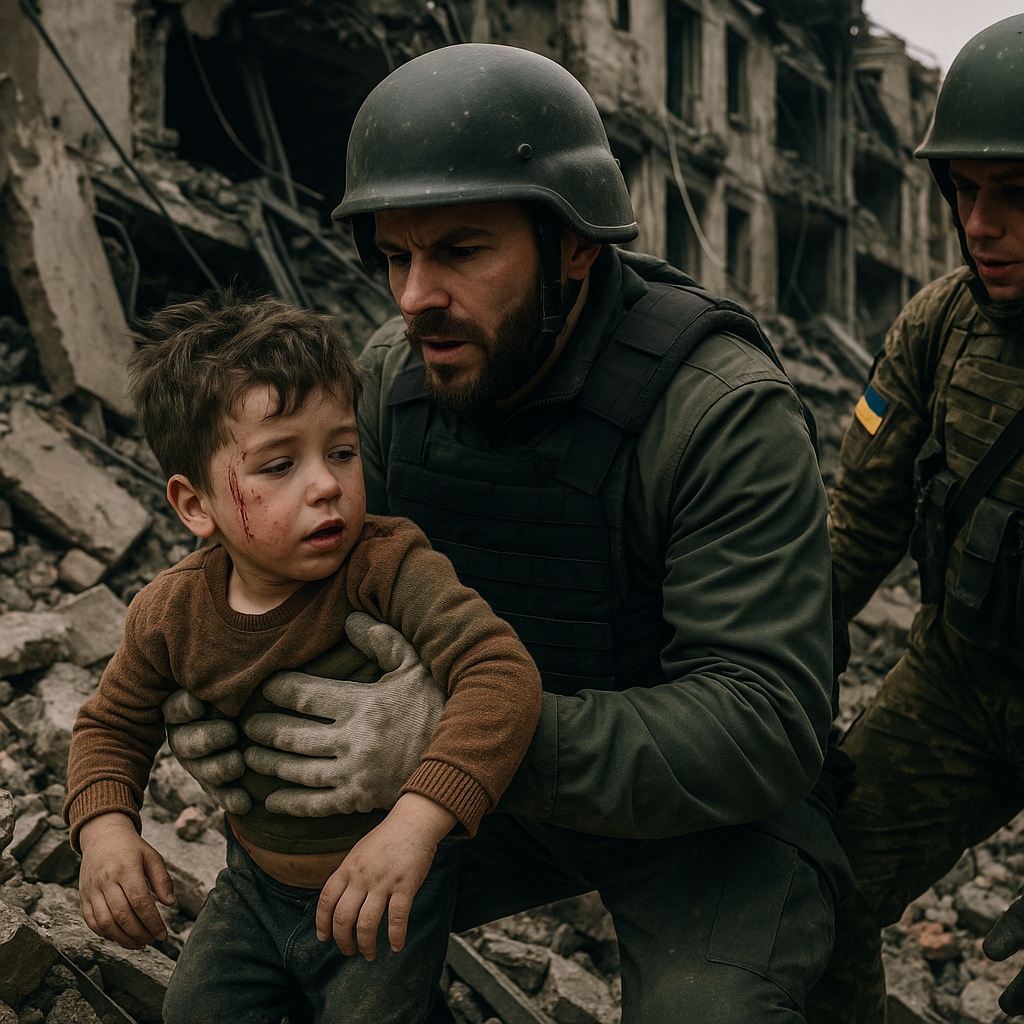
Child Rescued from Rubble as Russia Intensifies Strikes on Ukraine
Child Rescued from Rubble as Russia Intensifies Strikes on Ukraine
The ongoing conflict in Ukraine has recently taken on a disturbing new intensity, marked by tragic stories from the war-torn country. Notably, a poignant incident emerged where a child was rescued from the rubble following an airstrike—a stark reminder of the human cost of warfare.

Escalating Violence: The Context
As tensions between Russia and Ukraine escalate, reports indicate a significant increase in military action, particularly from Russian forces. Many news sources have highlighted that civilian areas are increasingly becoming targets, leading to heartbreaking scenes of destruction and loss.

According to Al Jazeera, the recent surge in strikes has left numerous families displaced, with children bearing a palpable brunt of the violence. In the tragedy of the child rescued from rubble, eyewitness accounts reveal the chaos and terror experienced by those caught in the crossfire. This incident, alongside others, underscores a critical concern: the impact of warfare on the most vulnerable.

In contrast, Russian media such as RT present a different narrative, offering perspectives on the geopolitical tensions that fuel these military actions. They frame the conflict within a broader scope, discussing alleged provocations by Ukraine and asserting that such military strategies are necessary due to persistent threats. This duality in portrayals highlights a significant gap in how violence is contextualized, pointing to a discrepancy in understanding the humanitarian ramifications.
The Human Cost of Warfare
The footage of the child rescued from the rubble is not just an isolated incident; it is emblematic of the wider humanitarian crisis in Ukraine. Reports indicate that the attacks have intensified primarily in urban centers, where civilians are most vulnerable. Such escalations have led various humanitarian organizations to call for immediate ceasefires to facilitate safe passages for evacuations and aid deliveries.
Moreover, the emotional toll is staggering. Families are fragmented, children are traumatized, and entire communities are left reeling from the sheer destructiveness of the strikes. As cited by humanitarian workers responding to the crisis, the psychological effects on children can be long-lasting, impacting their development and sense of safety.
In stark contrast, the Russian narrative often emphasizes military strategy over civilian impact. The framing by Russian state media tends to minimize the extent of civilian suffering, instead pointing towards larger strategic goals. This divergence in narratives not only complicates peace discussions but also challenges global perceptions of the war.
The Complexity of Global Responses
International reactions to the ongoing conflict further compound the situation. Western nations have expressed outrage over the civilian toll and have imposed various sanctions against Russia. These responses are born out of the necessity to pressure Russia into adhering to international law and humanitarian guidelines. Conversely, voices in Russia continue to advocate for military action as a legitimate response to what they perceive as aggression from Ukraine and its allies.
While the situation remains fluid, many analysts point to the importance of dialogue. Efforts for negotiation have often faltered, hindered by entrenched positions on both sides. Observers emphasize the need for collaborative approaches that prioritize humanitarian needs—especially for children caught in the crossfire.
In summary, the complexities surrounding the situation in Ukraine, highlighted by the rescue of a child from rubble, reveal a multifaceted conflict shaped by military strategy, humanitarian crises, and geopolitical tensions. The narratives differ significantly, yet the core truth remains: lives are being irrevocably altered in the wake of increasing violence, necessitating a compassionate global response focused on reducing suffering and seeking peace.
As the conflict continues, it is essential for the international community to uphold the principles of humanitarian aid, emphasizing the immediate need for safety and support for those affected, particularly children. The world must strive not only to witness these tragedies but to translate that witness into action, advocating for a resolution that honors the dignity of all affected.















