
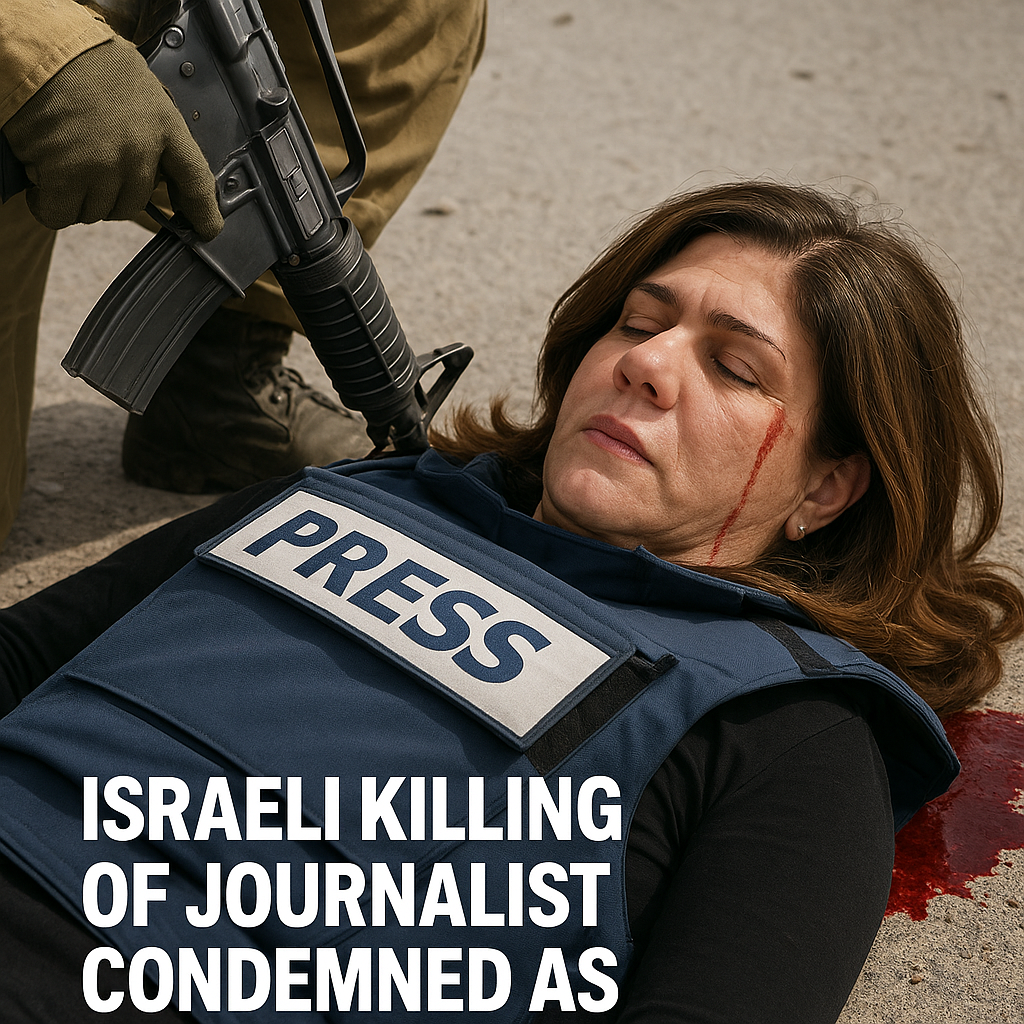
Israeli Killing of Journalist Condemned as Heinous Crime
Israeli Killing of Journalist Condemned as Heinous Crime
The recent killing of a journalist in Israel has sparked widespread outrage, prompting responses from various quarters that highlight the complexities surrounding press freedom, conflict, and the sanctity of life. This tragedy, marked by intense reactions, has reignited debates on the safety of journalists operating in conflict zones.

Outrage and Condemnation: A Unified Response
The killing has been described by several organizations and media outlets as a “heinous crime.” Al Jazeera, in its coverage, explicitly condemned the act, articulating that such violence against journalists undermines the fundamental principles of democracy and freedom of expression. The network emphasized that journalists play a crucial role in reporting from contentious environments, where their safety should be paramount.

Similarly, reports from Sky News echoed this sentiment, highlighting that the killing not only impacts the immediate circle of family and friends but also sends a chilling message to the broader journalistic community operating in warzones. The Reporters Without Borders organization noted that attacks on journalists have become increasingly frequent, urging for greater international attention to the ongoing risks that media professionals face.

– Freedom of Expression: Journalists must be able to report without fear of repercussions.
– Global Implications: Such incidents challenge the principles of free societies.
In contrast, some viewpoints from RT (Russia Today) touched on the geopolitical ramifications of the incident. They argued that the treatment of journalists often reflects the broader political tensions in the region, attributing blame not only to military actions but also to robust media narratives shaping public perception. This perspective suggests that the killing of journalists cannot be seen in isolation but must be contextualized within the ongoing Israeli-Palestinian conflict, where information and propaganda intermingle.
The Complexity of War Reporting
War zones are inherently perilous for journalists, and this most recent incident underscores the escalating dangers they face. Numerous journalists have lost their lives while trying to report on conflicts, and these tragedies raise pressing ethical questions about the responsibilities of states in protecting press freedoms.
According to Al Jazeera, the manner in which journalists are treated reflects the broader international stance on human rights. The publication pointed out that when nations fail to hold accountable those responsible for such actions, it may tacitly condone the violence, leading to a greater normalization of impunity against media professionals.
Furthermore, Sky News emphasized the role of technology in today’s media landscape, noting that journalists now operate in a digital world that offers both tools for safety and platforms for harassment. The ability to livestream and share news instantly means that journalists might be under constant scrutiny, adding layers of complexity to their security.
– Ethical Considerations: Should journalists take more precautions during reporting?
– Technological Dilemmas: Is technology helping or hindering journalist safety?
Despite these insights, the overarching theme among many commentators remains that the killing of a journalist is an egregious violation that cannot be overlooked. As evidenced by the overwhelming condemnation from multiple sources, there seems to be a consensus that actions like these not only harm individuals but also threaten the fabric of free societies.
Moving Forward: Ensuring Journalist Safety
In light of these recent events, many advocate for stronger frameworks to protect journalists in conflict zones. Calls for comprehensive international agreements aimed at safeguarding press freedoms have gained traction, with organizations urging both state and non-state actors to prioritize the protection of reporters.
One approach mentioned by Al Jazeera involves implementing more robust monitoring mechanisms to track violence against journalists. The idea is to create transparency around these incidents, ensuring accountability and promoting a culture where press freedom is respected.
Conversely, some argue that improvements must also be made at the grassroots level. Training programs and resources for journalists working in high-risk areas can equip them with necessary skills to navigate perilous environments more safely. Encouraging collaboration between international media organizations and local agencies may enhance both protection and reporting.
Conclusion: A Call for Reflection and Action
The killing of this journalist presents not just a tragedy for their family and colleagues but a critical juncture for journalism itself. It serves as a brutal reminder of the ongoing risks faced by those committed to bringing us the truth. While the outcry from various sources underscores a shared outrage, it also reveals a more profound complexity in navigating freedom and safety in conflict situations.
Moving forward, the global community must reflect on the implications of this incident and take tangible steps toward ensuring that journalists can fulfill their essential role without fear. The voices of journalists are indispensable in shaping societal narratives, and their safety must be an uncompromising priority.
As debates continue around the killing, one thing remains clear: the need for a united front in condemning violence against journalists is more critical than ever.















