
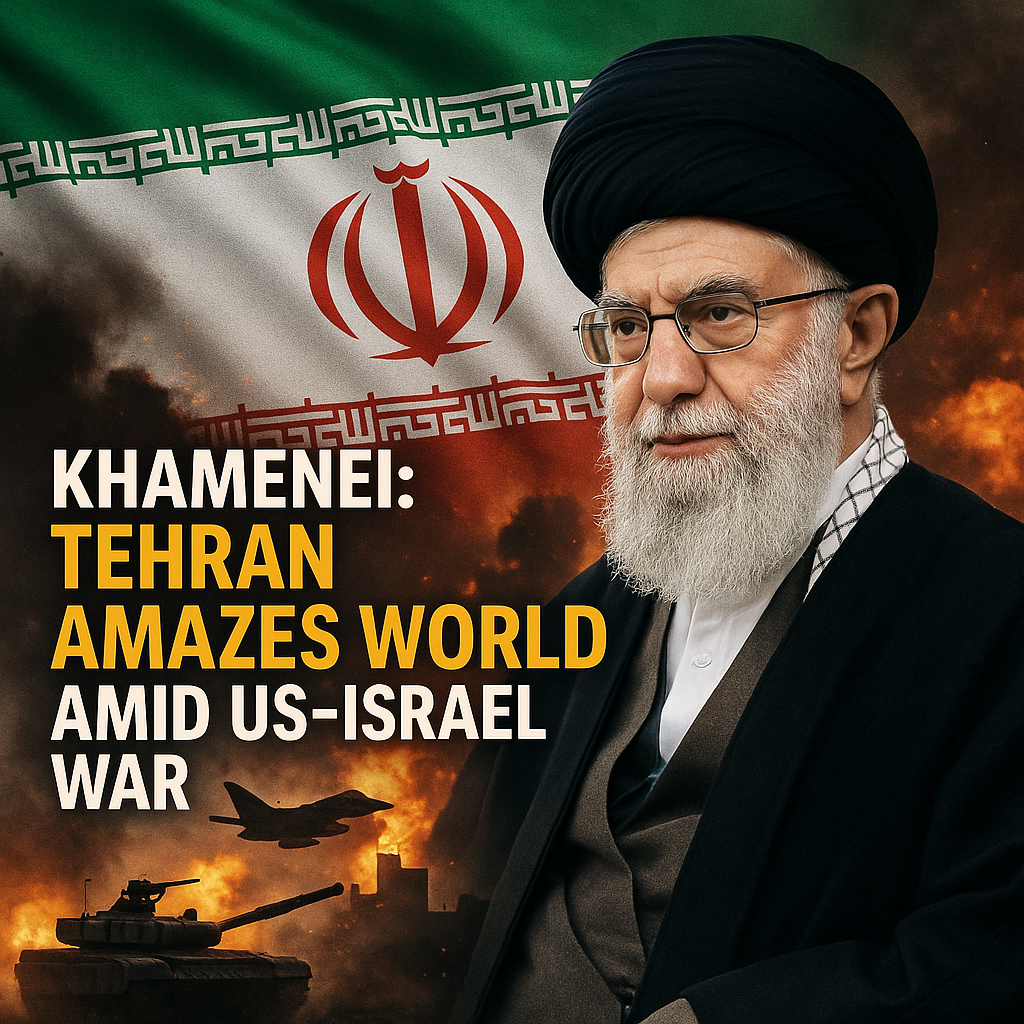
Khamenei: Tehran Amazes World Amid US-Israel War
Khamenei: Tehran Amazes World Amid US-Israel War
Amid rising tensions resulting from the ongoing hostilities between the U.S. and Israel, Iranian Supreme Leader Ayatollah Ali Khamenei asserts that Tehran is captivating the world with its resilience and strategies. This claim emerges during a turbulent period, spotlighting Iran’s adaptive political maneuvers and complex regional dynamics.

Iranian Resilience: Khamenei’s Narrative
In a recent statement, Khamenei highlighted Iran’s unique position amidst global upheaval, emphasizing that the Iranian public has showcased remarkable resilience. He argued that these developments have “astonished the world,” portraying Iran as a stabilizing force even as it faces external pressures from both the U.S. and Israel. Khamenei’s narrative suggests that Iran is leveraging its historical and cultural significance to emerge as a central player in regional politics, particularly as the U.S. and its allies grapple with profound challenges.

Supporters of Khamenei’s position point to several factors as evidence of Iran’s adaptability:

– Strategic Alliances: The Iranian government has fostered relationships with various regional actors such as Hezbollah in Lebanon and the Houthis in Yemen. This network of alliances allows Iran to extend its influence while applying pressure on adversaries.
– Military Advancements: Reports indicate ongoing advancements in Iran’s military capabilities, exemplifying its efforts to reinforce national sovereignty amid perceived threats. As Khamenei noted, “the strength of our armed forces continues to grow,” illustrating a sense of national pride intertwined with the narrative of resistance.
However, this perspective faces skepticism as critics cite potential isolation. Despite Khamenei’s assertions, others argue that the geopolitical landscape is shifting radically. Analysts note that many countries continue to align themselves with U.S. interests, particularly concerning Iran’s nuclear ambitions.
The U.S.-Israel Perspective: Concerns and Countervisions
Conversely, the U.S. and Israel maintain a clear stance against Iran’s nuclear program and regional activities. From a U.S. standpoint, Iran’s military developments and alliances present considerable risks, leading to ongoing military support for Israel in light of these perceived threats. An Israeli official recently stated that “security concerns regarding Iran are paramount,” highlighting a prevailing sentiment within the Israeli government.
– Military Cooperation: The U.S. has reinforced military cooperation with Israel, emphasizing the need for immediate countermeasures against Iran’s enhanced capabilities. Reports from various defense analysts suggest a growing likelihood of increased U.S. military presence in the Middle East as a direct response to Khamenei’s claims and Iran’s military posturing.
– Diplomatic Stalemate: Despite international negotiations to curb Iran’s nuclear program, outcomes remain inconclusive. Many countries, particularly in Europe, express frustration over these stalled diplomatic efforts, underscoring the need for a balanced approach.
The tension exacerbates the complexity of the situation; Khamenei’s narrative of triumph contrasts sharply with the worrying assessments from the U.S. and Israel. This divergence in perspectives reveals an intricate web of motivations and stakes that shape regional geopolitics.
A Divided Future: Navigating Complex Realities
The current state of affairs suggests that Iran, the U.S., and Israel will continue to navigate a challenging landscape defined by conflict and competition. While Khamenei’s assertions resonate with certain sectors within Iran, they also provoke caution from neighboring countries and allies in the West.
– Public Sentiment: Within Iran, public opinion seems mixed. While many rally around the idea of national pride characterized by Khamenei’s rhetoric, there are also segments expressing fatigue over prolonged isolation from the international community. The socio-economic realities facing everyday Iranians starkly contrast with the narratives from political leaders.
– International Reactions: Global reaction to Tehran’s claims often reflect broader geopolitical alignments. Countries favoring a more multilateral approach often highlight the need for continued engagement and dialogue with Iran, while hardline stances emphasize immediate containment.
As this complex situation unfolds, the claims from Khamenei present a challenge to conventional assessments of power dynamics in the Middle East. Observers are left to consider whether Iran’s self-portrayal as a formidable regional player can withstand the scrutiny of ongoing geopolitical pressures—whether the country can indeed astonish the world or if it will falter under the weight of its own rhetoric and international realities.
In conclusion, as the conflicts evolve, it remains essential to evaluate both narratives—and the undercurrents they may provoke—mindfully. Balancing optimism with caution will be crucial for all stakeholders involved in navigating this multifaceted crisis. The coming months may reveal the true landscape as all parties reflect on not only their immediate goals but also the larger implications of their choices moving forward.















