
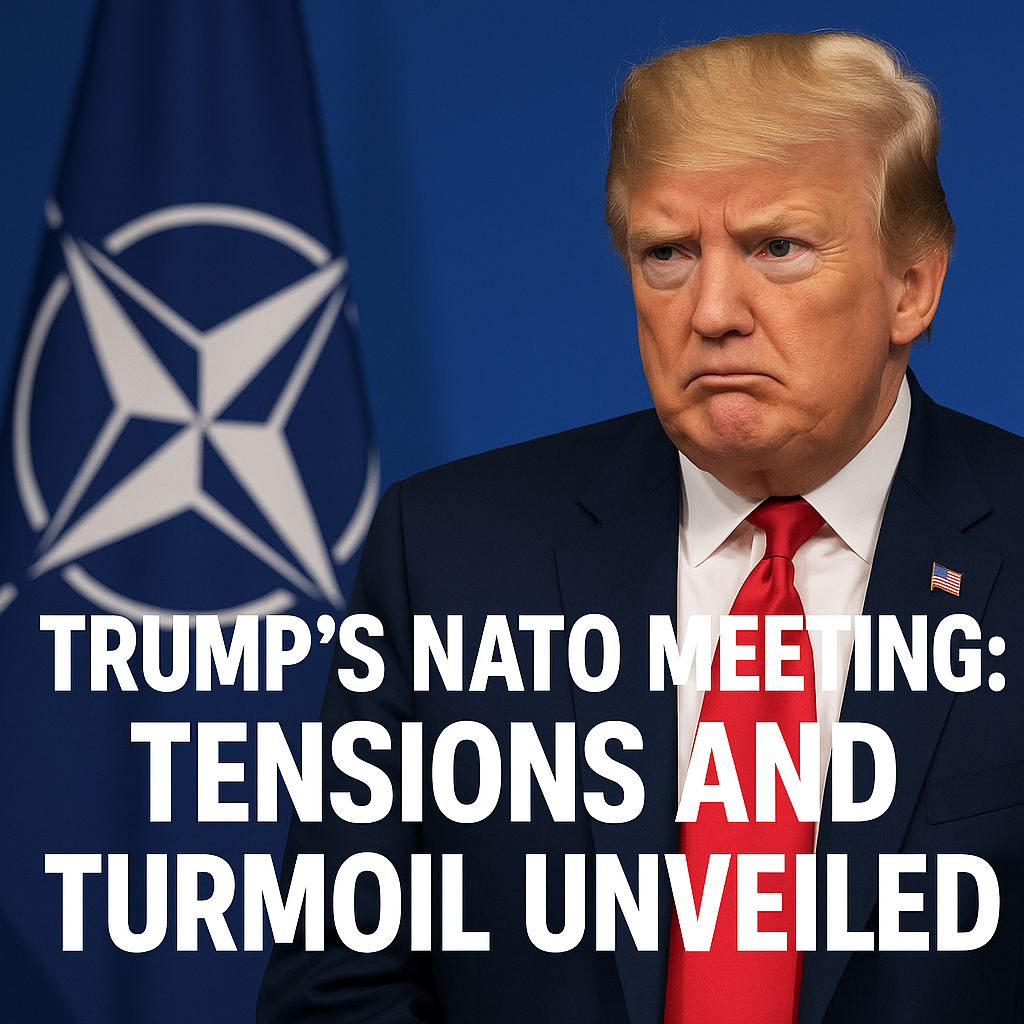
Trump’s NATO Meeting: Tensions and Turmoil Unveiled
Trump’s NATO Meeting: Tensions and Turmoil Unveiled
Donald Trump’s involvement in international politics has long generated discussion, and his recent NATO meeting was no exception. As tensions simmer in global affairs, particularly in light of Iran’s nuclear ambitions and geopolitical rivalries, the impact of Trump’s stance on NATO remains a topic of critical analysis.

A Mixed Bag of Reactions
The meeting, reported by multiple sources, revealed a tapestry of reactions. While some nations within NATO acknowledged the necessity of unity against common threats, other member states appear increasingly wary of the U.S.’s shifting foreign policy priorities under Trump.

Support for Reinforced Alliances
In the wake of rising tensions with nations like Iran, several NATO allies expressed positive sentiments about the need for a strong collective defense. Leaders like Dutch Prime Minister Mark Rutte emphasized that NATO must uphold its commitment to collective security. “Unity and a strong stance against threats are paramount,” Rutte stated, echoing sentiments that resonate within many European capitals.

NATO’s broader objectives during Trump’s tenure have often hinged on this idea of mutual defense, especially while addressing the challenge posed by Iranian actions in the region. The sentiment underscored by leaders like Rutte reflects a growing consensus that a fortified alliance is essential to counter threats, not only from Iran but also from other geopolitical challenges.
Diverging Perspectives
Conversely, Trump’s approach has drawn skepticism. Critics argue that his uncompromising nature can exacerbate existing tensions rather than alleviate them. A piece from Al Jazeera pointed out that Trump’s open disdain for multilateral agreements risks isolating the U.S. at a time when global cooperation is crucial. The article noted significant disparities in the expectations surrounding NATO’s role and the unilateral actions that the U.S. might take under Trump’s presidency.
In conversations surrounding NATO, there’s concern that Trump’s style could alienate allies, eroding the trust built over decades. Sources from Sky News echoed this sentiment, indicating that while there’s an understood necessity for NATO’s collective strength, Trump’s unpredictable rhetoric stirs uncertainty among member states.
The Role of Iran: A Tumultuous Factor
A focal point of the meeting was undoubtedly the issue of Iran and its nuclear capabilities, which many see as a significant challenge that NATO must confront. Underlining the gravity of this situation, reports from RT highlighted that Trump’s urging for a hardline stance against Iran could yield support among certain NATO members. There is a belief that a united front would be more effective; however, the approach itself has been contentious.
Balance Between Diplomacy and Aggression
The balance between diplomacy and aggression poses a question for NATO’s future. While Trump advocates for a more aggressive strategy against Iran, some experts caution against escalating tensions. There’s a fear that adopting a militaristic approach could inhibit diplomatic channels that might lead to peaceful resolutions.
Diverse perspectives on this complicated web of relations highlight the possibilities of NATO enhancing its influence by forging stronger diplomatic ties alongside its defense commitments. Encouraging negotiation rather than outright conflict might be a way to uphold NATO’s foundational ideals.
Charting a Course Forward
The implications of Trump’s NATO meeting are manifold. On one hand, some leaders within the alliance welcome a robust show of unity, emphasizing mutual defense in the face of adversarial threats. On the other hand, the president’s unpredictable stance presents a challenge to the long-standing mutual trust among allies.
Harsh Realities of International Relations
As the global landscape evolves, NATO’s role becomes increasingly critical. Yet, the harsh realities of international relations require a nuanced understanding of diplomacy, cooperation, and the complex motivations of member nations. In this precarious environment, finding a balance between showing strength and fostering collaborative dialogue may be the key to ensuring NATO’s relevance.
In the end, Trump’s NATO meeting served to unveil not just existing tensions but the potential for future turmoil if diplomatic channels are ignored. As member states grapple with these complexities, the road ahead will demand careful navigation to maintain unity within the alliance while addressing pressing global challenges. The uncertainty surrounding Trump’s approach to NATO underscores the ongoing struggle to define a coherent strategy that resonates across diverse geopolitical landscapes.
In conclusion, the upcoming months will likely reveal the extent to which NATO can adapt under current leadership and the potential consequences of decisions made today. Only time will tell whether the alliance will emerge stronger or face a fragmented future.















