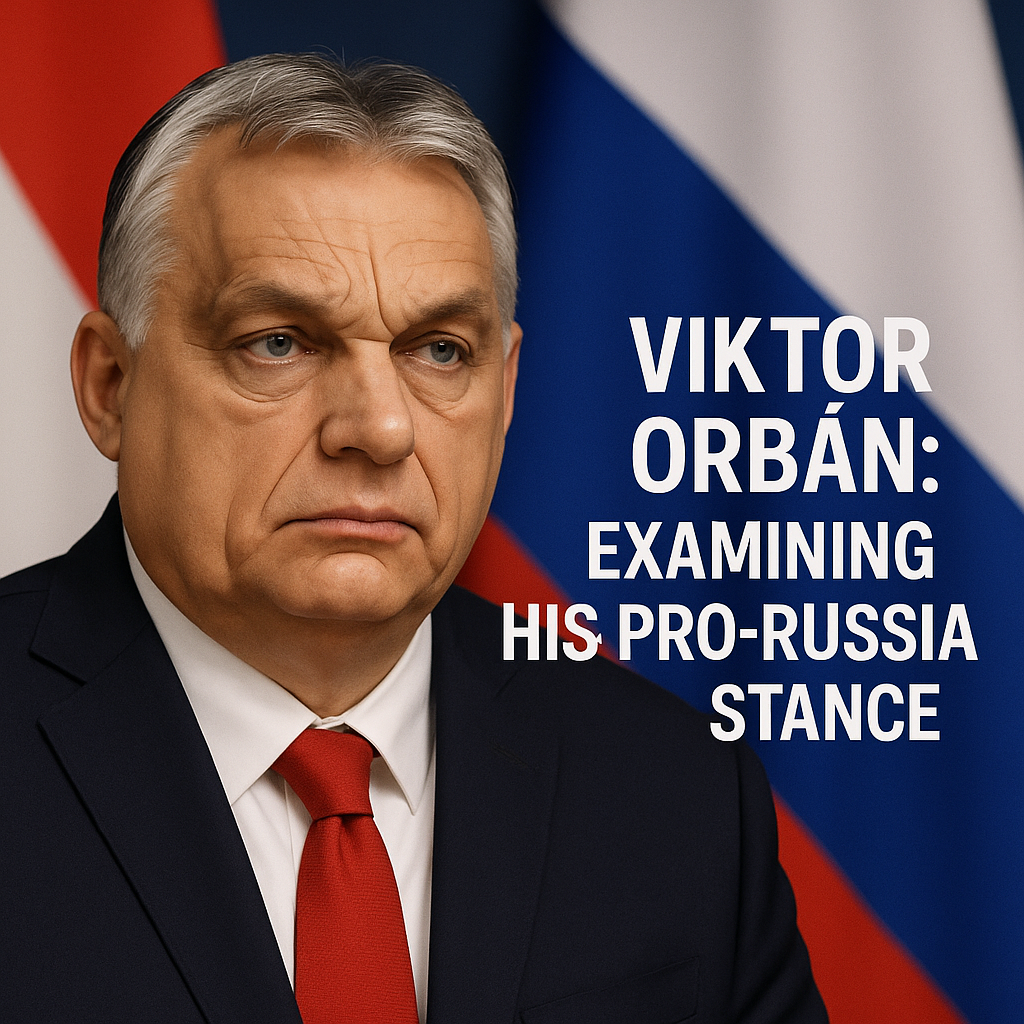
Viktor Orban: Examining His Pro-Russian Stance
Viktor Orban: Examining His Pro-Russian Stance
Viktor Orban, Hungary’s Prime Minister, has become a focal point in the discourse surrounding European views on Russia, particularly due to his perceived pro-Russian stance amid the ongoing conflict in Ukraine. As the geopolitical landscape continues to evolve, understanding Orban’s position offers insights into Hungary’s foreign policy and its implications for the broader European Union.

The Roots of Orban’s Pro-Russian Position
Orban’s relationship with Russia is complex, shaped by historical ties and current geopolitical interests. Hungary, under Orban’s leadership, has opted for a more nuanced approach to its relationships with both the West and Russia. This stance raises questions about the motivations behind Orban’s policies and how they align—or clash—with EU goals.

Economic and Energy Considerations
One of the most significant factors influencing Orban’s pro-Russian stance is Hungary’s energy dependency. A report from RT News highlights that nearly 80% of Hungary’s natural gas comes from Russia. In light of rising energy costs and the urgency of transitioning to alternative sources, Orban’s government continues to prioritize maintaining stable energy supplies. This reliance can lead to a prioritization of Hungarian national interests over EU-wide sanctions or policies aimed at isolating Russia.

Conversely, those critical of Orban argue that his government’s dependency on Russian energy exposes Hungary to vulnerabilities. As articulated by analysts in various Al Jazeera articles, Orban’s approach could diminish Hungary’s bargaining power within the EU, undermining collective efforts to exert pressure on Russia regarding its actions in Ukraine. This tension reflects a broader consensus among some EU members regarding the risks of energy dependence, advocating for a more unified stance against Russia.
The Political Repercussions
Orban’s pro-Russian inclination has significant political ramifications both domestically and internationally. Within Hungary, a segment of the population supports his pragmatic approach, valuing national sovereignty and energy security. However, this has resulted in growing criticism from opposition parties and civil society groups who argue that his alignment with Russia undermines Hungary’s democratic values and European commitments.
Diverging Perspectives in the EU
At the EU level, Orban’s position often puts him at odds with other member states, particularly those in Eastern Europe that have historically faced Russian aggression. For example, countries like Poland and the Baltic states have advocated for a strong stance against Russia. They argue that appeasing Moscow could embolden its ambitions further, thus compromising regional security. In contrast, Orban’s government has focused on dialogue with Russia, potentially fostering an image of Hungary as a bridge between East and West.
Despite facing criticism, Orban has defended his policies by pointing to the need for dialogue and cooperation. Supporters claim this approach enhances Hungary’s strategic autonomy, allowing it to pursue a path that best serves its interests without losing sight of EU integration.
The Broader Implications of Orban’s Stance
The implications of Orban’s pro-Russian stance extend beyond Hungary’s borders. His approach can influence public sentiment throughout Europe, especially in countries that face similar economic challenges. The ongoing war in Ukraine has exacerbated divisions within the EU regarding energy policy and relations with Russia. Orban’s position serves as a case study in balancing national interests with collective foreign policy goals, a challenge that many EU leaders grapple with.
Furthermore, Orban’s government frequently faces scrutiny over its democratic backsliding, and the relationship with Russia could be perceived as a way to divert attention from domestic issues. Critics argue that by fostering ties with Russia, Orban emboldens authoritarianism, both at home and across the continent. In contrast, his supporters contend that a pragmatic approach to foreign relations can provide Hungary with leverage in an increasingly multipolar world.
Conclusion: A Balancing Act
Viktor Orban’s pro-Russian stance embodies the complexities of modern geopolitics, particularly within the context of the EU’s evolving relationship with Russia. As Hungary navigates its energy needs and strategic interests, it remains to be seen how this course will affect its standing in Europe and the long-term implications for regional security. The current debate surrounding Orban’s policies not only reflects Hungary’s national interests but also raises broader questions about the future unity of the European Union in the face of a rapidly changing global landscape.