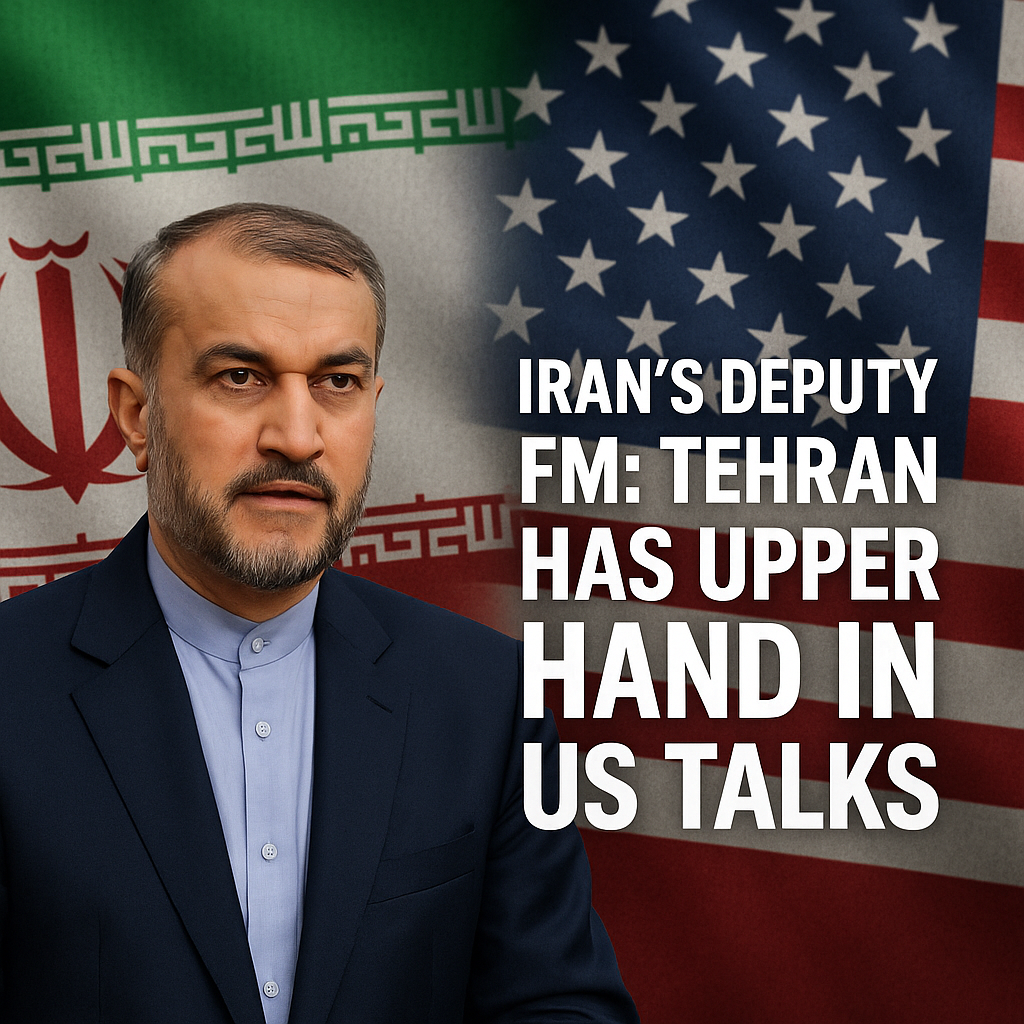
Iran’s Deputy FM: Tehran Has Upper Hand in US Talks
Iran’s Deputy FM: Tehran Has Upper Hand in US Talks
Iran’s Deputy Foreign Minister, Ali Bagheri Kani, recently asserted that Tehran holds the upper hand in ongoing negotiations with the United States. This statement underscores the complexities and evolving dynamics surrounding diplomatic efforts, particularly in the backdrop of Iran’s nuclear program and regional tensions. Understanding this nuanced perspective requires a closer examination of various viewpoints and the broader implications of these talks.

Context of the Talks
The backdrop to these negotiations is multifaceted, rooted both in Iran’s nuclear ambitions and its fraught relationship with the West. The discussions primarily aim to revive the Joint Comprehensive Plan of Action (JCPOA), a landmark nuclear agreement brokered in 2015, which the U.S. exited in 2018 under the Trump administration. Since then, Iran has progressively reduced its compliance with the agreement, enriching uranium to levels above the thresholds set by the JCPOA.

Iran’s Stance
Bagheri Kani’s declaration of Iran’s strong negotiating position reflects a sense of confidence in Tehran’s ability to navigate these discussions. He emphasized that Iran’s advancements in nuclear technology have strengthened its bargaining power. This confidence stems from a series of developments: increased uranium enrichment, a bolstered missile program, and strategic partnerships with nations like Russia and China.

Moreover, some analysts view Iran’s assertiveness as a calculated strategy to leverage its geopolitical position. The Iranian government claims that the U.S. is increasingly isolated in its hardline approach, suggesting that international support for Tehran has grown, particularly in opposition to perceived Western imperialism.
Diverging Perspectives
However, not all viewpoints align with Tehran’s optimism. Critics of Iran’s position argue that its advancements, particularly in military capabilities, could lead to greater regional instability. They contend that while Iran may feel empowered, its actions could provoke neighboring countries and lead to an arms race in the Middle East.
On the other hand, there are voices within the international community that advocate for a more diplomatic approach to these talks. Many experts suggest that acknowledging Iran’s regional influence and security concerns could create more fertile ground for negotiation. These analysts posit that the Biden administration should reconsider its stance, as economic sanctions have not yielded the desired outcomes and may, in fact, be exacerbating the situation.
The Role of International Dynamics
The international geopolitical landscape plays a crucial role in shaping the outcome of these negotiations. The presence of allies and adversaries alike complicates the dynamics. For instance, nations like Russia and China not only have strategic alliances with Iran but also possess vested interests in opposing U.S. foreign policies.
The Impact of Public Sentiment
Public opinion in both Iran and the U.S. further complicates the narrative. In Iran, a strong nationalistic sentiment drives public support for a hardline approach, with many citizens viewing the nuclear program as a symbol of national pride. Conversely, U.S. public sentiment is divided; while some support a tougher stance, others advocate for engagement and diplomacy.
A Path Forward?
Given the intricate landscape of viewpoints, where does this leave the talks, and what does it mean for the future? The issue remains one of uncertainty. Many analysts agree that neither side is currently prepared to concede significant ground, making a breakthrough seem distant. Additionally, with rising tensions in the region, including instances of military confrontation, the potential for miscalculation is ever-present.
As negotiations continue, it is essential for both parties to approach discussions without preconceptions. The efficacy of diplomacy hinges on mutual respect and understanding, qualities that have historically been in short supply. Engaging in meaningful dialogue could benefit not only U.S.-Iranian relations but also broader regional stability.
Conclusion
In sum, the assertion by Iran’s Deputy Foreign Minister that Tehran has the upper hand in talks with the U.S. reflects a complex interplay of confidence, strategy, and geopolitical realities. While Iran may indeed feel in a position of strength, the negotiating environment remains fraught with challenges and uncertainty. As both Tehran and Washington navigate these treacherous waters, the necessity for diplomacy and communication becomes increasingly paramount. The future of not only Iran-U.S. relations but also the stability of the entire Middle East hangs in the balance.