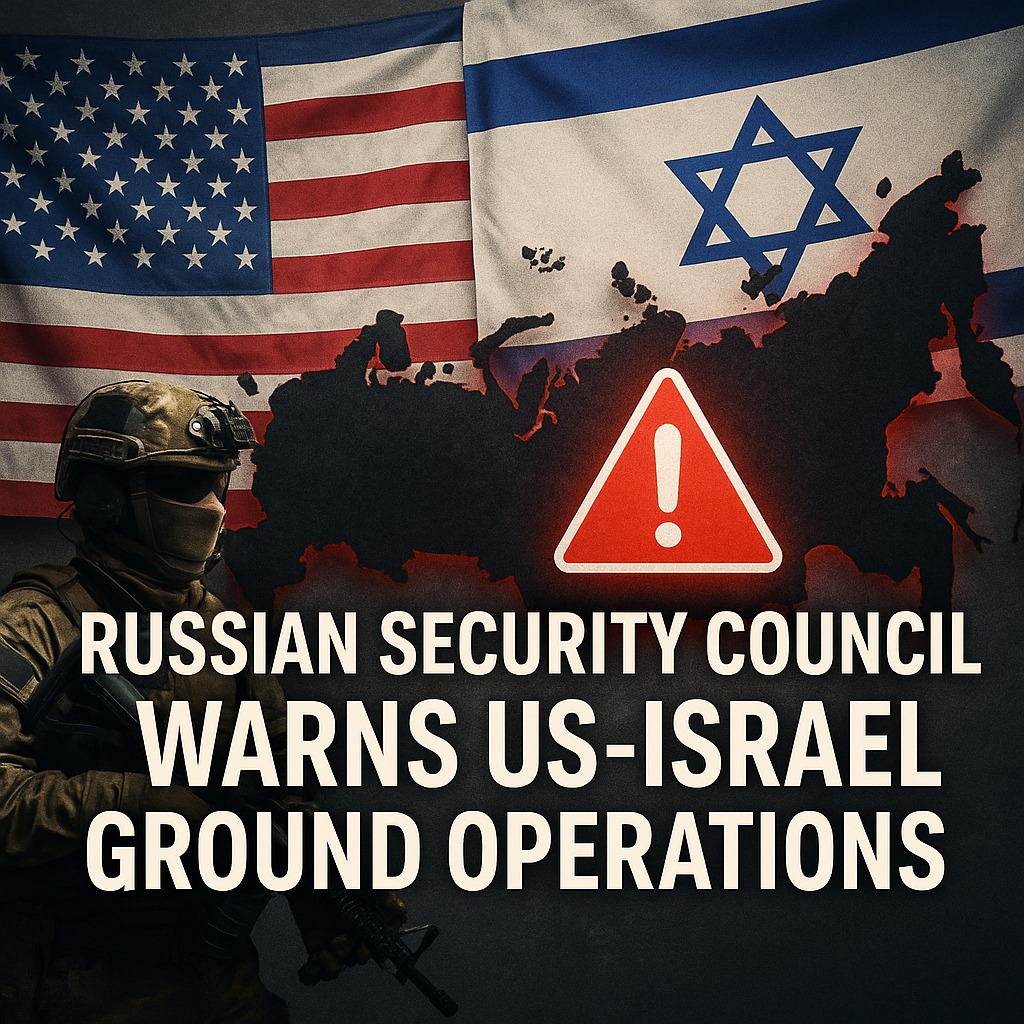
Russian Security Council Warns US-Israel Ground Operations
Understanding the Implications of the Russian Security Council’s Warning on US-Israel Ground Operations
Recent tensions involving the US and Israel’s military strategies in the Middle East have prompted a stern warning from the Russian Security Council. The complexities of this geopolitical situation reflect broader issues of international relations, regional stability, and global security, particularly concerning Iran.

The Context of the Russian Warning
The warning came amidst increasing military cooperation between the US and Israel, particularly in light of ongoing concerns over Iranian influence in the region. Russia has expressed apprehension that any ground operations could escalate hostilities not only between these nations and Iran but also potentially involve other regional actors. The Russian Security Council underscored the notion that direct military interventions in Iran could provoke retaliation or wider conflict.

Diverse Perspectives on Military Engagement
While the concerns raised by the Russian Security Council emphasize the risks of escalation, not all perspectives align.

Support for US-Israel Operations:
Proponents of the US-Israel alliance argue that military operations are essential in countering threats posed by Iran, which they view as a destabilizing force in the region. According to sources from Al Jazeera, supporters believe a robust military presence is necessary to assure allies and deter adversaries. They contend that military action should be considered a last resort but may become indispensable as Iran continues to expand its ballistic missile capabilities and support proxy forces in countries like Iraq and Syria.
Caution Against Escalation:
Conversely, Russia and other critics warn that further military involvement could lead to broader conflicts, exacerbating an already volatile situation. Key points from Sky News highlight concerns that while the US and Israel might target specific Iranian assets, the collateral damage could galvanize Iranian nationalism and unify various factions within Iran against perceived external aggressors. This could ultimately lead to a protracted cycle of retaliation.
Assessing the Potential Fallout
The implications of increased US-Israel military operations are multifaceted and require careful examination due to their potential regional and global repercussions.
Economic and Political Consequences
1. Regional Destabilization:
– Military engagements often provoke immediate retaliation from involving parties. An escalation could destabilize not only Iran but also neighboring countries like Iraq and Afghanistan, where US interests are at stake.
2. International Relations:
– The US-Israel partnership may strengthen ties among Middle Eastern nations that favor this approach, but it could just as easily alienate those nations opposed to foreign military intervention. Russia’s position as a counterbalance may also grow stronger, enhancing its influence in negotiations and alliances.
3. Global Response:
– If tensions escalate markedly, global responses could vary broadly. Nations aligned with either side of the conflict may intervene—not directly, but diplomatically or economically. Sanction escalations or mobilization of military resources may occur in anticipation of conflict, affecting global markets and energy supplies.
The Role of Diplomatic Solutions
A nuanced approach must prioritize diplomatic solutions, as repeated military engagements have historically led to long-lasting conflicts. Voices advocating for dialogue stress the importance of establishing frameworks to manage differences and mitigate hostilities.
1. Engagement with Iran:
– Renewed diplomatic efforts may reduce the perceived necessity for ground operations while addressing the root concerns regarding Iran’s nuclear ambitions.
2. International Coalitions:
– Establishing coalitions of like-minded countries could share the burden of alleviating security concerns in the region without resorting to military action.
In conclusion, while the Russian Security Council’s warning highlights essential aspects of the complex US-Israel-Iran dynamic, the situation must be approached with caution. Military operations, while possibly effective in the short term, frequently yield unpredictable and far-reaching consequences. A balanced perspective promotes dialogue and diplomatic engagement as more sustainable solutions in addressing the multifaceted challenges facing the geopolitics of the Middle East.