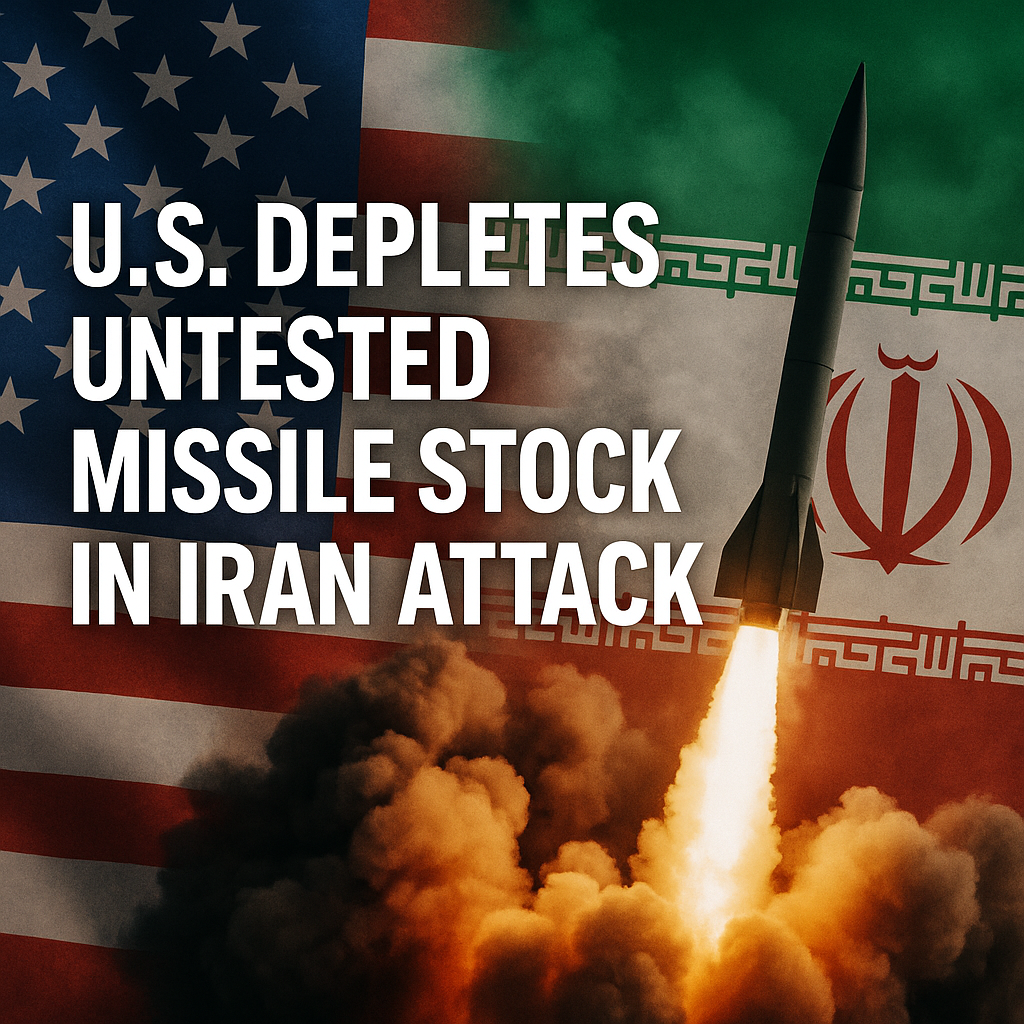
US Depletes Untested Missile Stock in Iran Attack
Unraveling US Military Strategy: The Depletion of Untested Missile Stock in Iran Attack
The recent military engagement involving the United States and Iran has raised significant concerns over the reliance on untested missile stock. As tensions escalate in the region, the implications of such actions must be examined through various lenses, including military efficacy, geopolitical ramifications, and the potential shift in international norms.

Context and Implications of Missile Deployment
The U.S. decision to deploy untested missile stock in a military operation against Iran has sparked debate among defense analysts and international relations experts. Historically, the U.S. has maintained a robust arsenal of sophisticated weaponry, often relying on advanced technology and extensive testing to ensure reliability and accuracy. However, the utilization of unverified missiles raises critical questions about the strategic calculus behind their deployment.

According to a report from RT, military experts have voiced concerns regarding the implications of deploying these weapons in an operational context without prior testing. “This strategy could lead to unpredictable outcomes,” suggested one defense analyst. The decision to utilize untested systems reflects a growing urgency within U.S. defense circles, emphasizing a shift toward quicker, albeit riskier, military solutions in volatile regions.

Conversely, other commentators argue that the U.S. military has long been adept at integrating emerging technologies into its operational framework. A piece from Al Jazeera highlights that while untested, these missiles are believed to be based on proven technologies that have evolved over the years. The rationale here is that rapid advancements and an urgent operational tempo necessitate immediate responses, even if it means deploying weapons that have not undergone extensive field testing.
Perspectives on Accountability and Effectiveness
One critical aspect of this incident is the accountability of military leadership regarding the deployment of untested weaponry. Adversaries and allies alike are closely monitoring how the U.S. conducts its military operations. The perception of reliability—both in terms of weapon effectiveness and the ethical implications of using such weapons—comes into play in shaping U.S. foreign relations.
Critics from various international forums argue that using untested missiles could embolden adversaries, while undermining the longstanding narrative of American military superiority. Some military strategists caution that any malfunction or ineffectiveness could not only jeopardize mission objectives but also contribute to a greater humanitarian crisis.
On the flip side, proponents of the operation argue that the aim is to deter aggression in the region, thereby preventing further conflict. Defense studies suggest that when adversaries perceive swift and decisive action, it may deter them from aggressive posturing that could lead to broader conflict.
Navigating the Future of U.S. Military Doctrine
As discussions heat up surrounding military engagement and the use of untested missiles, the U.S. is placed at a crossroads regarding its military doctrine. Should the reliance on cutting-edge but unproven technologies become a standard practice, or will there be a push towards rigorous testing protocols before deployment?
Emerging from the reports, a common thread surfaces—there is no clear consensus on whether this approach marks a bold new strategy or reflects a troubling trend toward impulsivity in military affairs. Many analysts underscore the importance of maintaining a balance between technological innovation and operational preparedness. The debate itself underscores the complexities of contemporary warfare and the delicate equilibrium between risk and readiness.
Moreover, the broader geopolitical landscape is shifting, as allies of the U.S. weigh their security options in light of its recent military actions. Nations in the Middle East, Europe, and beyond will be evaluating both the immediate military implications and the long-term strategic outcome of this engagement.
In essence, the depletion of untested missile stock in an operation against Iran does not just highlight a single military engagement; it encapsulates the evolving nature of warfare in a rapidly changing world. As nations grapple with the consequences of such decisions, the discourse surrounding military ethics, strategy, and international norms continues to unfold, revealing the intricate web of considerations that influence global stability.
Conclusion
The use of untested missile stock in a military strike against Iran represents a pivotal moment in U.S. defense policy, reflecting both the urgency of contemporary conflicts and the risks associated with leaning heavily on unproven technologies. The complexity of this situation emphasizes the need for ongoing dialogue among military leaders, policymakers, and international stakeholders to navigate the implications of such actions responsibly.
As nations respond to this evolving military narrative, the outcomes will indubitably shape future strategies and ethical standards in global military engagements for years to come. The world watches closely, aware that each decision can resonate well beyond the battlefield.