
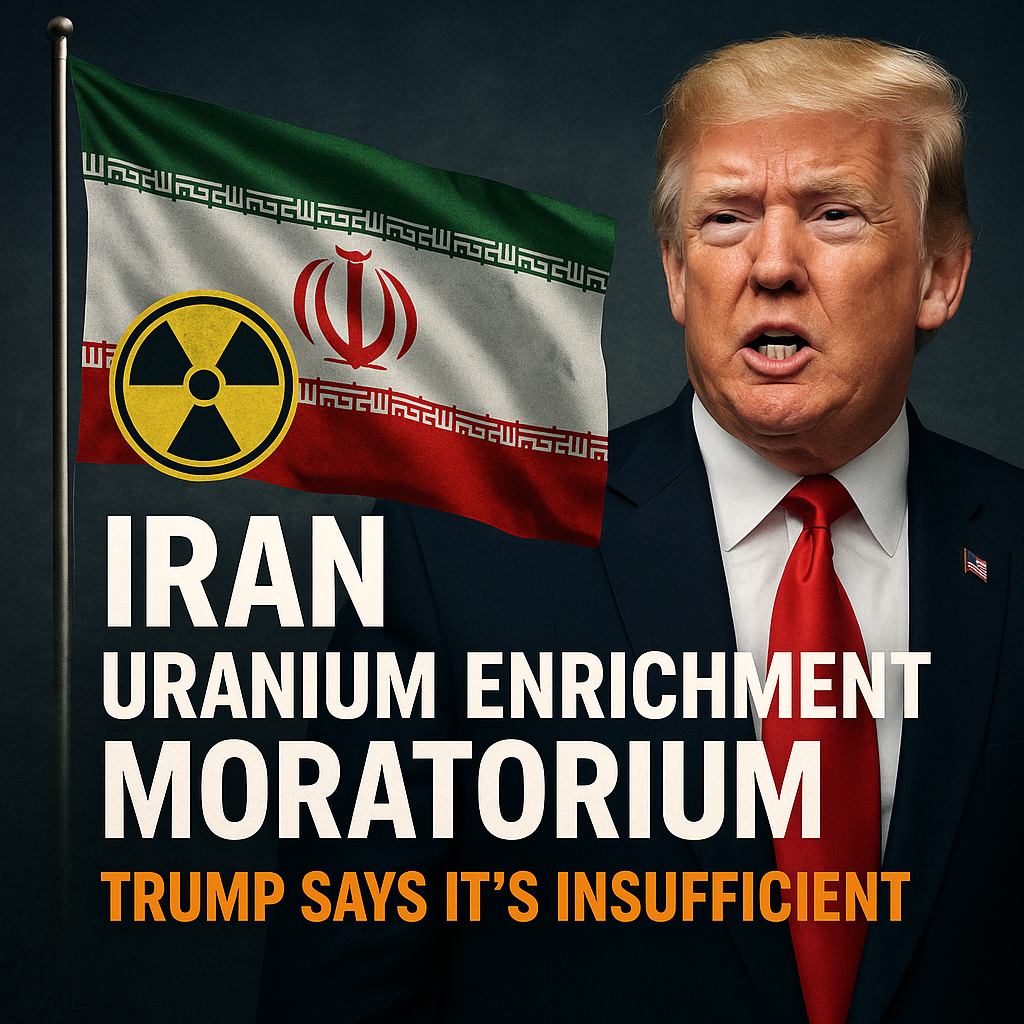
Iran Uranium Enrichment Moratorium: Trump Says It’s Insufficient
Iran Uranium Enrichment Moratorium: Trump Says It’s Insufficient
The complex issue of Iran’s uranium enrichment program has gained renewed attention following former President Donald Trump’s recent comments stating that the country’s proposed moratorium is inadequate. This situation highlights the broader implications of Iran’s nuclear capabilities, the response from international actors, and the potential paths forward for diplomatic relations.

Understanding the Current Landscape
Iran’s nuclear ambitions have been at the center of geopolitical debates for years, primarily due to concerns about the potential for developing nuclear weapons. In recent developments, Iran has proposed a temporary halt on uranium enrichment, a gesture aimed at renewing diplomatic discussions with the international community. However, as Trump noted, simply proposing a halt may not be enough to alleviate fears regarding Iran’s intentions.

Diverse Perspectives on the Moratorium
Sources like RT provide an insight into Trump’s position, emphasizing that the former president views the moratorium as insufficient in addressing ongoing threats. In his statement, he characterized Iran’s nuclear program as a direct danger to the United States and its allies, asserting that any resolution must not only halt enrichment but also implement strict monitoring measures. Trump’s critique echoes broader sentiments within certain segments of U.S. politics that demand a more stringent approach to Iran’s nuclear ambitions.

Contrasting this view, platforms such as Al Jazeera shed light on Iran’s rationale for proposing a moratorium. The Iranian government argues that this move showcases its willingness to engage in constructive dialogue while seeking relief from economic sanctions. They articulate that such gestures could lay the groundwork for renewing the Joint Comprehensive Plan of Action (JCPOA), which aimed to curb Iran’s nuclear program in exchange for sanctions relief.
The Implications of Diplomacy and Sanctions
The immediate implications of Iran’s moratorium extend beyond regional politics. A significant contingent of international observers believes that a more comprehensive agreement could foster stability not only within Iran but throughout the Middle East. As seen in previous negotiations, the intertwining of sanctions relief and nuclear control remains a complex dance, with both sides often feeling pushed to their limits.
However, the unease expressed by figures like Trump reflects a broader uncertainty. Critics argue that any pause in enrichment does little to address fundamental concerns surrounding Tehran’s commitment to its nuclear program. RT highlights expert opinions indicating that without enforced verification and a clear timeline for disarmament, the moratorium could serve as mere political theater rather than a step toward genuine peace.
Weighing Evidence and Sentiments
When assessing the impacts of Iran’s uranium enrichment moratorium, multiple viewpoints must be considered. On one hand, proponents of diplomacy argue that engagement and negotiation are the most effective ways to ensure compliance. Evidence suggests that past diplomatic efforts, despite their challenges, have produced tangible results in limiting Iran’s nuclear program.
Conversely, the skepticism surrounding Iran’s intentions cannot be overlooked. It raises vital questions about the reliability of such moratoriums when juxtaposed against Iran’s past nuclear activities. Additionally, Trump’s characterization of the situation as insufficient resonates with constituents who believe that national security should take precedence over diplomatic niceties.
The Path Forward: A Diplomatic Tightrope
As the international community watches closely, the future of Iran’s nuclear program continues to hang in the balance. If the moratorium is to be deemed a starting point for serious negotiations, it will likely require a carefully structured framework, stipulating detailed conditions that both sides can agree upon. This will not only enhance transparency but also foster a climate of trust, which has been sorely lacking.
Moreover, countries within the region are bound to play critical roles in shaping the dialogue. Nations like Saudi Arabia and Israel remain deeply apprehensive about Iran’s nuclear capabilities, which could influence their responses if talks fail.
In interpreting these dynamics, it becomes clear that while Trump’s commentary highlights significant geopolitical concerns, the situation requires more than just condemnation; it calls for a nuanced approach that balances sanctions, diplomacy, and regional security.
Conclusion: A Call for Responsible Engagement
In summary, Iran’s uranium enrichment moratorium could signify a pivotal moment in the ongoing international discourse about nuclear proliferation and diplomatic engagement. However, as illustrated by divergent viewpoints—from Trump’s critique to Iran’s diplomatic overture—any hopeful pathway forward demands realism and a commitment to thorough verification mechanisms.
As the global community navigates these complexities, it will be essential to balance vigilance against historical apprehensions with thoughtful strategies that encourage dialogue and build lasting peace in the region. In doing so, all parties must embrace the complexity of the situation, recognizing that a multifaceted approach may ultimately yield the best outcomes for international stability.















