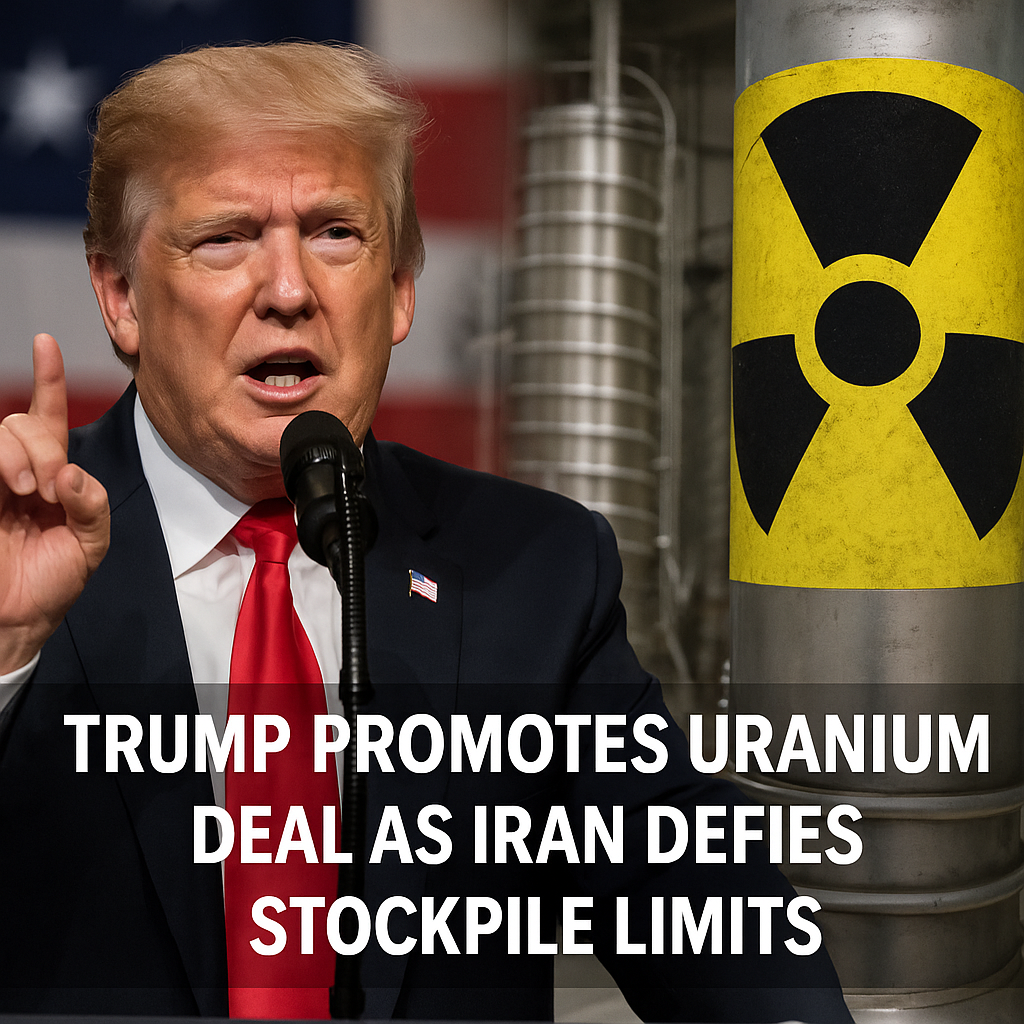
Trump Promotes Uranium Deal As Iran Defies Stockpile Limits
Trump and the Uranium Deal: A Complicated Narrative Amidst Iranian Defiance
In recent developments, Donald Trump has taken to the stage to promote a uranium deal, even as Iran openly defies its stockpile limits stipulated in the 2015 nuclear agreement. This situation reflects the intricate geopolitical dynamics at play, showcasing a blend of political ambition, security concerns, and international diplomacy.

Understanding the Stakes: Trump’s Position on Uranium
Trump has framed his advocacy for an uranium deal as a potential avenue for bolstering U.S. energy independence and global security. He has spotlighted the idea that a reevaluation of the nuclear framework could not only restrict Iran’s potential for military expansion but also allow for a more robust dialogue regarding energy resources. Reports suggest that Trump thanked Iran for its actions in the Strait of Hormuz, framing them as a catalyst for his push towards renewed negotiations over uranium sales and nuclear limits.

The former president’s assertions carry weight among certain demographics who prioritize national security and energy freedom. His perspective aligns with those who argue that having a controlled and regulated uranium trade can serve to curb any existing threats posed by rogue regimes. Conversely, critics of Trump’s approach argue that his rhetoric could undermine the cautious framework established under the Joint Comprehensive Plan of Action (JCPOA).

Iran’s Defiance: Stockpile Limits and International Reactions
Iran’s recent defiance of its uranium stockpile limits has raised alarms on multiple fronts. The International Atomic Energy Agency (IAEA) reported that Iran’s enriched uranium supplies have exceeded the limits set by the JCPOA, further escalating tensions. Iran insists that its actions are within its rights, emphasizing that the nuclear deal was rendered ineffective following the U.S. withdrawal in 2018. This perspective aligns with a growing sentiment among Iranian officials who argue for the reassessment of terms that they believe are no longer valid.
Iranians view their nuclear program as a matter of national pride and sovereignty. In an age where energy resources are essential for economic growth, the ability to develop nuclear technology is deemed imperative. As one Iranian official put it, “Our nuclear pursuits are a right, and we will defend that right.”
Divergent Perspectives and Strategic Implications
When examining the international landscape, there emerges a divide between Western powers and Iran regarding the interpretation and implementation of nuclear regulations. While Western countries stress the importance of compliance to ensure regional stability, Iran’s narrative centers around resilience and the right to self-advancement amidst sanctions.
Furthermore, Trump’s advocacy for revisiting the uranium deal raises questions about potential diplomatic fallout. Critics warn that such a pivot could isolate the U.S. diplomatically, especially if allies perceive a unilateral approach that disregards international frameworks. However, supporters of Trump’s approach argue that aggressive diplomacy might bring Iran back to the table, providing opportunities to negotiate terms that might better serve global security.
Navigating a Path Forward
As this discourse unfolds, several key points warrant close attention:
– The Role of Traditional Allies: Countries like France and Germany have voiced concern over Iran’s actions. Trump’s reclamation of the uranium discussion may not align with the European desire to maintain the current nuclear agreement.
– Potential for Renewed Dialogue: The paradox lies in whether a more assertive American stance can lead to constructive conversations or simply foster further polarization.
– Domestic Implications: Within the U.S., the political implications of Trump’s strategy have the potential to shape campaigns as both parties navigate the complexities of national security and energy policies.
Conclusion: A Complex Landscape
Ultimately, the call for a uranium deal by Trump amidst Iran’s defiance of nuclear limits showcases the multi-faceted nature of international relations. It is a dynamic space fueled by competing narratives and ambitions. As both sides prepare for what may come next—be it negotiations, sanctions, or further actions—the path ahead requires not just strategic foresight but a willingness to engage in nuanced, informed dialogue.
While the complexities are evident, the stakes remain high, necessitating an approach that prioritizes both national security and international cooperation. The world watches as this evolving narrative unfolds, knowing that the implications extend far beyond the borders of Iran and the United States.