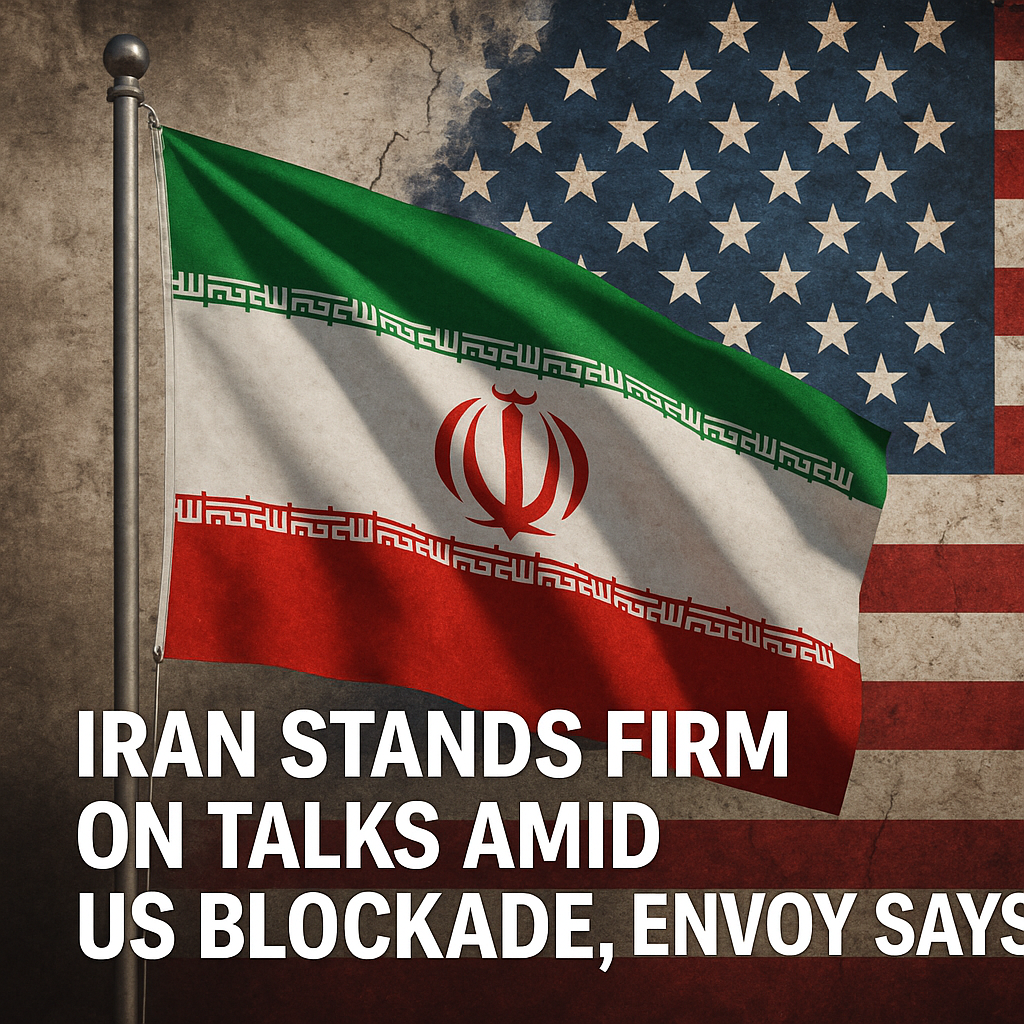
Iran Stands Firm on Talks Amid US Blockade, Envoy Says
Iran Stands Firm on Talks Amid US Blockade, Envoy Says
The ongoing dialogue between Iran and the West remains complex, particularly in light of the U.S. blockade. As tensions rise, Iran’s steadfast approach to negotiations reflects a calculated strategy that highlights both resilience and defiance in the face of external pressures.

The Context of the Blockade
To understand Iran’s position, it’s vital to grasp the implications of the U.S. blockade. This sanctions regime has targeted crucial sectors of Iran’s economy, including oil exports and financial transactions. Advocates of these measures argue they aim to curb Iran’s nuclear ambitions and aggressive regional activities. According to a report by Al Jazeera, the sanctions have indeed strained the Iranian economy but have also cemented a nationalistic resolve among its leadership.

In recent statements, Iran’s Foreign Ministry has emphasized its commitment to maintaining a platform for dialogue despite these sanctions. The envoy reiterated that Iran will not be swayed by external pressures and is committed to trilateral talks involving regional players. This assertion aligns with the interpretations offered by various political analysts who highlight the duality of Iran’s approach: seeking diplomatic engagement while simultaneously standing firm against coercive tactics.

Divided Opinions on Negotiation Strategies
The international community is not of one mind regarding the efficacy of Iran’s negotiation strategies.
Proponents of Dialogue: Some experts believe that Iran’s insistence on remaining at the negotiation table is a strategic move that could foster more substantial dialogue over time. In their view, a willingness to engage, despite punitive measures, is indicative of a rational calculation from Iranian leaders. This perspective resonates within the framework of international diplomacy, where open channels often lead to better outcomes.
Critics of Iran’s Position: Conversely, critics point to Iran’s defiance as a sign that the regime is more interested in maintaining its power than resolving longstanding regional tensions. They argue that Tehran’s commitment to certain policies, which often veer into military provocations, negates any goodwill it might foster through diplomatic efforts. Sources from RT highlight that recent missile tests and military maneuvers could undermine trust needed for effective dialogue.
As these divergent viewpoints demonstrate, opinions on the efficacy of Iran’s negotiation approach remain deeply divided. While some see it as a path towards resolution, others believe it indicates a steadfast authoritarianism.
The Role of Regional Dynamics
An essential aspect of the Iranian strategy is the intricate web of regional relationships. Iran is not navigating these waters in isolation. It maintains strong ties with various non-state actors and neighboring countries, many of whom share an adversarial relationship with the U.S. This geopolitical context complicates the dialogue, as actions taken by regional allies can significantly influence negotiations.
For instance, Iran’s support for groups such as Hezbollah in Lebanon and various militias in Iraq reflects its commitment to its regional strategy. As reported by Sky News, these affiliations provoke reactions from both supporters and detractors, driving a wedge between the Iran and U.S.-led coalitions in the region.
The Path Forward: What Lies Ahead?
Looking forward, the prospects for constructive dialogue hinge on multiple factors, including domestic pressures within Iran and external geopolitical developments. Iranian officials insist that any negotiation must consider their national interests and dignity, which they define in the context of the enduring sanctions. This position presents a challenging landscape for Western powers that are often hesitant to ease sanctions unless concrete steps are taken towards de-escalation.
Moreover, the potential for a new diplomatic framework encompassing not just the U.S. and Iran but also regional stakeholders could pave the way for more effective conversations. As Iranian officials position themselves firmly in opposition to unilateral sanctions, they may also be signaling an openness to multilateral discussions—potentially a silver lining.
Conclusion: A Balancing Act
As Iran navigates its negotiation landscape amid a U.S. blockade, the pursuit of dialogue while demonstrating resilience reveals a complicated balancing act. This scenario underscores the necessity for a nuanced understanding of international relations, where domestic policies intersect with global political maneuvers.
While the diverging perspectives on Iran’s approach highlight the difficulty of reaching a consensus, they indicate that, regardless of the current tensions, the path to dialogue remains an essential component of international diplomacy. As the situation evolves, both sides will need to reassess their strategies in light of both internal and external pressures.