
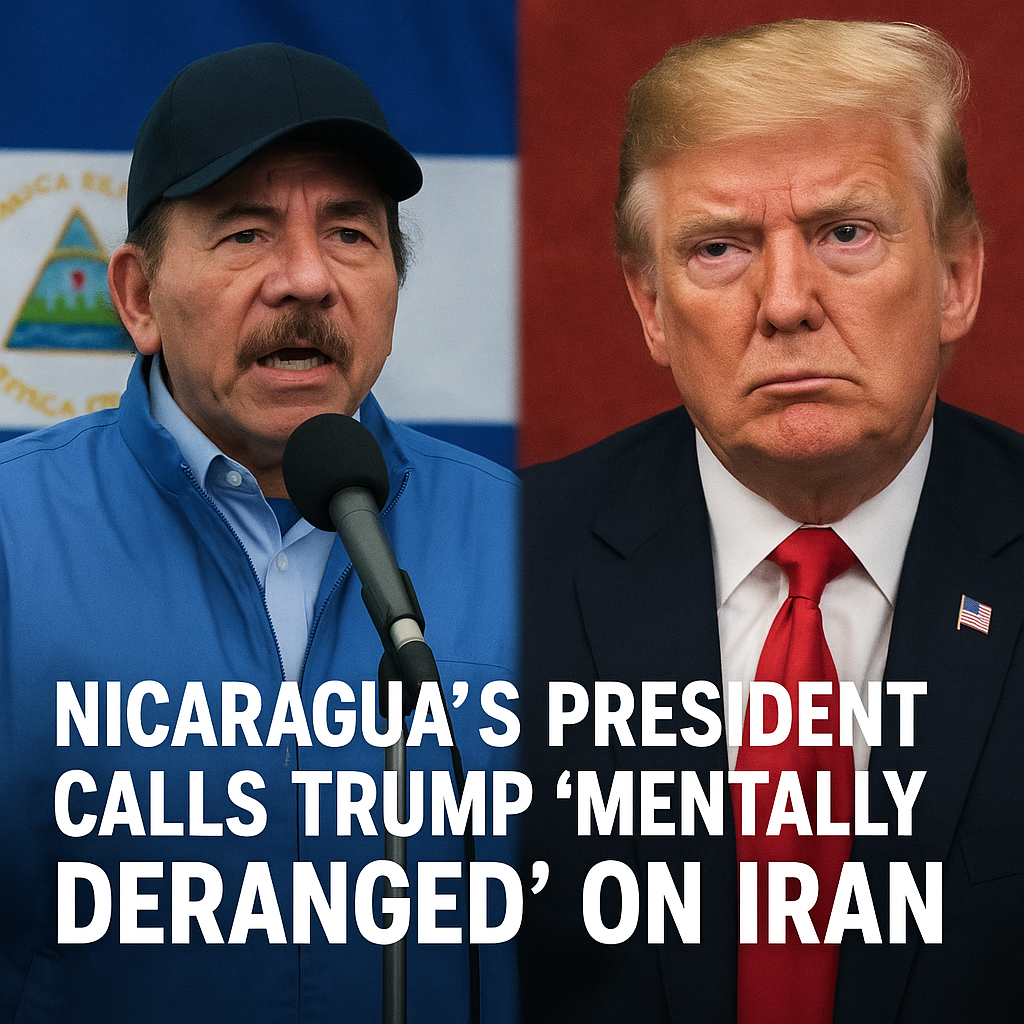
Nicaragua’s President Calls Trump ‘Mentally Deranged’ on Iran
Nicaragua’s President Calls Trump ‘Mentally Deranged’ on Iran
In a recent speech, Nicaragua’s President Daniel Ortega labeled former U.S. President Donald Trump as “mentally deranged” in response to Trump’s remarks regarding Iran. This statement has ignited a wave of discussion about political rhetoric and international relations, particularly concerning the tensions between the U.S. and Iran. Understanding the backdrop against which these comments were made can help clarify the differing perspectives on this complex issue.

The Context Behind Ortega’s Statement
Ortega’s comments came during a period marked by escalating tensions in the Middle East and ongoing debates in the U.S. regarding foreign policy. Trump has been vocal in his criticism of Iran, particularly in relation to its nuclear program and alleged support for terrorism. His approach has been characterized by a stark ‘America First’ stance that often emphasizes military action over diplomatic engagement. Ortega, who has long had a contentious relationship with U.S. administrations, particularly those led by Republicans, seized this opportunity to publicly challenge Trump’s approach.

Many analysts suggest that Ortega’s comments are not just aimed at Trump but are also a reflection of Nicaragua’s position in the regional geopolitical landscape. The Latin American country has historically positioned itself in opposition to U.S. interventionism while seeking alliances with nations like Iran and Venezuela. Thus, by criticizing Trump, Ortega reinforces his own political identity and appeals to a domestic audience that may feel disenfranchised by U.S. foreign policy.

Diverging Perspectives on U.S.-Iran Relations
The U.S.-Iran relationship is fraught with historical complexities, and opinions vary widely on how it should be navigated. On one hand, some experts and politicians argue for a hardline stance against Tehran, viewing it as a state sponsor of terrorism that threatens regional stability. This viewpoint aligns with Trump’s assertion that confrontational policies are necessary to curtail Iran’s influence.
Conversely, various global leaders and analysts argue for a more diplomatic approach, suggesting that negotiation is key to reducing tensions. The invitation to dialogue is often seen as more constructive, particularly when considering the long-term implications of military actions. Ortega’s harsh words about Trump can be seen as a broader commentary on the tendency to favor aggression over diplomacy in modern politics.
To many observers, Ortega’s choice of rhetoric reflects not only his disdain for Trump but serves as a reminder of the profound divides within global approaches to conflict resolution. Notably, Ortega’s comments resonate with other critiques of U.S. foreign policy, suggesting a disconnect between American actions and the aspirations of smaller nations.
Analyzing Responses and Implications
Here are some notable ramifications of Ortega’s statements on Trump concerning Iran:
– Regional Alliances: Ortega’s comments may tighten Nicaragua’s bond with Iran, encouraging bilateral cooperation amidst U.S. sanctions. This aligns with Iran’s interests and offers Nicaragua another avenue for political and economic support.
– Domestic Politics: Back home, Ortega may use this controversy to galvanize support by emphasizing nationalism and anti-imperialist sentiments. Labeling a high-profile American figure as “mentally deranged” might bolster his image among supporters who view U.S. actions in Latin America as historically aggressive.
– International Dialogue: The exchange underscores the need for a recalibration of dialogues around international relations, where less aggressive language might pave the way for constructive negotiations. Ortega’s outburst illustrates the deep frustrations felt by many regarding how nations are treated on the global stage.
While Ortega’s assertion may come off as extreme to some, it encapsulates a broader discontent with American foreign policy that fuels ongoing tensions in international affairs.
Conclusion: The Road Ahead
Engaging with the nuances of international relations often reveals the complex interplays of ideology, history, and personal politics that shape our world. Ortega’s direct attack on Trump provides insight into how global leaders approach the contentious world of diplomacy, especially when powerful nations like the U.S. exert considerable influence abroad.
In the end, as complex as the U.S.-Iran issue is, it is crucial to recognize the myriad perspectives presented. While some may champion confrontational policies, others, including Ortega, advocate for understanding, diplomacy, and mutual respect among nations. As diplomatic tensions persist, it remains to be seen how this rhetoric will impact future interactions among countries—whether they will choose to engage in dialogue or continue down a divisive path.















