
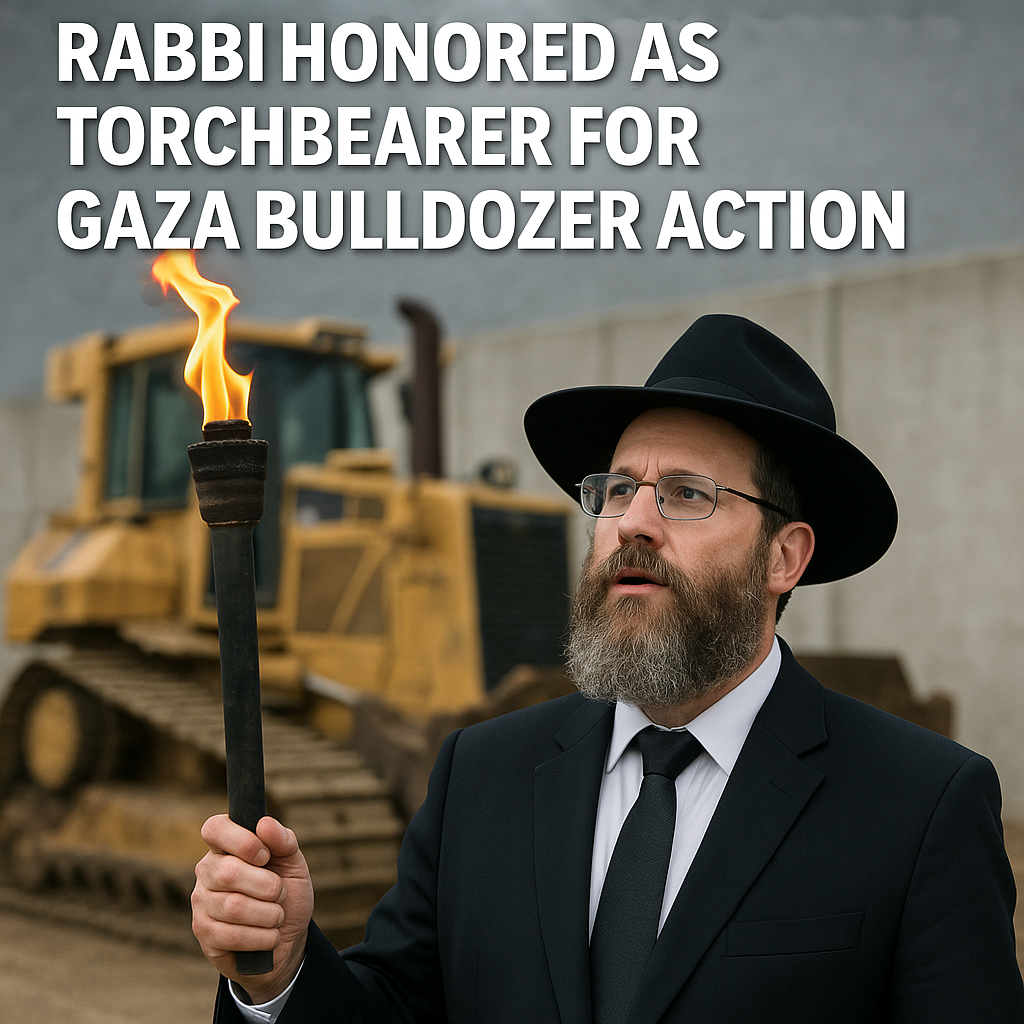
Rabbi Honored as Torchbearer for Gaza Bulldozer Action
Rabbi Honored as Torchbearer for Gaza Bulldozer Action
In a significant and controversial turn of events, an Israeli rabbi has been recognized as a torchbearer for his actions involving the bulldozing of structures in Gaza, raising a multitude of ethical and political questions. This recognition has sparked widespread debate, illuminating the complexities surrounding the Israeli-Palestinian conflict and drawing attention to the differing narratives that shape public opinion.

A Symbol of Resistance or Destruction?
The rabbi, whose actions have been both applauded and condemned, represents contrasting perspectives on the ongoing conflict. Supporters laud him as a symbol of resistance against what they perceive as threats to Israeli security. They argue that such measures are essential for protecting Israeli citizens from potential attacks. On the other hand, critics label the bulldozing actions as acts of unwarranted aggression, damaging the already fragile state of affairs in the region.

This duality is evident in various reports. According to Al Jazeera, supporters of the rabbi’s actions argue that his commitment to Israeli security is commendable. They cite historical contexts of violence in the region, suggesting that measures deemed aggressive may sometimes be necessary for self-defense. Conversely, RT News highlights the devastating impact these bulldozing actions have on Palestinian communities, shedding light on the loss of homes and livelihoods. Opponents argue that such actions exacerbate the humanitarian crisis in Gaza, creating instability rather than security.

The Broader Implications of Such Recognition
This torchbearer honor signifies far more than just recognition for one individual’s actions; it touches on core issues regarding collective identity, nationalism, and the profound narratives that shape the Israeli-Palestinian conflict.
– Nationalism and Its Perceptions: Some align the rabbi’s actions with a broader narrative of Israeli nationalism that supports strong military responses to perceived threats. This view is fortified by a segment of the Israeli populace who believe the fervent protection of national interests justifies extreme measures.
– Human Rights and Global Views: On the other hand, the honor brought to the rabbi has drawn criticism from international human rights advocates and organizations. Activists argue that recognizing such actions perpetuates a cycle of violence that undermines peace efforts and harms innocent civilians, calling for more humanitarian approaches rather than militaristic ones.
Navigating the Complexity of Perspectives
The reactions to this honor reveal not just a split in ideology among Israelis but also broader international implications. While the rabbi’s supporters echo sentiments of resilience and necessity, dissenters question the moral legitimacy of using heavy machinery to destroy homes.
Reports from Sky News indicate that international responses to this recognition have been mixed. While some nations and organizations express support for Israel’s right to defend itself, many others emphasize the importance of protecting human rights and advocating for an end to occupation. This highlights a persistent dilemma in international relations: how to balance security needs with humanitarian obligations.
The U.N. and various NGOs have repeatedly called for measures to protect civilians, pointing out that demolition of homes often leads to increased resentment and anger within affected communities. This seems to support the argument that while the intentions behind certain actions may be geared towards safety, the consequences are oftentimes detrimental.
Conclusion: A Path Forward?
As the discussion around the rabbi’s honor continues to unfold, it is crucial to navigate this dialogue with the understanding that each perspective carries weight. The recent acknowledgment of the rabbi’s actions serves as a reminder of the broader conflict’s complexities, emphasizing the need for mutual understanding and dialogue.
While some may view the rabbi as a torchbearer of security, others see a pathway leading to further suffering for innocent people. Moving forward, it is essential to recognize these narratives, engaging in conversations that consider all viewpoints. Ultimately, solutions to the long-standing Israeli-Palestinian conflict may lie in acknowledging the humanity on both sides and pursuing avenues for peace that prioritize dialogue over destruction.















