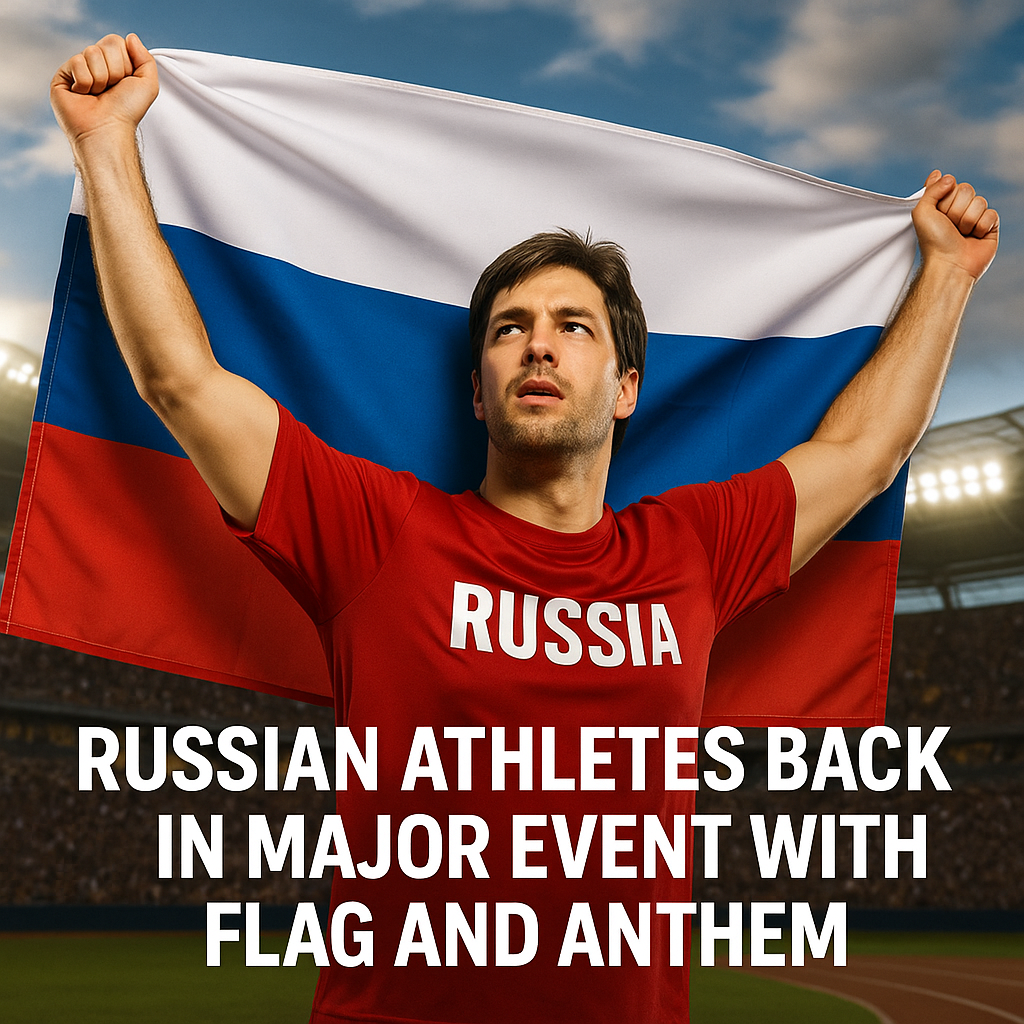
Russian Athletes Back in Major Event with Flag and Anthem
Russian Athletes Make a Comeback with Flag and Anthem
Russian athletes are set to participate in major international sporting events to display their national flag and anthem for the first time since the onset of the Ukraine conflict. This decision marks a significant shift in the landscape of sports, raising questions about fairness, nationalism, and the intersection of politics and athletics.

A New Chapter for Russian Athletes
As announced by various sports governing bodies, Russian athletes will no longer face restrictions that have been in place since 2022, which barred them from competing under their national flag and anthem due to the country’s military actions in Ukraine. This reversal has sparked diverse opinions ranging from support for athletic unity to criticism over political implications.

Support for Increased Participation
Proponents of the decision argue that sports should remain an arena for fair competition, free from political influences. They emphasize that athletes, many of whom have trained for years, should not be punished for the actions of their government. For instance, a spokesperson from the Russian Olympic Committee highlighted that “athletes should be recognized for their talents, regardless of geopolitical circumstances.”

Additionally, supporters argue that allowing Russian athletes to compete under their flag can foster a sense of international unity. International sporting events often serve as a platform for goodwill and cultural exchange. By reintegrating Russian athletes, advocates contend that a form of normalcy can be restored, benefiting not just the athletes but also fans and countries involved.
Criticism and Concerns
On the other hand, critics view this decision as a troubling endorsement of nationalism amid a global climate of division. They characteristically argue that allowing athletes to compete under their flag symbolizes tacit approval of Russia’s political stance, especially in light of ongoing military actions. For example, prominent sports commentators and former athletes have voiced their concerns, stating that this move undermines the principles of fair play and may alienate nations that oppose Russia’s actions.
Moreover, there are practical implications of this change. Critics highlight that by allowing Russian athletes to represent their country, it potentially sets a precedent for other nations facing similar geopolitical scrutiny, making it a slippery slope for international sports governance. “This could embolden countries with controversial political actions to push back against bans,” one commentator noted.
International Reactions
The global response to this policy shift has been mixed. While some countries have welcomed the announcement and expressed a willingness to compete on equal footing, others, particularly in the West, have maintained a cautious stance. For example, sports bodies in the United States and the UK have reiterated their reluctance to have Russian athletes compete alongside their teams. “Until there is a significant change in the geopolitical landscape, we stand firm on our position,” a representative from the British government stated.
Some international federations are faced with a dilemma: to either uphold the principles of a unified sporting platform or to enforce a stance against nations involved in military conflicts. In this vein, the International Olympic Committee (IOC) is placed in a challenging situation, as it attempts to balance inclusivity and integrity in sports.
Striking a Balance
As Russian athletes prepare to participate in major events once again, the question remains: how can international sports bodies navigate this complex terrain? The balance between inclusion and accountability will likely dictate future policies. Engaging with stakeholders—athletes, coaches, and spectators—from a variety of backgrounds may help in achieving a nuanced stance that respects both the values of sport and the geopolitical realities at play.
Conclusion
The reintegration of Russian athletes into major sporting events is a multifaceted issue that encapsulates the contentious overlap of sports, nationalism, and international relations. While some view this move as a reinstatement of athletic dignity, others warn of the dangers inherent in allowing political factors to influence the realm of athletics. As the dialogue continues, it may be crucial for both players and governing bodies to advocate for unity while remaining steadfast in their principles. Whatever the outcome, the world will be watching closely as events unfold, reminding us that sports can sometimes be as politically charged as they are thrilling.