
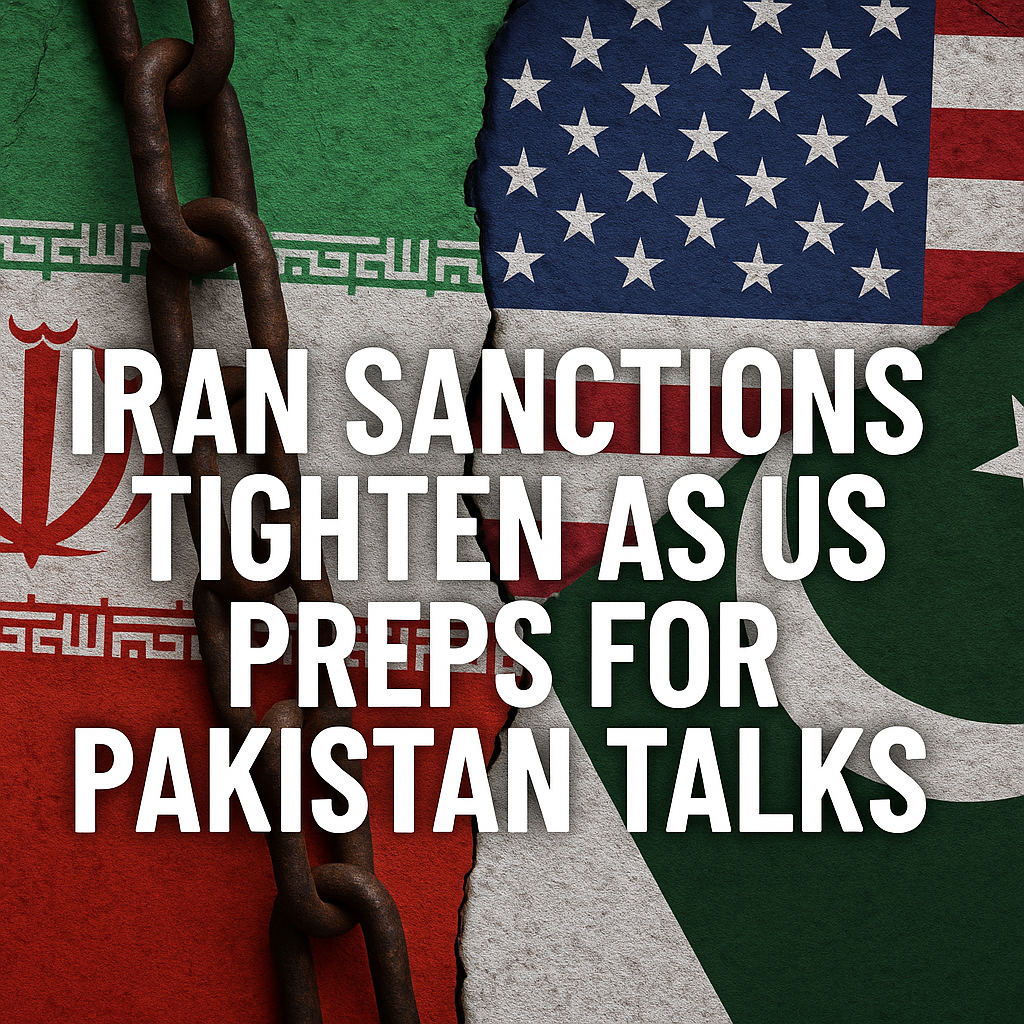
Iran Sanctions Tighten as US Preps for Pakistan Talks
Iran Sanctions Tighten as US Preps for Pakistan Talks
As tensions between Iran and the West escalate, recent developments indicate that sanctions against Iran are tightening even further. The U.S. government is navigating complex diplomatic realms, specifically looking to engage in talks regarding Pakistan, while simultaneously imposing additional sanctions on Iran. This multi-faceted issue reflects a broader narrative of international relations marked by cautious diplomacy, geopolitical strategy, and contrasting viewpoints.

The Increasing Pressure on Iran
In an announcement from the U.S. Treasury Department, the latest sanctions against Iran target key sectors implicated in the country’s defense and missile programs. As reported by Al Jazeera, the sanctioned entities are believed to be involved in facilitating Iran’s military capabilities, showcasing a robust approach from the U.S. aimed at curbing Iranian influence across the region. This is not an isolated incident but rather a continuation of decades of economic sanctions that have strained Iran’s economy significantly.

– Key Points of the Sanctions:
– Target key Iranian industries, especially those linked to military production.
– Aim to undermine Iran’s regional influence, particularly in Syria and Iraq.
– Reflect a broader U.S. strategy of isolating Iran while preparing for diplomatic discussions in South Asia.

The Iranian government quickly condemned the sanctions, referring to them as “economic warfare.” This sentiment aligns with previous responses from Iranian officials, underscoring the perception that U.S. actions are not merely precautionary but aggressive attempts to weaken Iran’s standing both locally and globally.
Divergent Views on the U.S. Strategy
While the U.S. pursues a policy of tightening sanctions, the rationale behind this approach is met with skepticism by some analysts. On platforms such as RT, commentators argue that sanctions have historically been ineffective in altering state behavior and have often flared tensions further. Critics assert that continued sanctions could exacerbate anti-American sentiment in the region, making diplomatic solutions increasingly challenging.
In stark contrast, proponents of the sanctions claim that they serve as a necessary tool for the U.S. to press Iran towards more favorable negotiations regarding its nuclear program and regional activities. They view the pressure as essential to coax Iran into a constructive dialogue, particularly with upcoming meetings concerning Pakistan on the horizon.
– Compounding Complexities:
– There’s a fear that Iranian retaliation could destabilize Pakistan, a nuclear-armed neighbor.
– The interplay between sanctions and the negotiating landscape complicates the U.S. position significantly.
– The relationship with Pakistan is critical; U.S. officials are reported to be keen to stabilize the region amidst rising tensions.
The Implications for Pakistan and Broader Geopolitics
The upcoming U.S.-Pakistan talks are set against this backdrop of increasing sanctions on Iran. The discussions are crucial as they may address not just bilateral relations but also regional security challenges involving India and Afghanistan. The stakes are amplified given that Pakistan has been increasingly aligned with China, its key ally and economic partner.
As noted by Sky News, these dynamics place the U.S. in a precarious position, as American officials must tread carefully to avoid straining ties with Islamabad while attempting to pressure Tehran. With Pakistan’s strategic location, the U.S. aims to leverage its partnership to add more diplomatic heft to its initiatives regarding Iran.
– Considerations for U.S. Strategy:
– The need for a balanced approach that engages Pakistan constructively while maintaining pressure on Iran.
– Understanding regional alliances is vital; as Iran grows closer to China, the U.S. could find its position further compromised.
– A comprehensive strategy might require the U.S. to consider re-engagement with multilateral forums involving key regional stakeholders.
Conclusion: Navigating a Complex Diplomatic Landscape
In summary, the tightening of sanctions against Iran by the U.S. as it prepares for talks with Pakistan signals a complex web of geopolitical maneuvering. While the U.S. focuses on curbing Iran’s influence through sanctions, the potential for increased regional instability looms large. This situation illustrates the intricate balancing act required in international diplomacy and underscores that the road ahead remains fraught with challenges.
As global powers jostle for leverage, one fundamental truth remains: the effectiveness of sanctions must be continuously assessed against their ability to foster meaningful dialogue and stability. As the world watches how these developments unfold, the impact of foreign policies executed in Washington will resonate well beyond the borders of Iran and Pakistan, affecting international relations globally.















