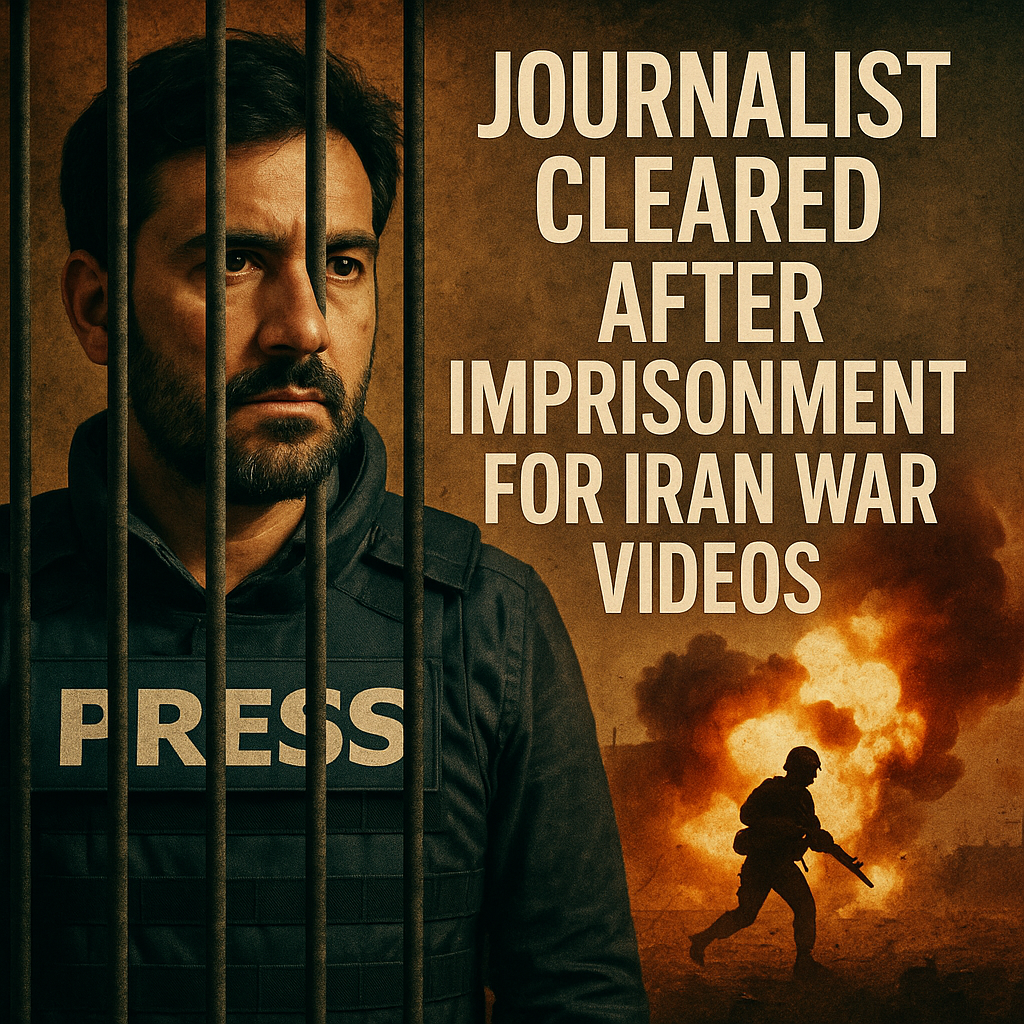
Journalist Cleared After Imprisonment for Iran War Videos
Journalist Cleared After Imprisonment for Iran War Videos
The recent acquittal of a journalist imprisoned for sharing videos related to the Iran war has sparked a complex discussion about press freedom and the consequences of reporting in conflict zones. This case emphasizes the precarious position of journalists in various regimes and the thin line between freedom of expression and national security.

The Case Overview
In a significant ruling, a court has cleared the journalist of all charges linked to posting videos of the Iran war, which had previously led to his arrest. The journalist, whose identity remains protected due to ongoing threats from the Iranian government, was accused of endangering national security by disseminating sensitive information. After months of legal battles and international pressure, the ruling has been hailed by advocates for press freedom worldwide.

Background Context:

– The journalist was initially detained as part of a broader crackdown on media professionals in Iran, especially those covering events deemed sensitive by the government.
– His videos reportedly showcased the realities of military operations and civilian impacts, which challenged the official narrative being projected by Iranian authorities.
This incident serves as a reminder of the overarching challenges faced by those who dare to document the often turbulent realities of war—the risks not only to their own safety but also to the integrity of the information disseminated.
Press Freedom: A Double-Edged Sword
Divergent Perspectives
On one hand, the acquittal is a win for journalism and a validation of the importance of an independent press. Advocates argue that this decision underscores a crucial principle: journalism plays a vital role in informing the public and holding authorities accountable. Organizations like Reporters Without Borders have reiterated the need for protection of journalists, especially in regions where dissent is not tolerated.
Conversely, some commentators caution against naively celebrating such outcomes. They argue that while this particular case may have resulted in a favorable verdict, it does not absolve the broader systemic issues surrounding media repression in Iran and similar regimes. Reports from sources like Al Jazeera articulate the sentiment that while legal victories occur, they are often overshadowed by ongoing threats and constraints on the free press.
Key Considerations Include:
– The implications of laws in countries like Iran that define the boundary between national security and free expression.
– The transient nature of such acquittals, with many journalists remaining imprisoned or facing ongoing harassment.
The Role of International Pressure
International reactions have played a pivotal role in this case. Global human rights organizations and news agencies applied sustained pressure on Iranian authorities, demanding accountability and transparency. The risk of reputational damage and economic consequences, particularly with regard to international relations, are increasingly influencing how regimes respond to internal and external criticisms of their treatment of journalists.
One of the notable outcomes of this case is the procedural transparency it unveiled in the Iranian judicial process—the decision to clear the journalist might reflect a more calculated response to external pressures than a shift in judicial philosophy or governance.
Future Implications and Ongoing Challenges
While the acquittal marks a positive development, it opens up a broader dialogue on the state of journalism in conflict zones and authoritarian contexts. The experiences of this journalist serve as a case study reflecting the ongoing struggle between individual rights and state control.
What Lies Ahead?
1. Continued Monitoring:
– Human rights organizations and international watchdogs must keep a vigilant eye on Iran’s treatment of journalists.
2. Support Networks:
– The establishment of international support networks for journalists facing similar circumstances can help fortify press freedom.
3. Dialogue and Engagement:
– Ongoing international dialogues with Iranian officials could foster an environment that encourages judicial reforms and protection for journalists.
4. Public Awareness:
– Raising public awareness about the challenges faced by those reporting from conflict zones can mobilize support for press freedom initiatives.
In conclusion, while the journalist’s acquittal is indeed a hopeful sign, it is essential to remain grounded in the realities that many others continue to face. The complexity surrounding the issues of press freedom, national security, and individual rights in regimes like Iran is multifaceted and far from resolved. Ensuring that journalists can operate without fear of persecution is not just a matter of justice for one individual; it reflects the health of a society that values truth and accountability.