
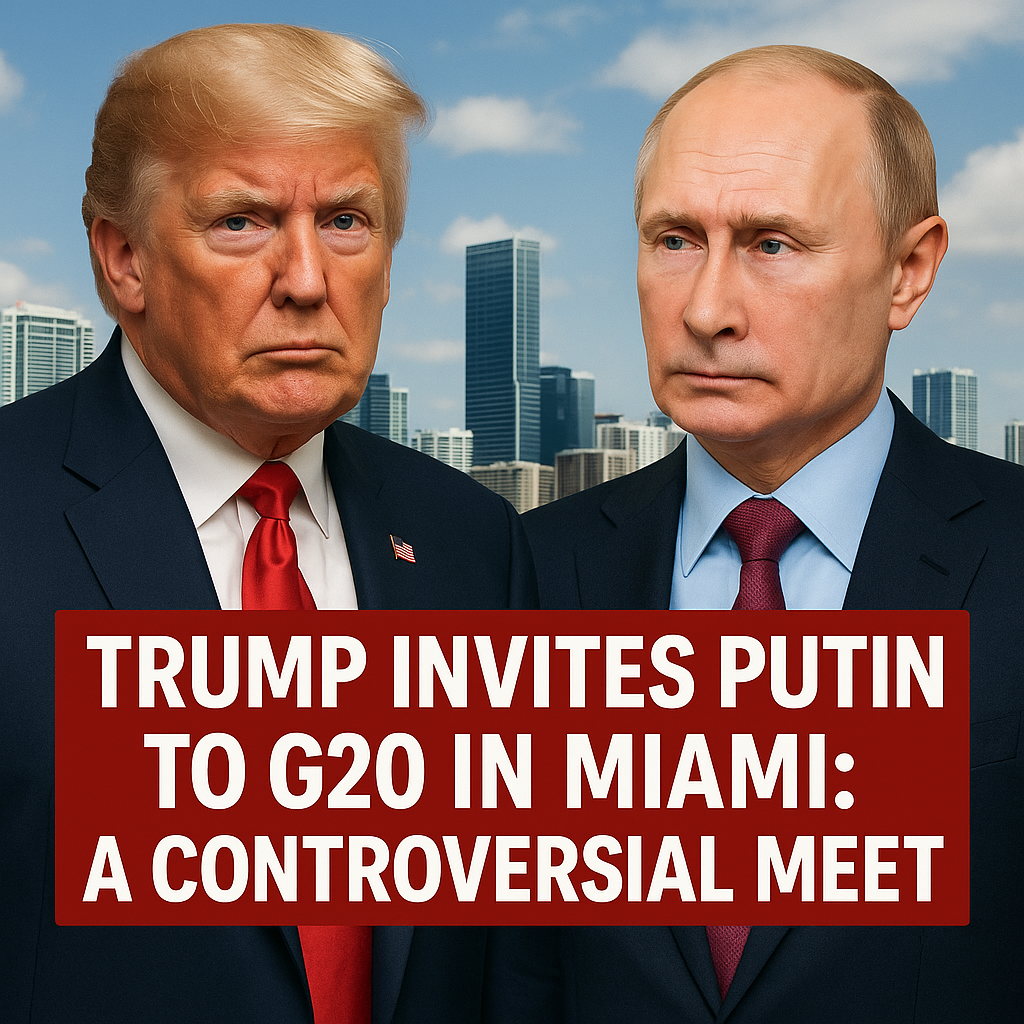
Trump Invites Putin to G20 in Miami: A Controversial Meet
Trump Invites Putin to G20 in Miami: A Controversial Meet
The prospect of a meeting between former U.S. President Donald Trump and Russian President Vladimir Putin is generating significant buzz, especially following Trump’s recent invitation extended for a G20 summit in Miami. This potential rendezvous raises a myriad of questions, revealing complex opinions and sentiments about international diplomacy and the ongoing ramifications of U.S.-Russia relations.

A Tumultuous History: Context Behind the Invitation
To fully grasp the implications of Trump’s invitation, we must consider the historical context underpinning U.S.-Russia relations. The interactions between the two nations have long been marked by tension, especially since the annexation of Crimea in 2014 and the continued conflicts in Ukraine. Despite these strained ties, Trump has consistently advocated for what he calls a “better relationship” with Putin.

A report from RT highlights that Trump’s stance has resonated with some Americans who believe that constructive dialogue could pave the way for a productive relationship. Supporters argue that engaging with world leaders is crucial for fostering peace and navigating geopolitical complexities. In their view, Trump’s attempt to include Putin in the summit is a step towards thawing relations that many consider detrimental to global stability.

Conversely, critics express deep skepticism about the wisdom of such a move. The invitation has drawn ire from several political commentators and analysts who argue that it could validate Putin’s controversial actions on the global stage, undermining Western unity against Russia’s aggressive policies.
Perspectives on the Invitation to G20
Supporters of Dialogue
Proponents of Trump’s invitation point to the importance of dialogue in international relations. They argue that avoiding engagement can lead to more significant misunderstandings and conflicts. The invitation to Putin can be perceived as an opportunity for both leaders to address pressing global issues collaboratively, such as cybersecurity threats, nuclear disarmament, and economic sanctions.
According to statements made by political analysts cited in Al Jazeera, “Diplomacy is crucial, especially when tensions are high; discussions can prevent miscalculations that may lead to conflict.” Moreover, supporters argue that if Trump’s presidency demonstrated anything, it was the potential for groundbreaking negotiations, whether through direct diplomacy or alternative channels of communication.
Critics and Concerns
On the flip side, many express concern that inviting Putin to the G20 could signal a form of endorsement of Russia’s controversial actions. Critics cite numerous violations of international law, including the interference in democratic processes, invasions, and human rights abuses. As emphasized in reports from Sky News, opponents argue that extending an olive branch to Putin could jeopardize ongoing sanctions and undermine international coalitions formed in response to Russian hostility.
Experts critical of the meet contend that giving Putin a platform, especially amid heightened geopolitical tensions, risks legitimizing his regime. They emphasize that the U.S. needs to send a strong message that actions contrary to international norms will not be rewarded, lest they encourage more aggressive behavior from Russia.
Weighing the Evidence: A Nuanced View
As the dialogue surrounding Trump’s invitation unfolds, it becomes clear that there isn’t a singular consensus on the issue. Those in support of the meeting often cite the benefits of direct diplomacy, while detractors emphasize the potential dangers of normalizing relations with a leader perceived as a threat.
Personal stories from both sides of the aisle reveal deep-seated emotions surrounding the issue of diplomacy with Russia. A poll referenced in data from various news outlets indicates that the American public is divided on the efficacy of engaging with Putin, with a considerable percentage expressing skepticism or outright opposition to such efforts.
While there’s no denying the complex dynamics at play, the truth remains that international relations are rarely black and white. The potential meeting represents a test not only of Trump’s diplomatic abilities but also of the current administration’s approach to a longstanding geopolitical challenge.
Closing Thoughts: The Road Ahead
In conclusion, Trump’s invitation to Putin for a G20 summit in Miami encapsulates the complexities of modern diplomacy. It forces us to confront not only the historical animosities and conflicts between the U.S. and Russia but also the need for dialogue in a world fraught with tensions.
As the event approaches, it will be crucial to monitor reactions across political and social spectrums to gauge the broader implications of this controversial invitation. In a world where potent adversaries must navigate their relationships cautiously, Trump’s overture might just signal a new chapter—or exacerbate existing divides. Only time will reveal the outcome.















