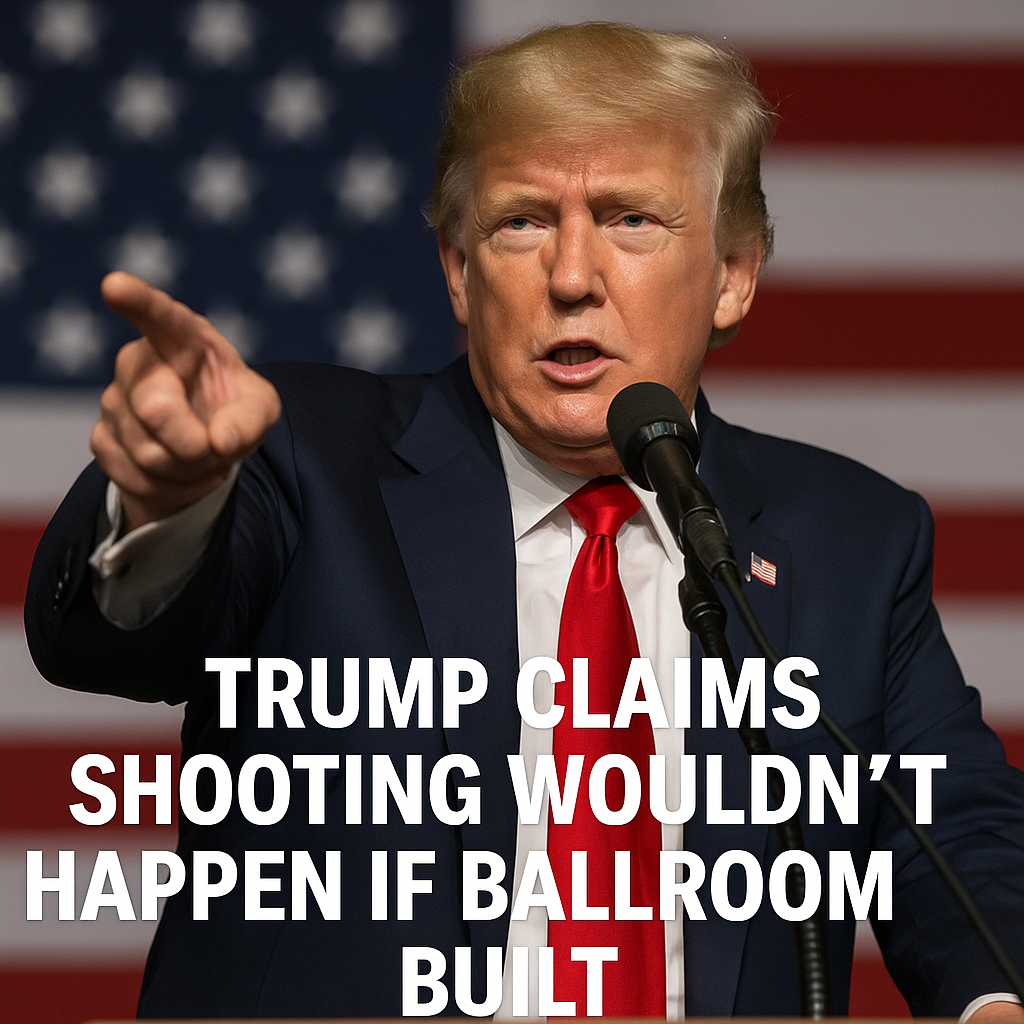
Trump Claims Shooting Wouldn’t Happen if Ballroom Built
Trump Claims Shooting Wouldn’t Happen if Ballroom Built
Former President Donald Trump recently stirred waves of controversy by suggesting that a mass shooting would never have taken place at a Las Vegas event if his proposed ballroom had been built. This statement highlights the complex interplay between urban development, gun violence, and political rhetoric.

Context of the Statement
In an address to supporters, Trump asserted that his vision for a new ballroom would have created significantly safer spaces by fostering community and providing alternatives to violence. He stated, “If I had built the ballroom like I wanted to, that shooting would never have happened.” This remark followed the tragic 2017 mass shooting during a country music festival that led to 58 deaths and hundreds of injuries, making it one of the deadliest mass shootings in modern U.S. history.

Different Perspectives on Trump’s Claim
While some view Trump’s comment as an exaggerated claim aimed at garnering political support, others see it as part of a broader debate on urban architecture’s role in promoting community safety.

For example, some urban planners argue that the design of public spaces can indeed influence societal behavior. Properly designed spaces can deter crime and promote community interaction, which may lower the likelihood of violence. In this view, the ballroom could hypothetically provide a gathering place that diminishes the feeling of isolation that sometimes leads to violent acts.
Conversely, critics argue that Trump’s statement oversimplifies a deeply complex issue. Gun violence in the U.S. is a multifaceted problem intertwined with gun laws, mental health resources, and socio-economic factors. Many point out that attributing the possibility of violence to the absence of a building neglects these essential components of the discussion. “Implying that a structure could have prevented a tragedy of this magnitude minimizes the larger systemic issues at play,” said a spokesperson from an anti-gun violence advocacy group.
The Broader Debate on Violence and Community
The discussion surrounding Trump’s statement reflects a larger dilemma within American society: how urban planning and environmental design can genuinely influence community safety. Various studies have suggested that well-thought-out urban design—such as increased lighting, open sight lines, and communal areas—can indeed contribute to lowering crime rates.
However, some urban theorists caution against putting too much faith in design alone. “While environmental design can help, it’s not a silver bullet. The roots of violence run much deeper and are tied to economic inequality, lack of mental health resources, and, of course, access to firearms,” noted urban sociologist Dr. Karen L. Peterson.
This perspective raises important questions: When addressing gun violence, should policy discussions prioritize architectural solutions? Or is it more crucial to focus on legislative reforms regarding firearms?
Exploring the Impact of Rhetoric on Public Perception
Trump’s commentary also underscores how political rhetoric can shape public perception of safety and responsibility. After mass shootings, the narrative often shifts toward blaming the shooter or advocating for stricter gun laws. With Trump’s assertion, however, the dialogue pivots to urban development, potentially diverting attention from immediate legislative actions aimed at curbing gun violence.
Moreover, his comments may resonate with a segment of the population that feels disillusioned with current urban policies. As cities grapple with rising crime rates combined with limited resources, promises of new developments can sound appealing. Yet, such discussions can carry an undertone of political opportunism, especially when connected to a high-profile figure like Trump.
The Complex Reality of Gun Violence Solutions
Ultimately, Trump’s claim on the ballroom reflects a microcosm of the challenges facing American society regarding gun violence. The relationship between community design, societal behavior, and individual responsibility is multifaceted and rife with differing opinions.
As the conversation continues, it’s crucial for policymakers, urban planners, and community leaders to adopt a comprehensive approach that encompasses not just architectural solutions, but also enacts significant legislative reforms in gun control, improves mental health services, and actively addresses economic disparities.
While Trump’s remarks provide a glimpse into how rhetoric can reshape discussions on violence, they also exemplify the ongoing struggle to find consensus amid a polarized landscape. Addressing gun violence requires more than single feature solutions—it demands a collaborative effort across various sectors that considers the complexity of the issue holistically.
In a society striving for safety, the path forward will likely involve a blend of innovative urban design, robust policy, and community engagement—ensuring that future tragedies do not overshadow the potential for healing and resilience.