
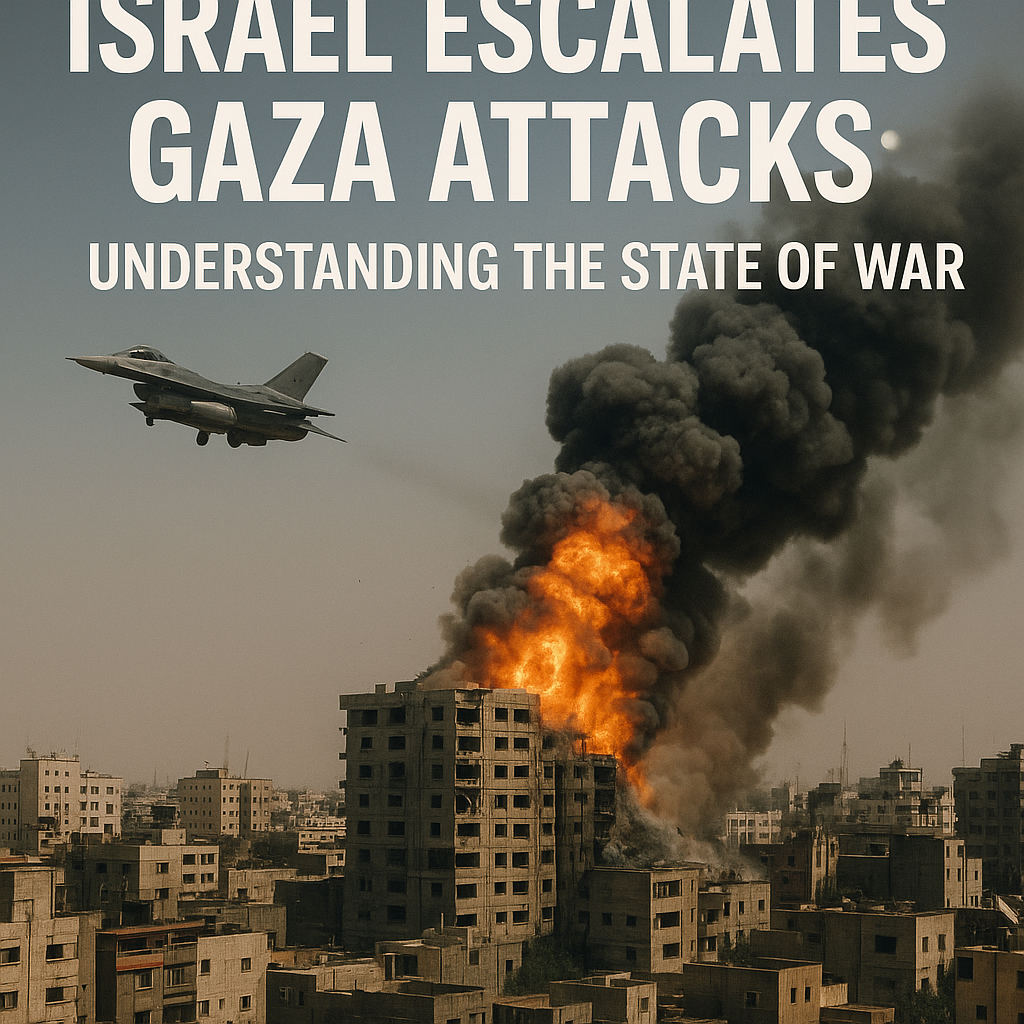
Israel Escalates Gaza Attacks: Understanding the State of War
Israel Escalates Gaza Attacks: Understanding the State of War
The ongoing conflict between Israel and Hamas has intensified significantly, marking a troubling escalation in Gaza. This situation is rooted in complex historical, political, and socio-economic factors that continue to manifest through violent confrontations. Understanding the specifics of this escalation requires examining diverse viewpoints, historical contexts, and implications for both Palestinians and Israelis.

Historical Context of the Conflict
The Israel-Palestine conflict stretches back over a century, with roots in territorial, religious, and cultural disputes. The modern state of Israel was established in 1948, leading to the displacement of hundreds of thousands of Palestinians during the Arab-Israeli War—a period commonly referred to by Palestinians as the Nakba or “catastrophe.” This historical backdrop fuels ongoing clashes and a cycle of retribution and violence that consistently disrupts peace efforts.

Recent escalations in Gaza can be attributed to a combination of factors, including the weakening of Palestinian political unity, increasing Israeli settlement activities, and flare-ups triggered by specific events. For instance, during significant commemorative dates or religious occasions, tensions often rise, as demonstrated in recent months when protests erupted over the Israeli government’s actions in sensitive areas such as East Jerusalem.

The Current Escalation: Reasons and Reactions
Several reputable sources outline varying perspectives on why Israel has intensified its military actions in Gaza recently. According to Al Jazeera, Israeli officials assert that the current offensive is a necessary response to rocket fire and violent protests by Hamas, emphasized by ongoing tensions in the West Bank and frequent confrontations at holy sites. Israeli Defense Minister Yoav Gallant has articulated that “Hamas needs to understand that the price of attacking us will be heavy,” suggesting an intent to deter further aggression.
Conversely, RT News highlights the perspective of Palestinian authorities and humanitarian organizations, arguing that Israel’s retaliatory measures are disproportionate and often result in excessive civilian casualties, including women and children. Activists report that the airstrikes have led to widespread devastation and a humanitarian crisis in Gaza, exacerbating already dire living conditions. This viewpoint underscores the need for a balanced approach to ensure protection for civilians rather than perpetuating a cycle of violence.
Civilian Impact and Humanitarian Concerns
The humanitarian consequences of the current conflict are severe, with reports citing increased displacement and casualties among civilians. According to sources, there has been a significant rise in casualties, which has prompted global human rights organizations to condemn the violence. In particular, reports from both local NGOs and international observers illustrate that hospitals are overwhelmed by the influx of injured civilians, and essential services such as water and electricity remain critically disrupted.
Organizations such as the United Nations have called for immediate ceasefire negotiations to prevent further loss of life and ensure access to humanitarian aid. However, these calls often clash with the Israeli government’s insistence on continuing military operations until specific security goals are achieved, further complicating the efforts for peace.
A Path Forward: Diplomatic Initiatives and Prospects for Peace
The current escalation poses challenging questions about the future of Israeli-Palestinian relations and the broader implications for regional stability. Diplomatic efforts remain crucial, yet they face substantial hurdles. The division between Palestinian factions, primarily Hamas and the Palestinian Authority, adds layers of complexity to any negotiation. Additionally, the evolving political landscape in Israel, characterized by hardliner positions, appears to undermine prospects for compromise.
Sky News posits that international mediators, including the United States and other nations, must play a decisive role in broker a ceasefire and reignite dialogue for a two-state solution. The U.S. has reiterated its commitment to Israel’s right to self-defense while expressing concern over civilian casualties, highlighting the delicate balance needed to address both security and humanitarian needs.
Conclusion: Navigating Uncertainty
As Israel escalates its attacks in Gaza, the multifaceted nature of the conflict requires a nuanced understanding that considers the diverse perspectives of involved parties. While Israeli officials maintain the need for decisive military action to ensure national security, the humanitarian implications for Palestinians cannot be overlooked. The cycle of violence not only devastates communities but also complicates the already fragile fabric of relations across the region.
In light of these challenges, the international community’s role remains critical in advocating for civilian protection, promoting dialogue, and fostering long-term peace initiatives. Ultimately, navigating the uncertainty inherent in this conflict calls for a concerted effort towards mutual understanding and reconciliation, recognizing that true security can only be achieved through peace rather than warfare.















