
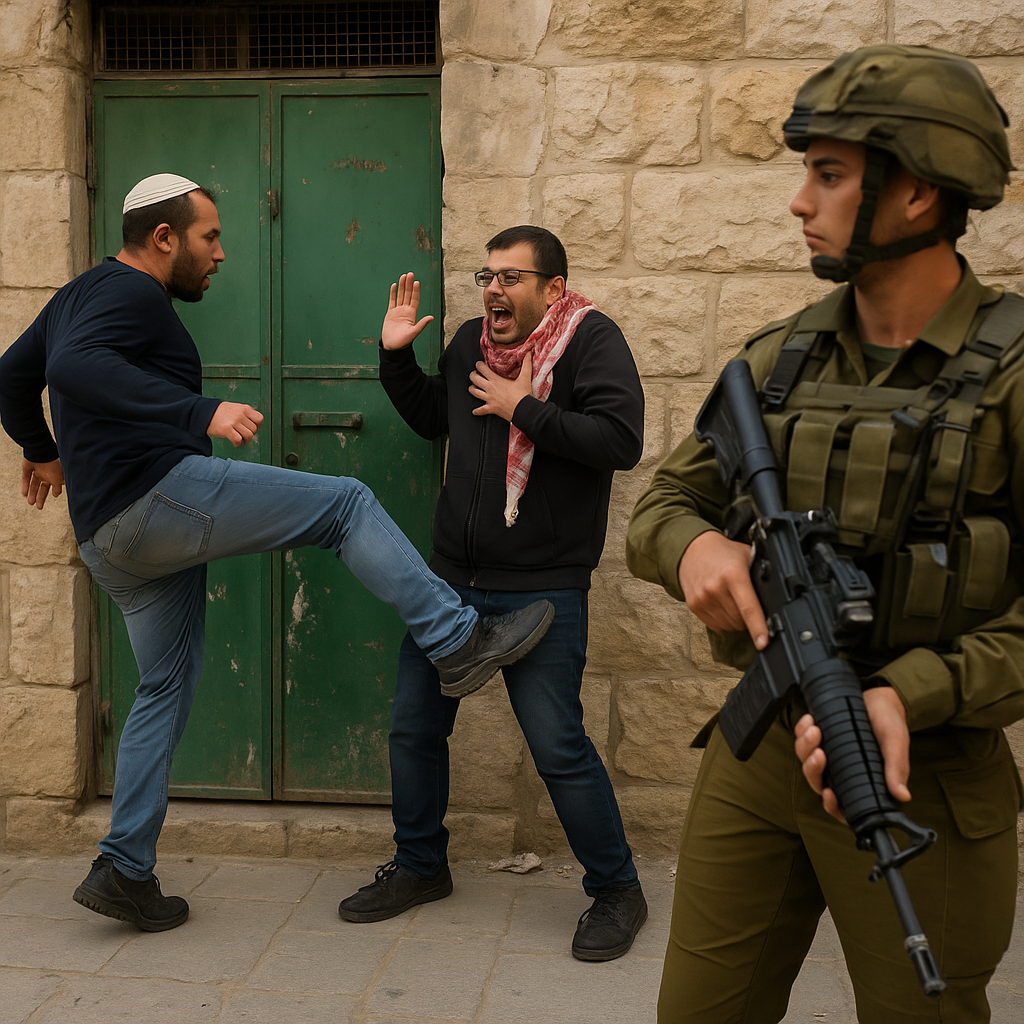
Israeli Settler Attacks Hebron Activist’s Home Amid Soldier’s Watch
Tensions in Hebron: The Impact of Settler Violence on Activism
The recent attack on the home of a Hebron activist by Israeli settlers, conducted under the watchful eye of a soldier, has reignited discussions about the complex dynamics in the region. This incident not only highlights the ongoing conflict but also raises critical questions about the role of security forces in these tense interactions.

An Incident Under Observation
Reports indicate that a Hebron-based activist, known for documenting abuses against Palestinians in the West Bank, was targeted by a group of Israeli settlers. Eyewitness accounts, including video footage, show settlers throwing stones at the activist’s home while an Israeli soldier stood nearby, seemingly indifferent. This incident has drawn widespread criticism from various human rights organizations, emphasizing the apparent complicity of security forces.

The activist in question has been vocal about the escalation of settler violence, arguing that such attacks are part of a broader strategy to intimidate Palestinian residents and suppress activism. Certain reports suggest that settlers often feel emboldened by a lack of accountability, leading to a culture of impunity. Activist groups assert that this attack underscores the urgent need for accountability and intervention to protect Palestinian civilians.

Diverging Perspectives on Settler Violence
While the incident has received significant attention, viewpoints about its implications differ markedly. Human rights organizations like Amnesty International and Human Rights Watch have condemned not only the actions of the settlers but also the failure of Israeli authorities to intervene effectively. They argue that the soldiers’ behavior represents a systemic issue—one where security for settlers outweighs the rights and safety of Palestinian residents.
Conversely, some Israeli officials and settlers defend their actions as a necessary response to threats, framing their presence in Hebron as an effort to ensure security. They contend that the narrative surrounding settler violence often neglects the context of hostility that settlers face from the Palestinian population. In their view, these actions are portrayed as self-defense rather than aggression.
This divergence is emblematic of the broader debate regarding the Israeli-Palestinian conflict, where narratives are deeply influenced by political, cultural, and historical factors.
Human Rights Implications
The implications of this attack extend beyond mere property damage. Human rights advocates claim that such acts of violence against activists threaten the very fabric of civil society in the occupied territories. With the environment for dissent against Israeli policies becoming increasingly hostile, activists fear a chilling effect on their work.
Moreover, the interaction between settlers and soldiers raises ethical questions about the role of security forces. If soldiers are perceived to stand by during such attacks, the legitimacy of their role in maintaining peace and order is called into question. Critics argue that the presence of soldiers should deter violence, but when it appears to enable it, the ramifications for trust in security institutions become significant.
Conclusion: Seeking a Balance
As tensions continue to rise in areas like Hebron, the need for a balanced dialogue becomes ever more critical. While addressing the actions of settlers, it’s crucial to also remain attentive to the broader issues at play. The dual narratives surrounding such incidents often complicate efforts for peace and reconciliation.
Moving forward, fostering a clearer understanding of the complex layers at play is essential for both sides. It’s not merely an issue of right and wrong, but a humanitarian crisis that requires an informed, nuanced approach. Acknowledging the fears and grievances on both sides could pave the way for more effective dialogue, aiming at lowering the flames of violence in a region that has seen too much conflict.
In conclusion, while the attack on the activist’s home reflects a troubling trend within the ongoing Israeli-Palestinian tension, it also serves as a reminder of the need for systemic change. Only through collaborative and comprehensive peace-building efforts can a sustainable resolution be achieved, allowing both Israelis and Palestinians to coexist with dignity and safety.















