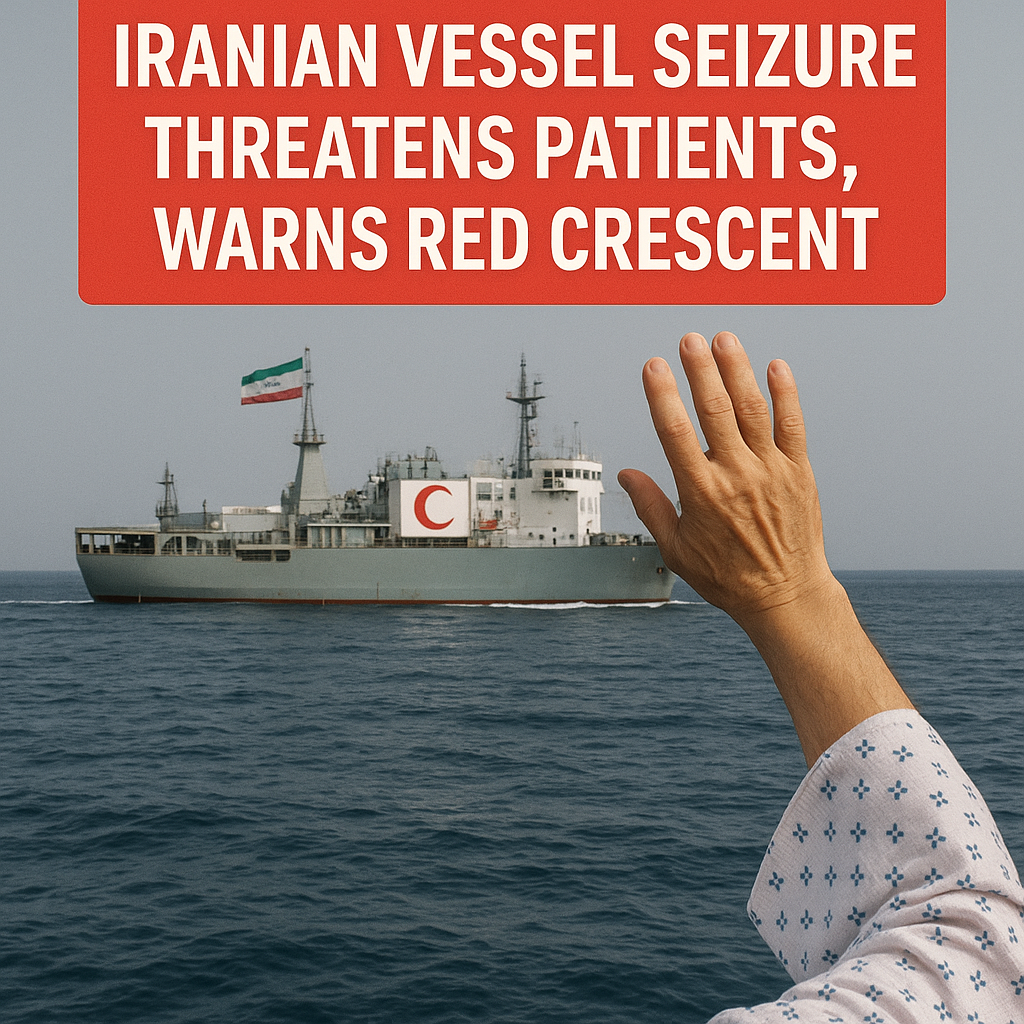
Iranian Vessel Seizure Threatens Patients, Warns Red Crescent
Iranian Vessel Seizure Threatens Patients, Warns Red Crescent
The recent seizure of an Iranian vessel has raised significant concerns among health organizations, particularly the Red Crescent, which warns that this act could lead to dire consequences for vulnerable patients reliant on medical supplies. This development not only highlights the geopolitical tensions in the region but also underscores the humanitarian ramifications that often accompany such maritime confrontations.

Geopolitical Tension and Maritime Security
The escalating tensions in the waters surrounding Iran and its neighbors have become a focal point for international relations. Various reports suggest that the Iranian vessel was intercepted amid claims of transporting contraband, although Iran vehemently disputes these allegations. This incident follows a pattern of maritime confrontations wherein both sides bolster their naval presence, leading to an environment fraught with uncertainty.

According to RT News, the Iranian government has condemned the seizure, stating it as an unwarranted act of aggression. Iran’s Foreign Ministry spokesperson was quoted saying, “Such actions will only escalate tensions and could have serious humanitarian implications.” This sentiment echoes a broader concern shared by many who argue that geopolitical maneuvers often overlook the critical impact on civilian lives, particularly those who rely on essential goods for their survival.

In contrast, sources from Sky News point out that nations often justify such seizures under the pretext of enforcing international sanctions, particularly against nations like Iran. This dichotomy raises questions about the balance between enforcing international law and respecting humanitarian needs.
Humanitarian Concerns from the Red Crescent
The Red Crescent’s statement on the escalating crisis provides a vital perspective on the matter. Officials have expressed alarm over the implications of the maritime seizure, warning that it jeopardizes the delivery of medical supplies crucial for patients in Iran, many of whom suffer from chronic conditions. “Our patients cannot be collateral damage in these geopolitical disputes,” a Red Crescent spokesperson lamented.
This raises significant ethical questions surrounding the enforcement of sanctions and naval blockades. While governments often cite national security as a reason for such measures, the humanitarian fallout is undeniably severe. The inability to transport essential medical supplies could lead to devastating outcomes, particularly in a country where healthcare resources are already stretched thin.
The Balance of National Security and Humanitarian Needs
The divide between enforcing sanctions and maintaining humanitarian standards is pivotal in understanding the complexities surrounding incidents like the Iranian vessel’s seizure. The law of the sea may prioritize territorial waters and impose restrictions; however, the consequences on human lives present a compelling argument for a more nuanced approach.
Reports indicate that while tensions escalate, many countries within international coalitions voice support for maintaining humanitarian corridors even amidst sanctions. As Al Jazeera notes, the international community must weigh the validity of national security interests against the moral imperative to assist those in need.
In the face of escalating tensions, a dialogue around mitigating humanitarian impacts needs to be initiated urgently. Scholars and policymakers advocate that nations derive a new framework that does not pit security against human needs, allowing both aspects to coexist harmoniously.
Navigating the Path Ahead
In light of the Iranian vessel seizure incident, stakeholders—be it national governments, humanitarian organizations, or international coalitions—must engage in constructive dialogues that address both security and humanitarian concerns. The Red Crescent’s warnings serve as a reminder that while nations navigate the treacherous waters of geopolitics, the effects on human lives should remain a central aspect of their deliberations.
The uncertainty that looms over such incidents reflects the complexity of international maritime law and its often-ignored repercussions for health care delivery. Both advocates and critics of maritime interventions must acknowledge the imperative need for safeguarding humanitarian principles, even in the murky waters of global politics.
In conclusion, as various nations assess their strategies related to Iranian economic sanctions and maritime security, the voices of those affected—especially the sick and needy—must be amplified. Only then can a more humane approach be fostered, one that prioritizes the lives at stake without compromising the essential principles that govern international relations. The stakes are high, and the stakes must matter.