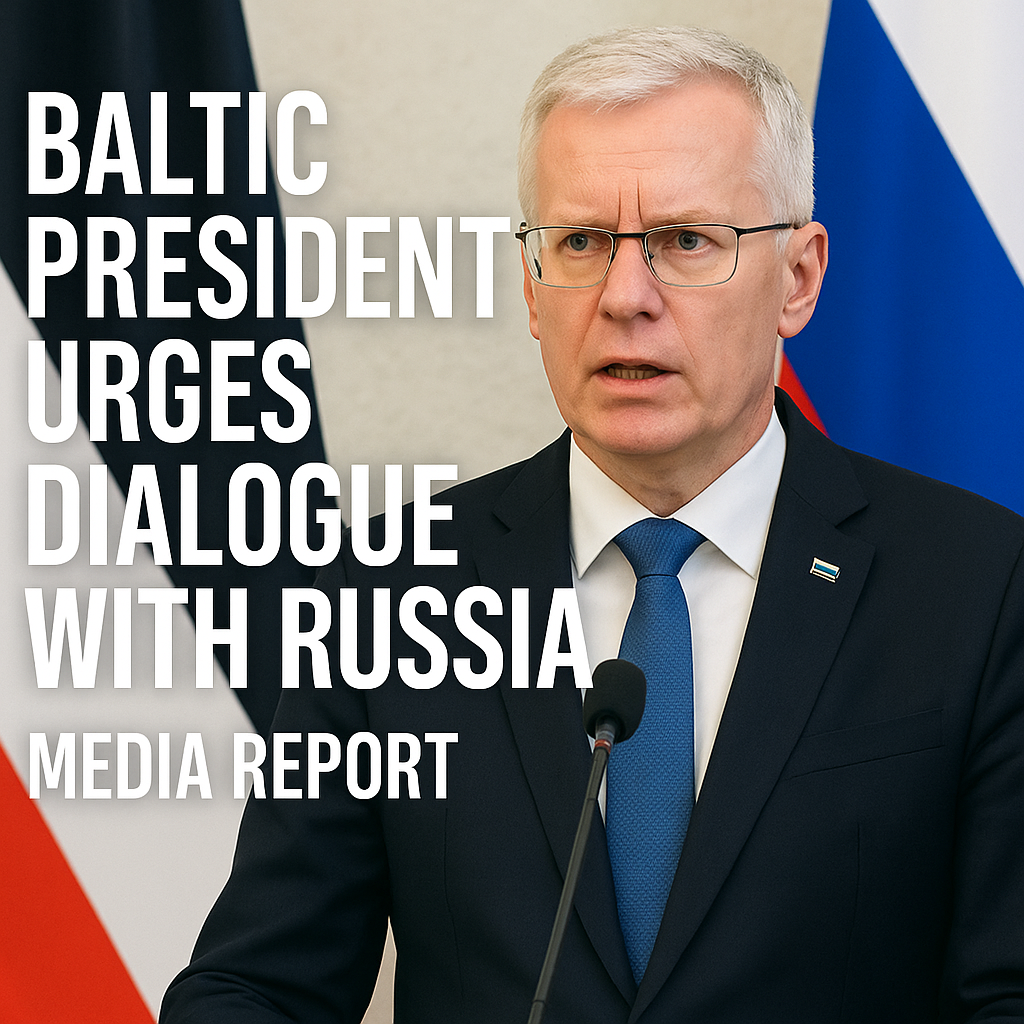
Baltic President Urges Dialogue with Russia – Media Report
Baltic President Urges Dialogue with Russia – Media Report
In recent discussions surrounding international relations, the Baltic president has taken a bold stance, advocating for dialogue with Russia amid the ongoing geopolitical tensions. This perspective has sparked considerable debate, fostering varied reactions across the European political landscape.

The Case for Engagement
The president of Estonia has emphasized the importance of dialogue, suggesting that communication channels could be crucial in diffusing current hostilities. Proponents of this view argue that open dialogue could reduce misunderstandings and foster a more stable environment in the Baltic region. As one expert noted, “Diplomacy is often the first step toward resolving long-standing conflicts.”

This call for conversation comes amidst heightened rhetoric and military posturing in Eastern Europe. Supporters argue that diplomatic engagements, even when challenging, can prevent conflicts from escalating. For example, peace negotiations during the Cold War serve as a historical case where dialogue helped to ease tensions, allowing for more constructive exchanges.

Diverse Reactions in Europe
However, not all European leaders share this sentiment. Critics within the region caution against any forms of normalization with Russia, highlighting concerns about Kremlin’s aggressive actions in Ukraine and beyond. For instance, a report from Al Jazeera details how many Eastern European nations remain wary of Russia’s intentions, viewing dialogue as a potential sign of weakness. “Engagement may be misinterpreted as an endorsement of Russia’s actions,” stated a representative from Poland, who prefers a more robust posture against Russian aggression.
This contrast in perspectives illustrates the complexities surrounding the issue. While the Estonian president may be advocating for dialogue as a means of safeguarding regional peace, other leaders fear that such openness could undermine collective European security and unity against aggression from the East.
The Balance of National Interests
When considering the Baltic president’s proposal, it is essential to weigh national interests against the backdrop of broader European security concerns. Countries that border Russia often have historical grievances that influence their current political strategies. The sentiment is particularly palpable in the states that faced direct military threats in the past.
The Estonian leader’s push for dialogue suggests a recognition of the changing geopolitical landscape and an attempt to adapt. Yet, as various political analysts highlight, any dialogue must be underpinned by clear expectations and mutual respect. Unwarranted concessions or a lack of firmness from European leaders could unintentionally embolden Russian actions.
The Need for a Nuanced Approach
The question remains: how should European nations navigate this delicate balance? A nuanced approach may involve establishing clear parameters around dialogue, ensuring that any discussion does not stray into compromising territory. Engaging with Russia does not mean ignoring its actions; rather, it involves critically assessing how to handle the relationship amid persistent challenges.
Moreover, recent developments in geopolitical dynamics, including shifts in NATO’s strategy and relationships with other global powers, further complicate matters. Various reports indicate that Western allies are currently reevaluating their defense strategies in light of ongoing tensions, thereby impacting how dialogues could be structured moving forward.
Conclusion: Dialogue as a Double-Edged Sword
The call for dialogue from the Baltic president underscores a vital yet contentious topic in international relations. While fostering communication can play a pivotal role in mitigating conflicts, it also risks fostering untenable conditions if not carefully managed. Balancing national interests, historical context, and future challenges will be essential for European leaders as they decide how to approach dialogues with Russia.
In the coming months, how Europe navigates its relationship with Russia will undoubtedly shape geopolitical stability not just in the Baltic region but also across the broader European continent. As discussions unfold, the importance of a measured, cohesive strategy becomes ever clearer—one that prioritizes security while acknowledging the complex realities of diplomacy.