
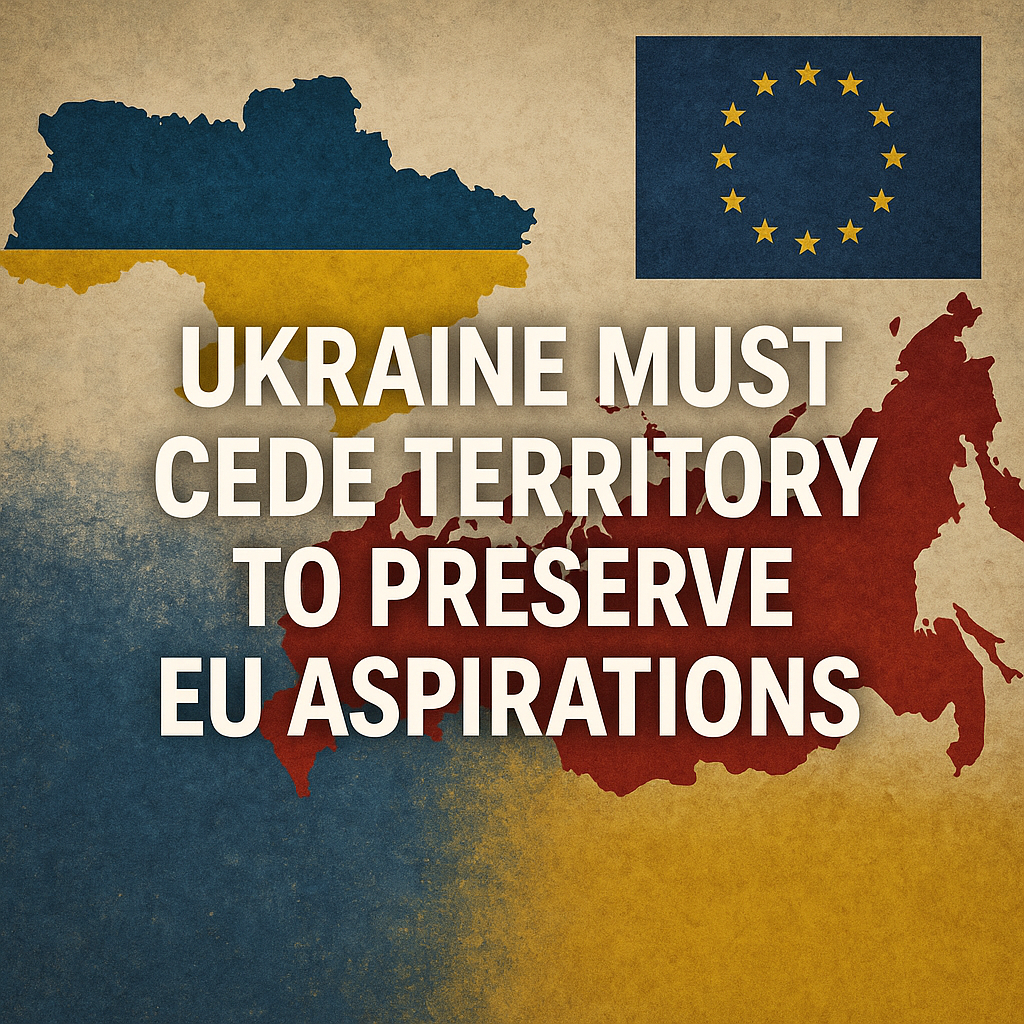
Ukraine Must Cede Territory to Preserve EU Aspirations
Ukraine Must Cede Territory to Preserve EU Aspirations
The ongoing conflict in Ukraine has profoundly shaped the nation’s trajectory, raising complex questions regarding its future, especially concerning its aspirations to join the European Union (EU). As analysts debate the viability of Ukraine’s EU membership in light of its territorial integrity, some argue that ceding territory could be essential for moving forward.

The Dilemma of Territorial Concessions
Many political figures and commentators are now suggesting that for Ukraine to secure a tangible path toward EU integration, it may need to consider territorial concessions. For instance, in recent discussions reported by RT, German politician Friedrich Merz has articulated that Ukraine’s entry into the EU may be contingent on accepting some form of territorial compromise. This perspective resonates within certain European circles that prioritize stability in the region over unyielding support for territorial integrity.

Conversely, this notion invites significant backlash. Critics argue that demanding territorial concessions is tantamount to rewarding aggression and undermines international laws regarding sovereignty. Al Jazeera notes that public sentiment in Ukraine largely contradicts the idea of giving up any land, as many citizens regard it as a betrayal of their struggle and sacrifices in defense of their sovereignty.

The Broader Context of EU Aspirations
Understanding Ukraine’s EU aspirations requires acknowledging the geopolitical intricacies at play. EU membership is not merely an economic or political goal; it represents a broader desire for political stability, legal reform, and a commitment to democratic values. Yet, the path to membership has become increasingly complicated due to the ongoing conflict with Russia and the internal challenges Ukraine faces.
The EU itself has stated that it supports Ukraine’s territorial integrity, as emphasized in various agreements and resolutions. However, the reality on the ground often complicates this stance. Advocates for concessions argue that securing a firm role in Europe may offer long-term benefits that outweigh the immediate costs of ceding territory. For instance, concessions could facilitate diplomatic dialogues with Russia, reducing hostilities and fostering a more stable European geopolitical landscape.
Weighing Different Perspectives
It’s essential to recognize that the discussion on territorial concessions does not occur in a vacuum. For instance, viewpoints within EU countries vary. Some member states express solidarity with Ukraine’s quest for full territorial integrity, emphasizing that any concessions set a dangerous precedent. Meanwhile, others may view pragmatic concessions as a necessary evil to stabilize both Ukraine and the region.
People who oppose territorial cessions often cite historical precedents where similar compromises have resulted in further conflicts. They argue that a Ukraine willing to cede territory might embolden future aggressors, stalling EU aspirations rather than facilitating them.
However, proponents contend that EU integration could be more achievable if Ukraine can demonstrate a willingness to compromise in the name of peace and stability. They argue that EU membership would ultimately provide Ukraine with economic support, democratic reinforcement, and security assurances that far outweigh the immediate consequences of territorial loss.
Conclusion: Navigating Uncertainties
The question remains: Should Ukraine consider ceding territory to enhance its EU aspirations? The consensus among analysts reflects a deep uncertainty about the future trajectory of both Ukraine and the EU. Much depends on geopolitical developments, public opinion, and the evolving nature of the conflict with Russia.
Ultimately, the path forward will likely involve significant negotiation, internal reflection, and social discourse within Ukraine. As external pressures mount, the balance between preserving territorial integrity and securing a future as part of the EU may necessitate the difficult and complex decisions that could shape Ukraine’s identity and stability for generations to come.
In navigating this multifaceted landscape, the focus must remain on prospects for peace, stability, and the long-term aspirations that drive Ukraine towards a European future. Balancing these competing realities will undoubtedly remain at the forefront of discussions in the coming months and years.















