
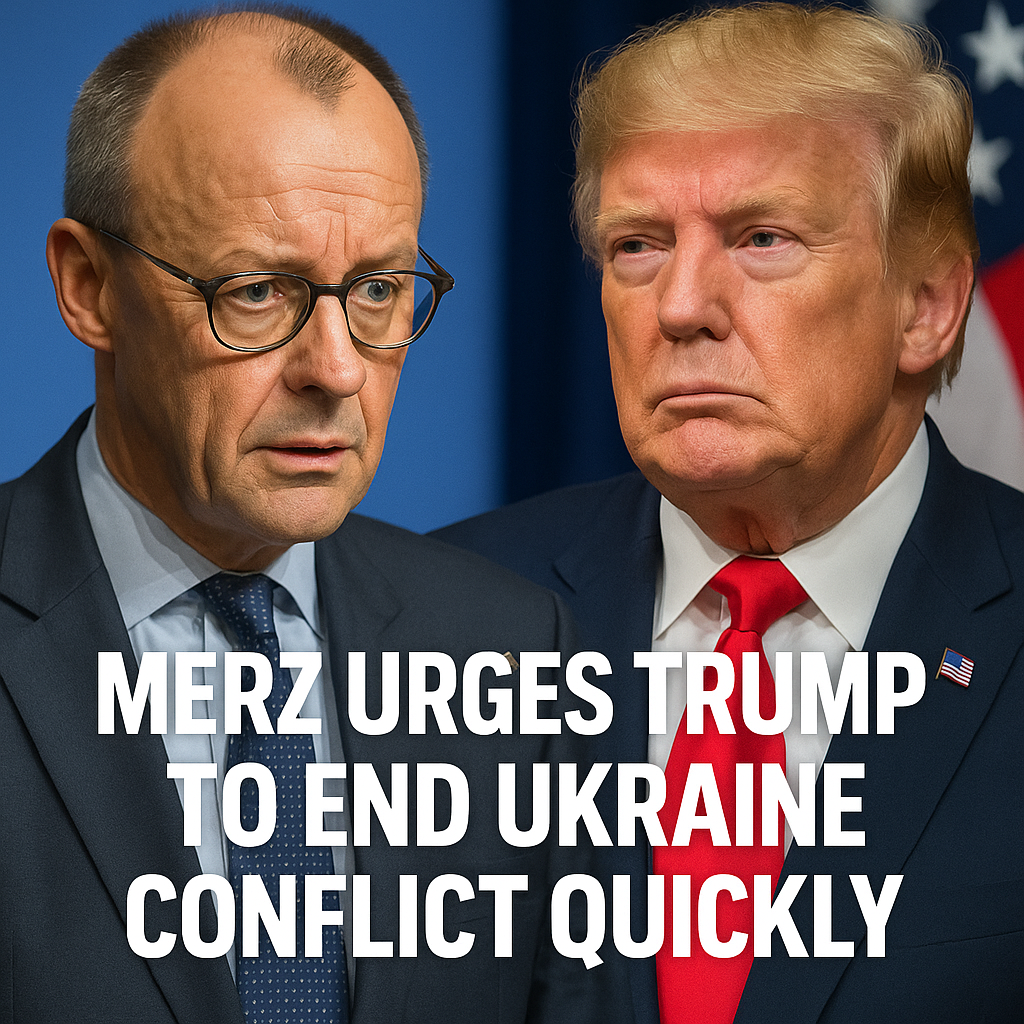
Merz Urges Trump to End Ukraine Conflict Quickly
Merz Urges Trump to End Ukraine Conflict Quickly
In the ongoing discourse surrounding the Ukraine conflict, German politician Friedrich Merz has made headlines by urging former President Donald Trump to take a pivotal role in expediting an end to the war. This request signifies deeper geopolitical implications and reflects the complexities of international relations.

The Urgency of Resolution
Merz, who leads the Christian Democratic Union (CDU) in Germany, articulated his concerns amid growing fears of the conflict escalating further. Understanding this urgency is essential; the war not only affects the immediate region but has broader repercussions for global security and economic stability.

The conflict’s protraction is creating a strain on resources in Europe, leading to heightened refugee crises and economic challenges exacerbated by rising energy prices. As such, Merz’s appeal to Trump is aimed at leveraging Trump’s influence in Washington to advocate for a swift peace resolution.

Perspectives from the U.S. Political Landscape
The call for Trump to act brings to light the divided perspectives within U.S. politics on the Ukraine conflict. While many Democratic lawmakers are steadfast in their support for continued military aid to Ukraine, a faction within the Republican Party, including Trump and his supporters, has shown skepticism towards prolonged involvement. Some argue that U.S. resources could be better allocated domestically, a sentiment echoed by various conservative commentators.
Conversely, Merz emphasizes the importance of American leadership in international conflicts, stressing that the U.S. has historically played a crucial role in mediating such crises. This contrast in viewpoints underscores a pivotal question: Can the U.S. effectively balance its domestic priorities with its international obligations?
The Geopolitical Landscape: Complex and Dynamic
Navigating the geopolitical landscape, Merz’s proposal sheds light on the delicate balance of power and the complexities of international relations. While Trump’s approach to foreign policy may lean toward isolationism, the dynamics of global conflicts often necessitate collaborative efforts.
Several news sources highlighted the potential shift in strategy that could ensue if Trump reclaims a substantial role in American politics. For instance, if Trump prioritizes negotiations over military intervention, it may pave the way for dialogue aimed at peace in Ukraine. However, skepticism remains regarding Trump’s commitment to international alliances and the implications of his “America First” ideology on global stability.
It’s worth noting that Trump’s previous administration had a tumultuous relationship with NATO and other international bodies, raising concerns about his willingness to engage in multilateral diplomacy. As such, Merz’s appeal serves not only as a call to action but as an acknowledgment of the complicated tapestry of today’s international relations.
Varied International Reactions
Reactions to Merz’s comments have varied significantly. Some international analysts view his suggestion as a hopeful nudge towards diplomatic resolutions. Others, however, express skepticism regarding Trump’s approach to foreign policy, warning that his prior stance may complicate any peace efforts.
Public opinion on this matter further divides; while many Americans support Ukraine against Russian aggression, they are also wary of entanglement in prolonged conflicts. Thus, Merz’s call to expedite a resolution elicits a range of responses, prompting important discussions about the responsibilities of global leaders.
Conclusion: The Path Forward
The path forward in resolving the Ukraine conflict remains fraught with challenges, yet Merz’s call to Trump serves as a reminder of the impact that leadership can have on global issues. While navigating these complex dynamics, it is essential to engage in dialogues that reflect shared concerns and collective security.
Ultimately, whether Trump’s influence could lead to meaningful negotiations and a timely cessation of hostilities remains an open question. As the world watches closely, it is clear that the stakes are high not only for Ukraine but for the international community at large. The urgent need for decisive action underscores the importance of collaboration across political lines, reflecting the shared responsibility of global leaders in fostering peace and stability.
The complexities of the situation highlight that while political motivations often complicate responses to crises, the collective goal remains the same: a durable and just resolution to the conflict.















