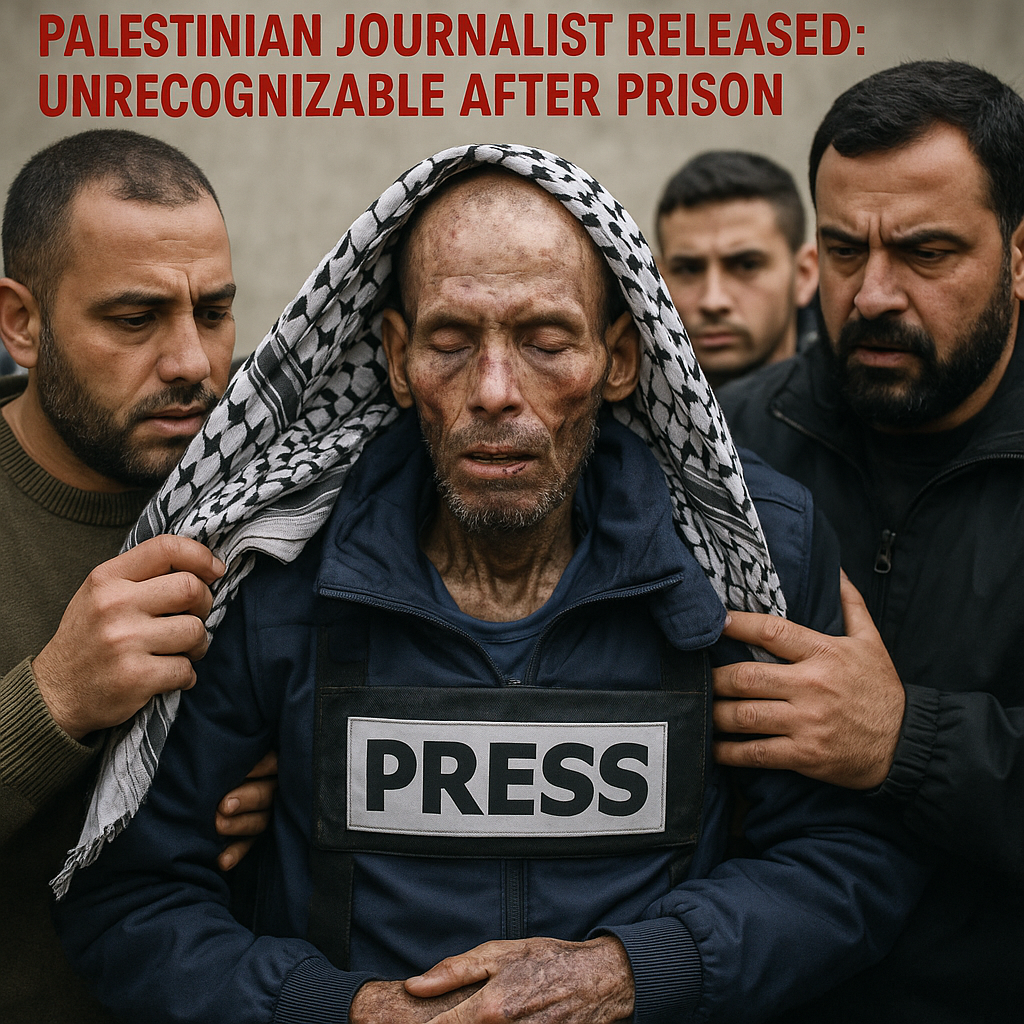
Palestinian Journalist Released: Unrecognizable After Prison
Palestinian Journalist Released: Unrecognizable After Prison
The recent release of a Palestinian journalist from Israeli prison has generated widespread concern and sparked discussions about the conditions faced by detainees. Reports suggest that the journalist appeared unrecognizable due to severe physical and psychological effects of imprisonment, a revelation that underscores the complex narratives surrounding media freedom and human rights in conflict zones.

The Circumstances of Release
The journalist in question was imprisoned under accusations widely considered to hinge on their work and vocal criticism of Israeli policies. Sources indicate that during their period of detention, the individual suffered from significant health issues and was reportedly held in conditions that many human rights organizations characterize as inhumane.

Al Jazeera describes the momentous occasion of the release, illustrating the emotions of family and supporters waiting outside the prison gates. Upon release, the journalist’s physical state raised alarms; the individual was said to be drastically altered, both physically and emotionally, from when they had entered prison. The report highlights the ongoing debate surrounding the treatment of political prisoners and the implications for freedom of speech and press in Palestine.

Conflicting Narratives: Supporters vs. Critics
The contrasting perspectives on this situation reveal a fractured dialogue within both the Palestinian territories and the international community. Supporters underscore the journalist as a victim of repression, a symbol of the struggle for freedom of expression under oppressive conditions. Reports from RT reinforce this view, citing testimonies from peers and family, who detail the toll that such treatments can exert on a person’s well-being.
Conversely, critics of the journalist’s work often argue that their reporting incited violence or undermined state security, framing the imprisonment as a necessary measure to ensure stability. Sky News notes that while this perspective exists, it fails to acknowledge the broader implications of suppressing journalistic voices that seek to depict the realities of life under occupation.
This dichotomy indicates a stark divide: many see the journalist as a hero fighting against authoritarianism, while others view them as a participant in a broader narrative of conflict and resistance.
The Broader Implications for Journalism and Human Rights
The release of the Palestinian journalist raises significant questions about the state of journalism in conflict zones. The treatment and release of reporters can serve as a litmus test for media freedom in any region, reflective of a government’s commitment to uphold human rights standards. The psychological and physical toll on journalists like the one released can deter others from reporting on contentious issues, further stifling discourse.
Moreover, the journalist’s ordeal is not isolated; numerous reports indicate that journalists in Palestine and other regions under conflict experience harassment, arrest, and violence. This environment can lead to self-censorship, compromising the integrity and richness of journalism.
A Call for Accountability
Human rights organizations have long called for accountability regarding the treatment of journalists. As noted in various reports, including those from Al Jazeera and RT, there is an urgent need for global advocacy in safeguarding freedom of the press. The international community is urged to confront such issues, demanding transparency and improved conditions for those incarcerated.
While some governments and organizations remain reticent—believing that political motives often underpin the treatment of dissenting voices—many advocates argue that safeguarding journalistic freedom is essential for democracy itself.
In conclusion, the release of the Palestinian journalist serves as a stark reminder of the challenges faced by media personnel in conflict zones. The incident illustrates not only the personal consequences for journalists but also the broader implications for freedom of expression and human rights discourse. As narratives continue to unfold, drawing attention to these issues is crucial for fostering an understanding of the complexities involved in such geopolitical landscapes. The future of journalism—and indeed, democracy—may very well depend on how societies respond to these pressing humanitarian concerns.