
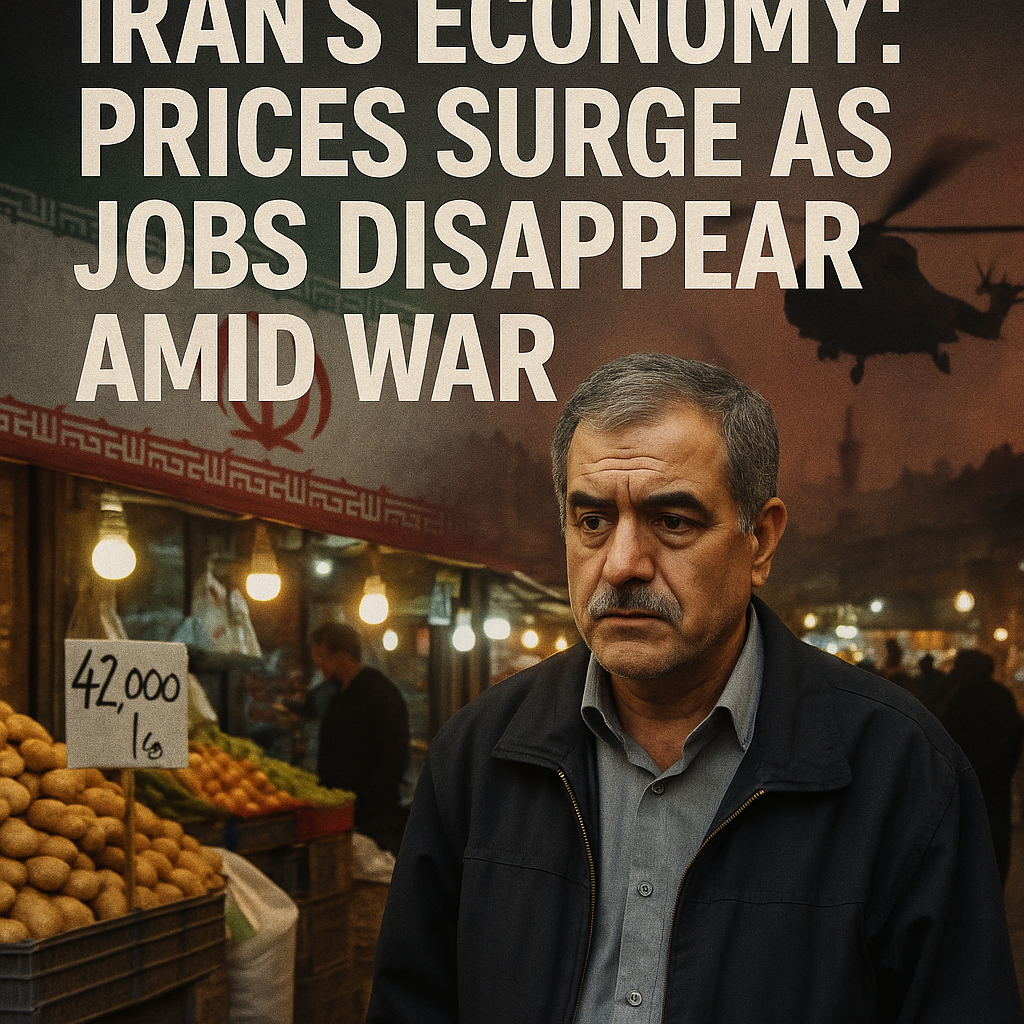
Iran’s Economy: Prices Surge as Jobs Disappear Amid War
Iran’s Economy: Prices Surge as Jobs Disappear Amid War
In recent months, Iran’s economy has faced staggering challenges, marked by soaring prices and a troubling decline in job availability. As the nation grapples with the effects of ongoing geopolitical tensions, including the ramifications of prolonged conflict, the economic landscape has shifted dramatically for many Iranians.

The Current Economic Landscape
The Iranian economy is experiencing a perfect storm of crises that have resulted in escalating prices for basic goods and a worrying rise in unemployment. Reports indicate that inflation rates have surged, with many essentials becoming increasingly out of reach for average citizens. According to Al Jazeera, prices of food items and other daily necessities have risen sharply as the country’s economy continues to struggle under the weight of sanctions and war-related disruptions.

Interestingly, while consumers feel the pinch as their purchasing power diminishes, some sectors are witnessing a paradox where certain goods are still in demand. Despite the economic turmoil, a small number of businesses continue to thrive, particularly those linked to government contracts or that serve the military effort. This highlights a stark divergence in the impacts of the economic crisis, where not all segments of the population are affected equally.

Job Market Deterioration
Compounding the effects of rising prices, Iran is witnessing a concerning trend in job availability. As industries buckle under pressure, the job market has contracted significantly. Many businesses have shut down or scaled back operations, resulting in layoffs and a stagnant job creation rate. Al Jazeera reports that young Iranians, who constitute a significant portion of the workforce, are particularly affected. With fewer prospects in both public and private sectors, frustration and disillusionment are palpable among the youth, many of whom are struggling to find any form of employment.
RT echoes these sentiments, noting that the country’s economic mismanagement and the impact of international sanctions have created a dilemma for the Iranian populace. The diminished job market poses not only immediate financial challenges but also long-term societal risks, as frustrated youths may turn towards unrest or emigration in search of better opportunities.
Potential Solutions and Future Outlook
As the Iranian government seeks ways to stabilize the economy, there is heated debate about potential solutions. Some officials argue for a concerted effort to engage in diplomatic talks to lift sanctions, while others believe that an internal restructuring of the economy could provide relief. This internal focus might involve fostering local industries and prioritizing self-sufficiency to mitigate the effects of external pressures.
However, implementing such strategies is complex, particularly in a context where political dissent is often met with suppression. There is an acknowledgment that without a broader change in international relations, immediate relief from economic hardship will remain elusive.
Moreover, the situation necessitates a nuanced approach to reform, as some analysts suggest that simply lifting sanctions may not produce the desired effects unless accompanied by genuine changes in governance and economic policy. The discord in viewpoints illustrates the complexity of Iran’s economic struggle—while many advocate for lifting sanctions as a primary solution, others caution that without internal reforms, any relief might only be temporary.
Conclusion: A Path Forward in Uncertain Times
The plight of Iran’s economy manifests not only as an economic crisis but also as a human one, impacting the everyday lives of millions. The surge in prices coupled with vanishing jobs creates a volatile environment where frustration is likely to simmer. Looking ahead, the Iranian government faces the daunting task of addressing these intertwined issues while navigating a complex global landscape.
As opinions diverge on the best path forward, there remains a pressing need for comprehensive strategies that not only seek to stabilize economic conditions, but also work towards fostering a sense of hope and opportunity for the Iranian people. With the combined pressures of rising prices and joblessness, the potential for unrest looms large unless decisive action is taken.
In such challenging times, the resilience of the Iranian populace will be tested, but it is the actions of decision-makers that will ultimately sculpt the future of Iran’s economy and society. The prospects for recovery hinge on navigating both internal reforms and external relations deftly, creating a balanced approach toward sustainable improvement.















