
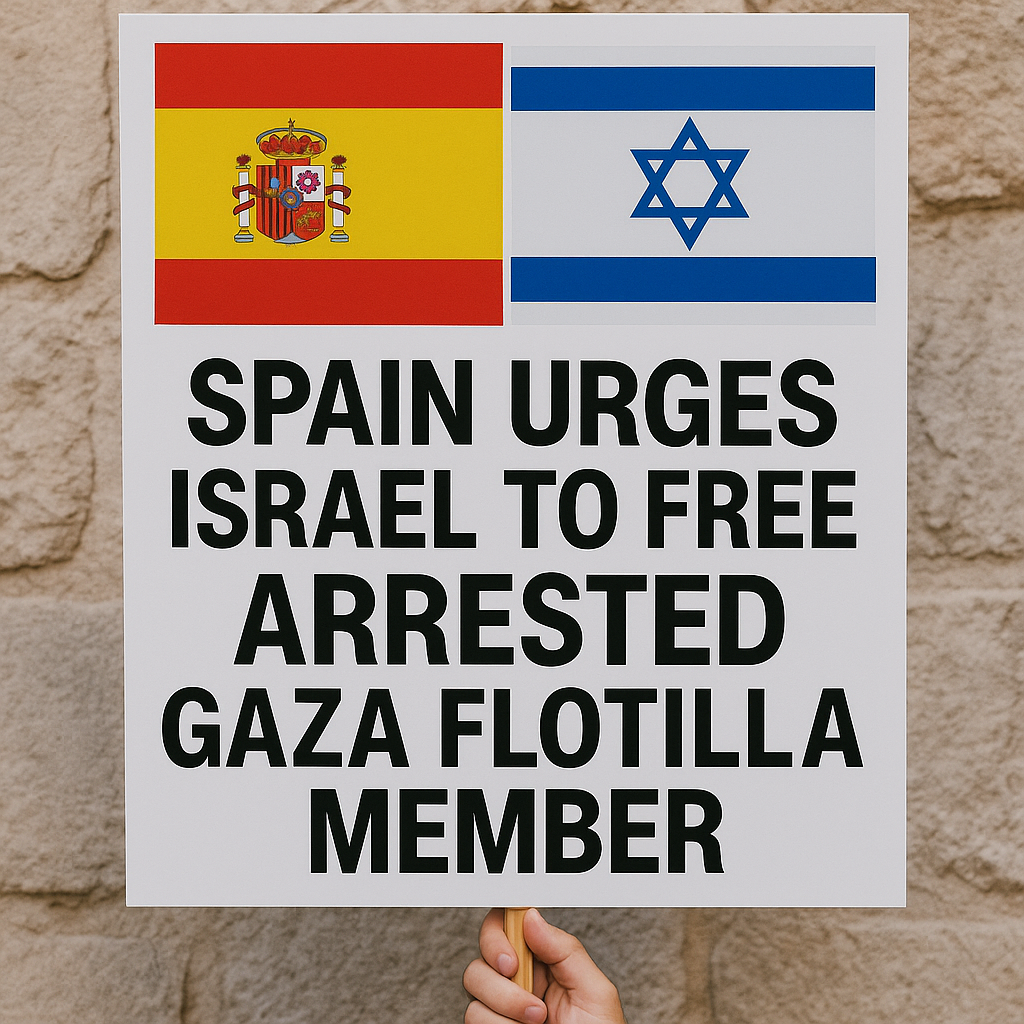
Spain Urges Israel to Free Arrested Gaza Flotilla Member
Spain Urges Israel to Free Arrested Gaza Flotilla Member
In a significant geopolitical development, Spain has urged Israel to release a member of the Gaza flotilla who was detained during a recent attempt to breach the maritime blockade of Gaza. This incident has reignited discussions surrounding freedom of movement, humanitarian aid, and the complex nature of international relations in the region.

The Incident in Context
The Gaza flotilla, a series of maritime endeavors aimed at delivering humanitarian aid to the densely populated and economically beleaguered Gaza Strip, has long been a flashpoint in Israeli-Palestinian relations. The latest incident saw multiple activists arrested, raising alarms among various governments and organizations advocating for humanitarian assistance.

The Spanish government, through its Foreign Minister, has expressed grave concerns regarding the arrest, emphasizing the importance of international laws that protect humanitarian missions. Spain’s call for Israel to release the detained flotilla member reflects its commitment to standing against perceived violations of humanitarian rights. The Spanish government posits that blocking humanitarian efforts undermines peaceful resolutions to an already fraught situation, emphasizing dialogue instead of detention.

A Diverse Range of Reactions
Reactions to Spain’s stance vary widely across the geopolitical spectrum, highlighting the complexity of international opinions on this issue.
1. Support for Spain’s Position: Many human rights organizations and humanitarian groups, particularly in Europe, have applauded Spain’s call for Israel to free the arrested member. According to these advocates, the act of detaining individuals engaged in humanitarian missions violates principles of international law. Amnesty International has pointed to past incidents in which humanitarian aid has been obstructed, arguing that such acts are counterproductive to achieving peace and stability in the region.
2. Israeli Government Perspective: On the opposite end, Israeli officials maintain that the flotilla’s activities threaten national security. Israel justifies its blockade of Gaza, citing the need to prevent weapons smuggling and to protect its citizens from potential attacks. As expressed in several statements, Israeli authorities argue that the flotilla poses a significant risk, as past endeavors have been linked to supporting militant factions within Gaza. This perspective aligns with a broader narrative within Israeli policy that prioritizes national security over the unfettered transportation of goods and individuals.
Navigating the Conversation
While Spain’s demand reflects a humanitarian inclination, the tension it brings illustrates a conflicting landscape where national security interests clash with humanitarian efforts. Critics of Israel argue that its stringent policies have not only resulted in humanitarian crises but have also fueled anti-Israel sentiment globally. Conversely, defenders of Israeli actions contend that without robust security measures, the possibility of violent incursions into Israeli territory remains a constant threat.
Given these contrasting viewpoints, finding common ground becomes increasingly difficult. Various international actors, including the United Nations and even some within the European Union, have called for both sides to engage in constructive dialogue, seeking balanced solutions that acknowledge legitimate security concerns alongside humanitarian needs.
Where Do We Go From Here?
The situation remains unresolved, underscoring the broader challenges faced in the Israeli-Palestinian conflict. The international community finds itself at a crossroads, grappling with how to intervene effectively while respecting the sovereignty of nations. Spain’s call for action may resonate with many, but it also highlights the delicate balance between applying pressure and facilitating proactive solutions for peace.
As nations respond to Spain’s plea, the future of humanitarian actions aimed at Gaza may hinge on how effectively these pleas are translated into tangible actions. Will diplomatic channels open up for more substantial dialogues, or will tensions escalate further? The answers remain uncertain, reflecting the intricate web of relationships in this historically charged area.
In conclusion, while Spain’s demand may reflect the sentiments of a segment of the global community advocating humanitarian aid, it also brings to the fore the deep-rooted complexities that characterize the Israeli-Palestinian relationship. Each incident, such as the arrest of the flotilla member, serves not just as a catalyst for discussion but as a reminder of the pressing need for genuine dialogue that encompasses the multiplicity of perspectives involved.















