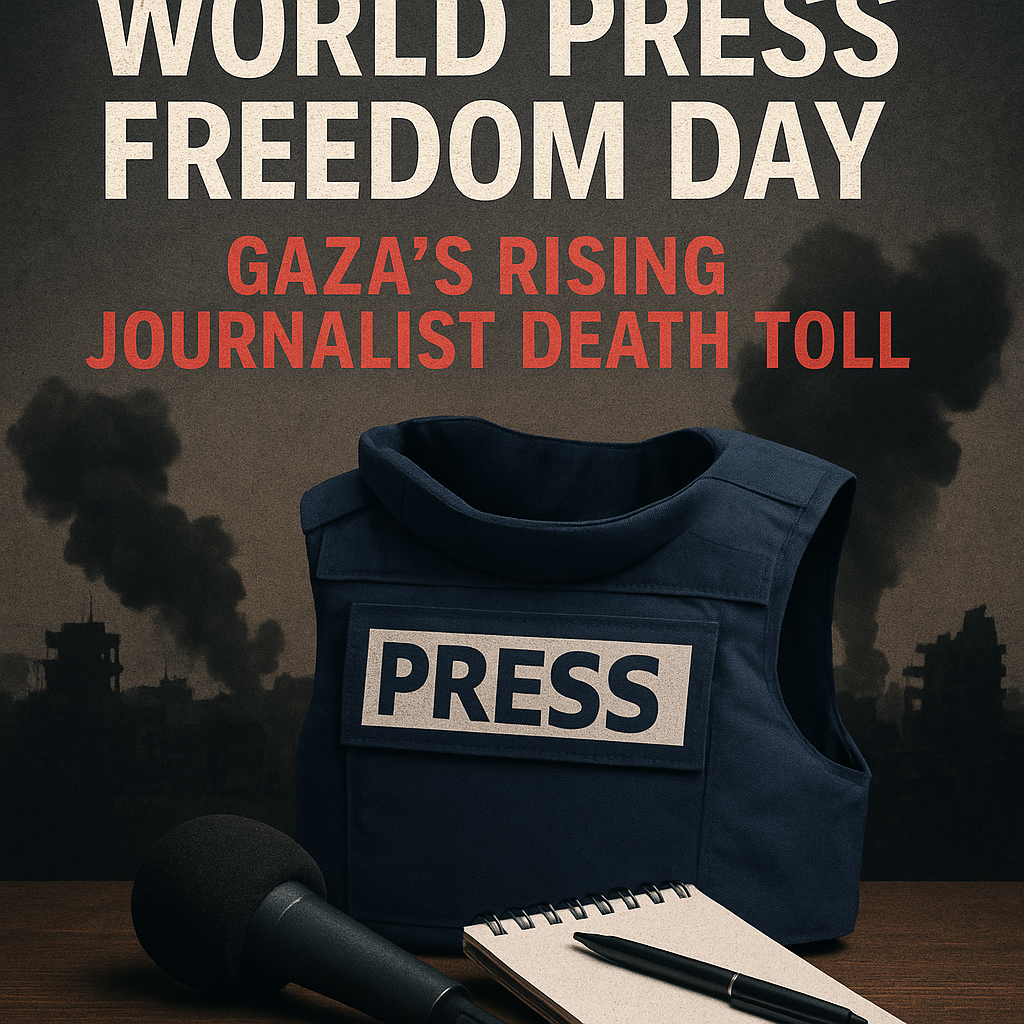
World Press Freedom Day: Gaza’s Rising Journalist Death Toll
World Press Freedom Day: Gaza’s Rising Journalist Death Toll
World Press Freedom Day serves as a timely reminder of the vital role journalists play in disseminating information, especially in conflict zones like Gaza, where the toll on media professionals has reached alarming levels. As we observe this day, the challenges faced by journalists reporting from Gaza reflect a broader narrative about freedom of expression and the perilous conditions that can accompany the pursuit of truth.

The Context of Risk in Gaza
In recent years, Gaza has seen a significant increase in violence, impacting not only civilians but also those committed to reporting the reality on the ground. A recent report highlighted that the death toll for journalists in Gaza has risen sharply, with many losing their lives while covering conflicts, protests, and the ongoing humanitarian crisis. According to Al Jazeera, recent confrontations have claimed the lives of several journalists, prompting international outcry and calls for accountability.

Gaza’s geopolitical context adds layers of complexity to the issue. The region has been a flashpoint for conflict between Israel and Hamas, and both local and foreign journalists face risks from direct military actions, censorship, and the prevailing political climate. An RT news article points out that the hostile environment for journalists often results in self-censorship, as many refrain from covering sensitive materials that could put their lives in jeopardy. This reinforces a dangerous cycle where the public remains uninformed about critical issues.

The Voices of the Fallen
An unfortunate reality is that many journalists who have died in Gaza were not merely casualties of war; they were often killed while performing their duties. The International Federation of Journalists (IFJ) underscores that protecting journalists should be a priority, arguing that the world must stand in solidarity with those who seek to hold truth to power. Several organizations, including Reporters Without Borders (RSF), have repeatedly called out the number of journalist deaths as part of a broader attack on press freedom itself.
Eyewitness accounts highlight the immediacy of the threats. A recent Al Jazeera report features interviews with surviving journalists in Gaza, illustrating the emotional and psychological distress faced by those remaining in the field. Many express a sense of duty to report, even as they navigate a precarious environment. Such sentiments reveal a deeply ingrained commitment to their profession, despite the evident dangers.
The Broader Implications of Rising Journalist Deaths
The increasing number of journalist casualties raises critical questions about the implications for both press freedom and public safety. For one, the deaths amplify concerns regarding censorship and the stifling of investigation in locales like Gaza. The repercussions extend beyond just the immediate fear of violence; the chilling effect on reporting can lead to gaps in knowledge about conflicts and humanitarian conditions, inhibiting global understanding and action.
Furthermore, the international community’s response to these tragic losses will play a crucial role in shaping future discourse around press protections. Advocacy for journalist safety must involve not only the enactment of laws but also the prioritization of press freedom in diplomatic conversations. As Sky News summarizes, the symbolic importance of events like World Press Freedom Day cannot be underestimated in fostering global awareness about the risks journalists undertake daily.
Are We Doing Enough?
Despite growing concerns, there are calls for a reevaluation of how the international community responds. While statements of condemnation are often issued after attacks, many argue that these words must be followed by actions that hold governments accountable for protective measures. The lack of tangible movements towards accountability can foster feelings of hopelessness among journalists, further exacerbating the cycle of violence.
It’s also vital to acknowledge the disparity in coverage among conflicts worldwide. Some crises receive significant media attention, while others, like the continual struggles in Gaza, can fade from the international spotlight, particularly as they become complex narratives involving multiple parties. Media watchdogs urge that a consistent focus on reporting from perilous environments must remain central to discussions surrounding press freedom.
Conclusion: Towards a Safer Future for Journalists
As World Press Freedom Day serves as a moment of reflection, it also pushes us to confront the harsh realities faced by journalists operating in conflict zones like Gaza. The rising death toll is not merely a statistic; it symbolizes the alarming risks professionals encounter in the pursuit of truth.
To bolster media freedom and safety, global entities and policymakers must amplify their efforts, ensuring that reporters are protected and empowered to carry out their critical work. While the path forward is fraught with challenges, there is a collective responsibility to ensure that the voices of journalists, especially those in dangerous regions, continue to reach the global audience they serve. In doing so, we honor their sacrifices and foster a more informed, just world.