
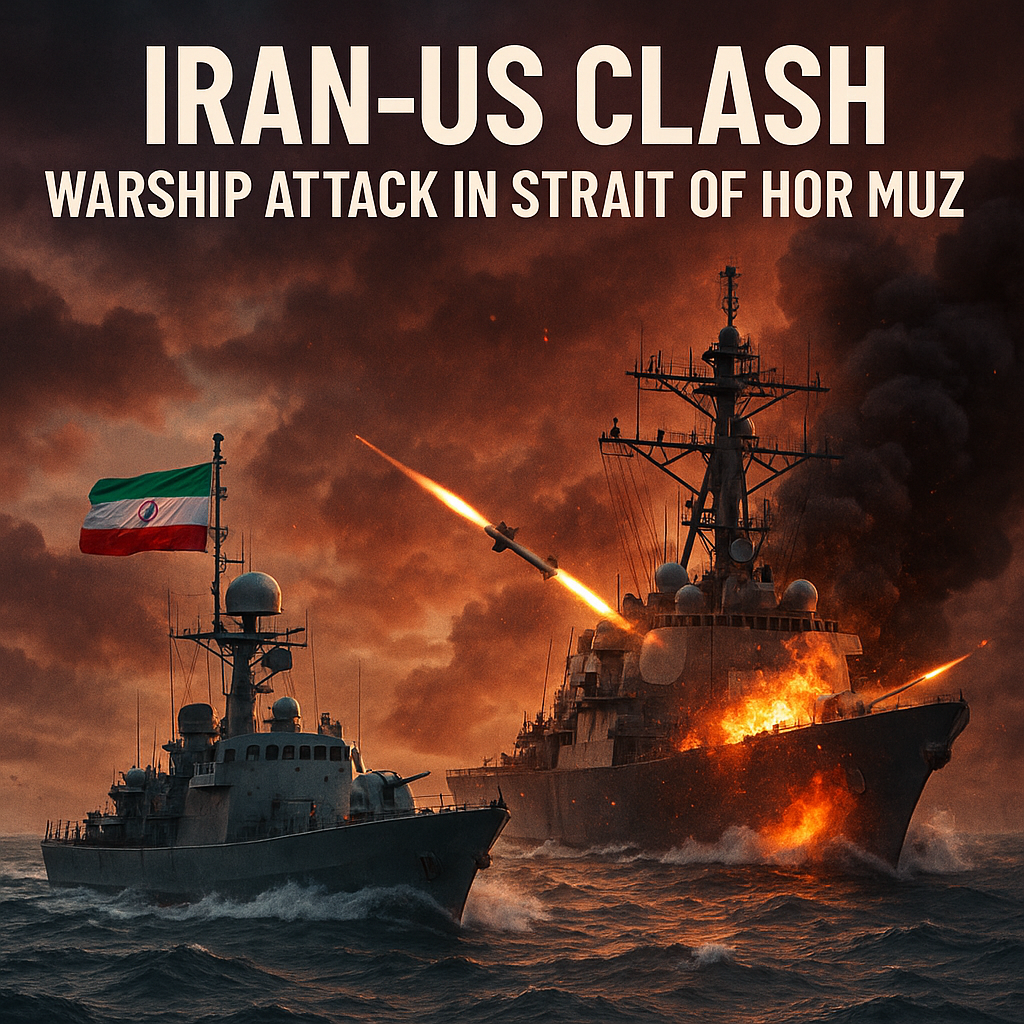
Iran-US Clash: Warship Attack in Strait of Hormuz
Iran-US Clash: Warship Attack in the Strait of Hormuz
The recent incident involving a warship attack in the Strait of Hormuz has heightened tensions between Iran and the United States, raising global concerns about maritime security in one of the world’s most critical waterways. This article aims to explore various perspectives on this complex situation, balancing facts and sentiments from diverse, reputable sources.

Background of the Incident
The Strait of Hormuz, a vital shipping channel, is essential for international oil transport, which makes it a hotspot for geopolitical tensions. The recent clash reportedly occurred when an unidentified assailant targeted a US warship, leading to a swift military response from the United States. According to reports from Al Jazeera and Sky News, the US Navy condemned the attack, labeling it as an unprovoked act of aggression by Iranian forces. They asserted that it bends the norms of international maritime law, further complicating an already strained relationship.

Diverging Perspectives on Responsibility
Iranian Claims vs. US Position
Perspectives on the responsibility for the attack diverge significantly. RT News reported Iranian officials denying involvement in the incident, claiming it was a false flag operation aimed at escalating tensions. Iranian Commander Amir Hatami was quoted saying, “The Iranian military acts solely in defense of sovereignty and is committed to regional peace.”

On the other hand, the United States has maintained that the evidence points squarely at Iranian operatives who have repeatedly demonstrated a willingness to challenge US maritime presence in the region. An official from the US Navy, echoing sentiments cited in Al Jazeera, noted that such actions cannot go unanswered and will have significant repercussions.
These conflicting narratives highlight the complexities underlying the clash, as both nations provide their own interpretations based on historical animosities and current geopolitical interests. The United States seeks to project power and maintain freedom of navigation, while Iran views US military presence as a direct threat to its sovereignty.
The Broader Implications
Economic Ramifications
The Strait of Hormuz is a crucial artery for global oil shipments, with nearly 20% of the world’s oil supply passing through its waters. A sustained escalation in military encounters could lead to substantial disruptions in global oil markets. Experts warn of potential price spikes as insurance costs rise for vessels operating in the region. According to reports from Sky News, analysts predict that increased military activity could discourage shipping lines from transiting the strait, thereby pushing oil prices upwards and impacting economies worldwide.
Diplomatic Efforts and Future Outlook
As tensions escalate, diplomatic channels are more critical than ever. Diplomatic efforts have been sporadic, often hindered by entrenched positions on both sides. The potential for negotiation appears slim, according to analysts, yet some experts suggest that dialogue must continue to prevent further conflict.
The international community has largely been reticent, with countries expressing concern but offering no substantive solutions. According to an article from Al Jazeera, there’s a growing call for an independent investigation into the incident. The idea is to foster transparency in what has become an increasingly murky situation, though Iran has shown little willingness to cooperate with international observers.
Conclusion: Uncertainties Ahead
Ultimately, the clash between Iran and the United States in the Strait of Hormuz underscores a precarious balancing act between national security interests and economic imperatives. The incident illustrates how quickly tensions can escalate, leading to potential for prolonged conflict that could have global repercussions.
While both sides appear entrenched in their narratives, one thing is clear: the complexities surrounding the Strait of Hormuz will require careful navigation. The potential for miscalculation exists, and as both nations posture militarily, the eyes of the world remain fixed on this critical maritime corridor. Ongoing vigilance, diplomatic dialogue, and concerted international efforts will be essential in mitigating the risks associated with heightened military activity in the region.















