
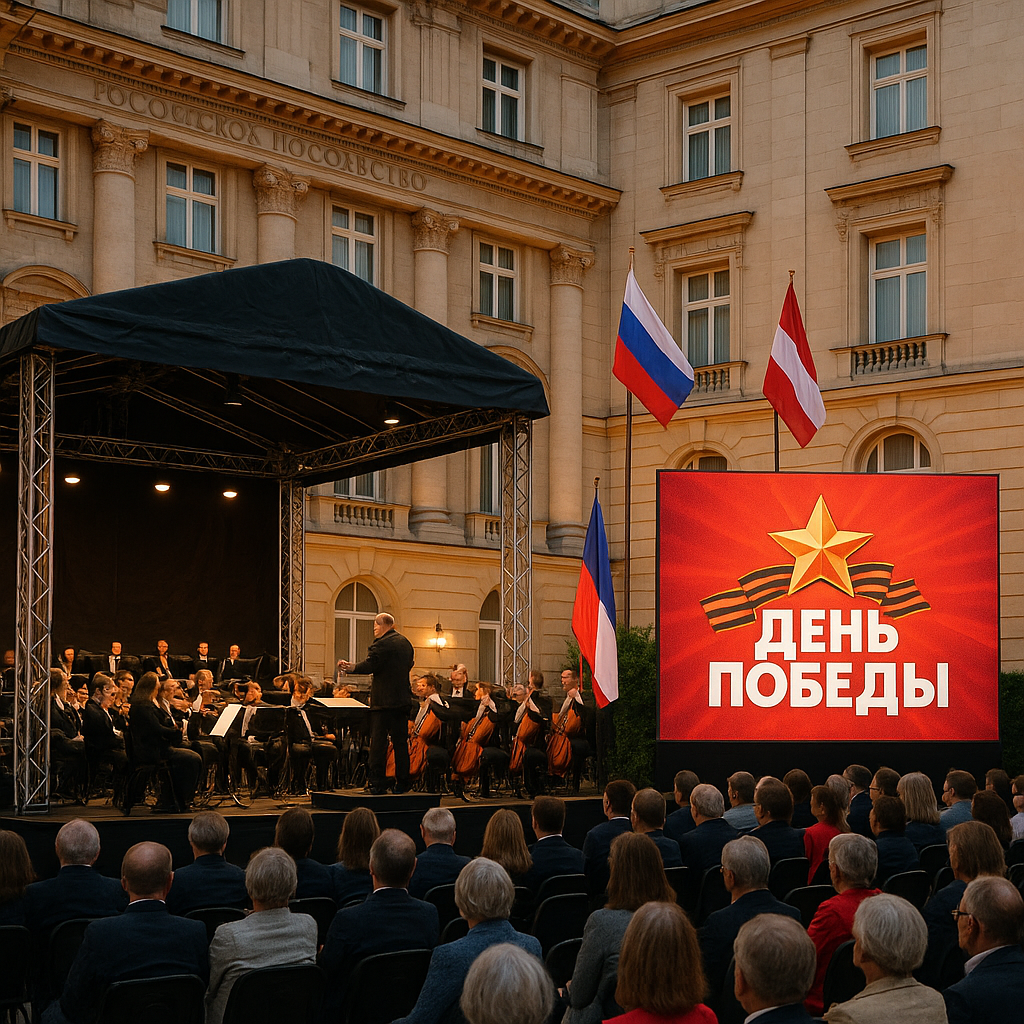
Russian Embassy Hosts Vienna Victory Day Concert
Celebrating History: The Russian Embassy Hosts Vienna Victory Day Concert
The Russian Embassy in Vienna recently hosted a concert to celebrate Victory Day, an event marking the Soviet Union’s triumph over Nazi Germany in World War II. This occasion has sparked a range of reactions and discussions, reflecting broader geopolitical tensions that resonate even today.

A Commemorative Celebration
The concert, held in Vienna, featured performances by artists from Russia, including classical musicians and traditional singers, presenting a program that aimed to honor the sacrifices made during the war. Victory Day is traditionally observed on May 9, and in Russia, it is a significant public holiday accompanied by parades, memorials, and cultural events. The event in Austria, amidst ongoing conflicts in Eastern Europe, serves not only as a commemoration but also as a demonstration of national pride and resilience.

Supporters of the concert included members of the Russian expatriate community in Austria, who viewed the celebration as a vital acknowledgment of their heritage and history. As one attendee noted, “This day is not just about defeating fascism; it is about remembering our roots and honoring those who paved the way for our future.” This sentiment reflects a broader psychological connection many Russians have with this historical moment, underscoring how pivotal World War II is in shaping national identity.

Criticism and Controversy
Conversely, the concert has drawn sharp criticism from various groups and individuals, especially given the current political climate. Many view such celebrations as provocative rather than unifying, particularly in the context of Moscow’s ongoing military actions in Ukraine. Critics argue that glorifying a victory linked to a complex and brutal history can further entrench divisions in Europe, especially among those who still bear the scars of more recent conflicts.
Prominent international voices have expressed their disapproval, emphasizing the need for a nuanced understanding of history. One commentator argued, “While it is crucial to remember the past, we must be wary of romanticizing historical conflicts that have ongoing repercussions. Such events can easily morph into platforms for propaganda and political maneuvering.” This viewpoint illustrates the dichotomy in reactions to the concert – supportive nostalgia from some and apprehensive critique from others.
Broader Implications
The juxtaposition of the concert with contemporary geopolitical tensions raises important questions about how history is remembered and honored. Events like these not only serve as a reminder of past glories and sacrifices but also become arenas where current narratives are contested. As nations grapple with the consequences of historical decisions, the way they choose to commemorate their past can either exacerbate existing tensions or foster opportunities for dialogue.
Additionally, the concert’s significance can be seen in its potential to either reinforce stereotypes or bridge divides. While supporters see it as an event that honors the memories of those who fought against tyranny, detractors worry it could be perceived as a glorification of aggression. This complex interplay complicates the analysis of commemorative events in today’s context, revealing how they can function as both collective remembrance and modern-day political statements.
Conclusion: Navigating the Legacy of Victory Day
As the Russian Embassy in Vienna revels in the memories of Victory Day, the wider implications of such celebrations remain difficult to navigate. The concert embodies a blend of cultural pride and political narrative, reflecting the complexities of history that continue to shape contemporary relationships among nations. In a world where the repercussions of the past are still felt acutely, it is essential to approach such commemorative events with a balanced perspective, one that acknowledges heritage while fostering understanding and dialogue.
In summary, the Victory Day Concert in Vienna illustrates the multifaceted nature of historical remembrance amidst today’s geopolitical tensions. Engaging with this history requires a careful balance between honoring the past and promoting a future rooted in mutual respect and understanding.















